
Introduction
Cervical spondylosis is a common degenerative disorder of the cervical spine and is recognized as one of the leading causes of spinal cord dysfunction in individuals over 55 years of age. Degenerative changes in the intervertebral discs result in secondary alterations in adjacent vertebrae, which may affect nerve roots, the cervical spinal cord, or both. From an Ayurvedic perspective, such degenerative conditions can be broadly classified under Vāta Vyādhi, particularly Sandhigata Vāta, where aggravated Vāta localizes in susceptible tissues and produces disease manifestations.
Clinical presentation of cervical spondylosis
Cervical spondylosis commonly presents with features of cervical radiculopathy and cervical myelopathy. In cervical radiculopathy, sensory symptoms are more prominent than motor symptoms, with pain being the most frequent complaint.
Common clinical manifestations include:
- Neck pain
- Pain during neck flexion and extension
- Headache
- Paraesthesia, hyperesthesia, and hyperalgesia
- Numbness and tingling sensations in the upper limbs
- Weakness and clumsiness of the hands
- Weakness of the lower limbs
- Symptoms suggestive of vertebrobasilar insufficiency
Cervical myelopathy typically develops gradually, with progressive disability occurring over several months.
Ayurvedic understanding of cervical spondylosis
In Ayurveda, degenerative disorders are considered manifestations of Vāta Vyādhi, with Sandhigata Vāta representing the involvement of aggravated Vāta in joints and related structures.
Key Ayurvedic concepts include:
- Nidāna Sevana aggravates Vāta doṣa
- Aggravated Vāta accumulates in Rikta Srotas, leading to localized disease processes
- The term Gata denotes localization of aggravated Vāta in a specific anatomical site
- In Grīvā Asthi Sandhi Gata Vāta, Vāta localizes in the cervical vertebrae and associated joints
- Cervical spondylosis is considered an Adhātukṣayajanya Roga, where age-related Dhātukṣaya and degeneration are central to disease development.1
Therapeutic rationale for Grīvā Vasti
Classical Ayurvedic texts emphasize Snehana, Svedana, and Upanāha in the management of Vāta Vyādhis. Among these, Svedana is particularly beneficial in reducing pain, stiffness, swelling, hyperesthesia, and restriction of movement.
The rationale for Grīvā Vasti includes:
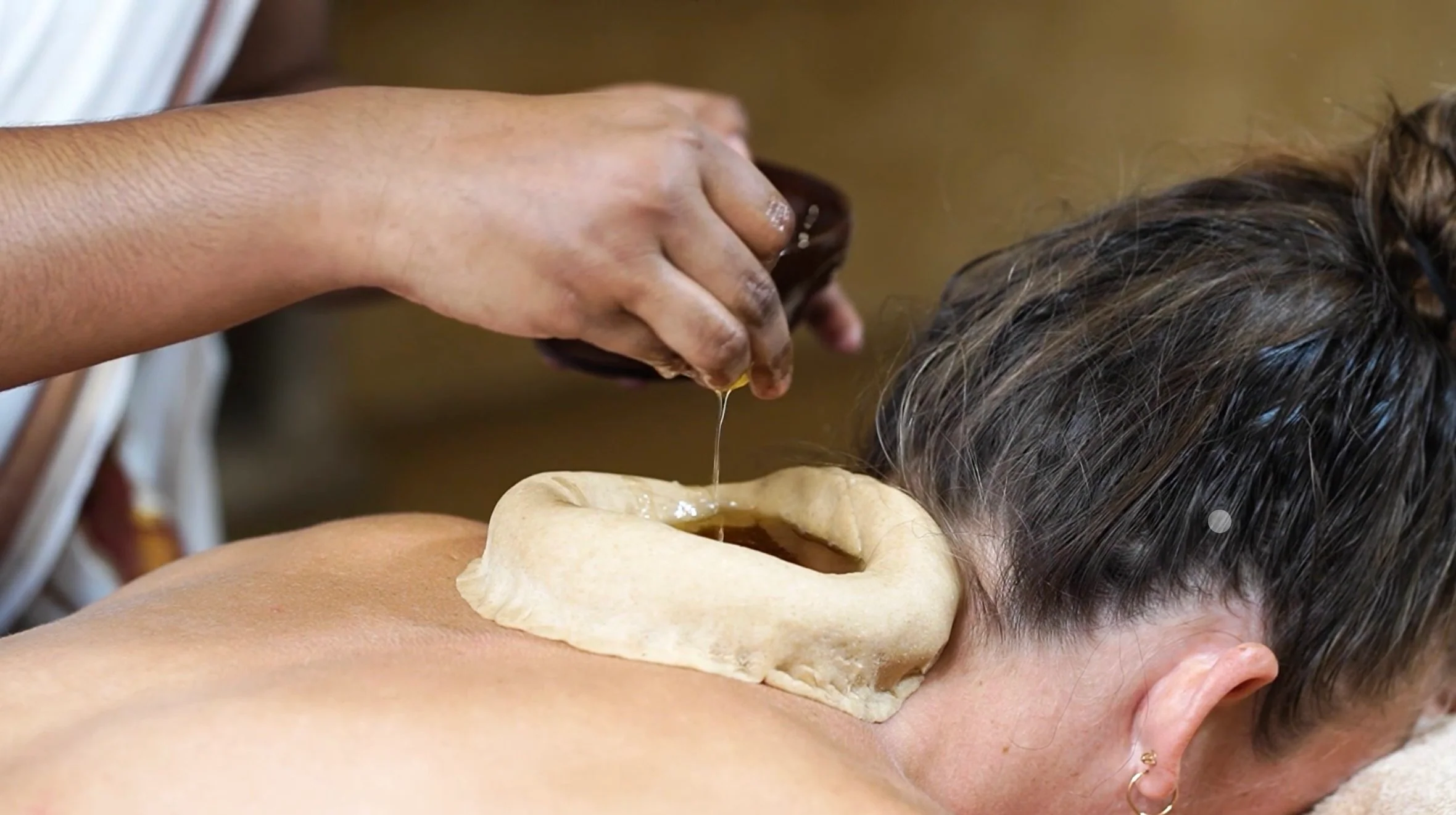
- Providing localized Snehana and Svedana
- Addressing Vāta-dominant pathology
- Supporting relief from pain and restricted cervical movements
- Managing age-related degenerative changes affecting the cervical spine
Grīvā Vasti with Daśamūla Tailam is specifically designed to deliver localized oleation and fomentation to the cervical region, thereby targeting the underlying pathology associated with cervical degeneration.2,3
Clinical outcomes of Grīvā Vasti
Clinical observations have demonstrated encouraging outcomes following Grīvā Vasti with Daśamūla Tailam.
Reported findings include:
- Significant reduction in neck pain and associated symptoms
- Improvement in pain during neck movements
- Reduction in numbness and tingling sensations
- Improvement in neck-related disability
- Good patient tolerability
Importantly, no adverse effects or toxic manifestations were reported during the course of treatment.
Future perspective
Considering the degenerative and Vāta-dominant nature of cervical spondylosis, therapies that combine localized Snehana and Svedana may play an important role in symptom management. The observed improvements in pain and neck disability highlight the potential value of Grīvā Vasti as a supportive therapeutic option in the long-term management of cervical degenerative disorders.
Conclusion
Cervical spondylosis represents a progressive degenerative disorder that significantly impacts quality of life. From an Ayurvedic perspective, the condition closely resembles Grīvā Asthi Sandhi Gata Vāta, where aggravated Vāta and age-related degeneration contribute to disease manifestation. Clinical observations suggest that Grīvā Vasti with Daśamūla Tailam provides meaningful symptomatic relief, improves neck function, and is well tolerated, making it a valuable therapeutic approach in the management of cervical spondylosis.4
References
1. Young WF. Cervical spondylotic myelopathy: a common cause of spinal cord dysfunction in older persons. Am Fam Physician. 2000;62(5):1064-1073. https://www.aafp.org/afp/2000/0901/p1064
2. Balasubramanian T, Chatterjee TK, Sarkar M, Meena SL. Anti-inflammatory effect of Stereospermum suaveolens ethanol extract in rats. Pharm Biol. 2010;48(3):318-323. doi:10.3109/13880200903127383. https://www.tandfonline.com/doi/10.3109/13880200903127383?url_ver=Z39.88-2003&rfr_id=ori:rid:crossref.org&rfr_dat=cr_pub%20%200pubmed
3. Singh RS, Ahmad M, Wafai ZA, Seth V, Moghe VV, Upadhyaya P. Anti-inflammatory effects of Dashmula, an Ayurvedic preparation, versus diclofenac in animal models. J Chem Pharm Res. 2011;3(6):882-888. https://pubmed.ncbi.nlm.nih.gov/20645819/
4. Pandey YK, Shalini, Sharma AK. Effect of Grīvā Vasti in management of Grīvā Asthi Sandhi Gata Vāta (Cervical Spondylosis). Anc Sci Life. 2013;33(1):71-75. doi:10.4103/0257-7941.134618. https://pmc.ncbi.nlm.nih.gov/articles/PMC4140026/#sec1-1