
Introduction
Fatty liver disease, encompassing non-alcoholic fatty liver disease (NAFLD) and alcoholic fatty liver disease (AFLD), is characterized by excessive lipid accumulation in hepatocytes. NAFLD, the predominant form, ranges from simple steatosis to non-alcoholic steatohepatitis (NASH), potentially progressing to fibrosis, cirrhosis, and hepatocellular carcinoma. AFLD follows a similar pathological continuum but is driven by chronic alcohol intake. The global prevalence of NAFLD is ~30%, with projections exceeding 55% by 2040, driven largely by sedentary lifestyles and metabolic dysfunction.
Disease burden and clinical significance
Fatty liver disease represents a major global health concern due to its strong association with obesity, insulin resistance, and metabolic syndrome. The condition contributes substantially to liver-related morbidity and mortality worldwide. Despite advances in pharmacotherapy, no definitive approved drug exists for NAFLD/NASH, highlighting the need for alternative and adjunctive therapeutic strategies.
Pathophysiology and therapeutic targets
Hepatic steatosis is driven by dysregulated lipid metabolism, oxidative stress, mitochondrial dysfunction, and chronic inflammation. Progression to fibrosis involves activation of hepatic stellate cells and sustained cytokine signaling. Key therapeutic targets include lipid accumulation, oxidative injury, inflammatory mediators, and fibrogenic pathways.
Role of phytoconstituents in hepatic protection
Plant-derived bioactive compounds exhibit hepatoprotective effects through antioxidant, anti-inflammatory, antifibrotic, and lipid-modulating mechanisms. These phytoconstituents reduce reactive oxygen species, suppress pro-inflammatory cytokines, regulate lipid homeostasis, and inhibit stellate cell activation, thereby attenuating disease progression.
Kalmegh (Andrographis paniculata): botanical profile
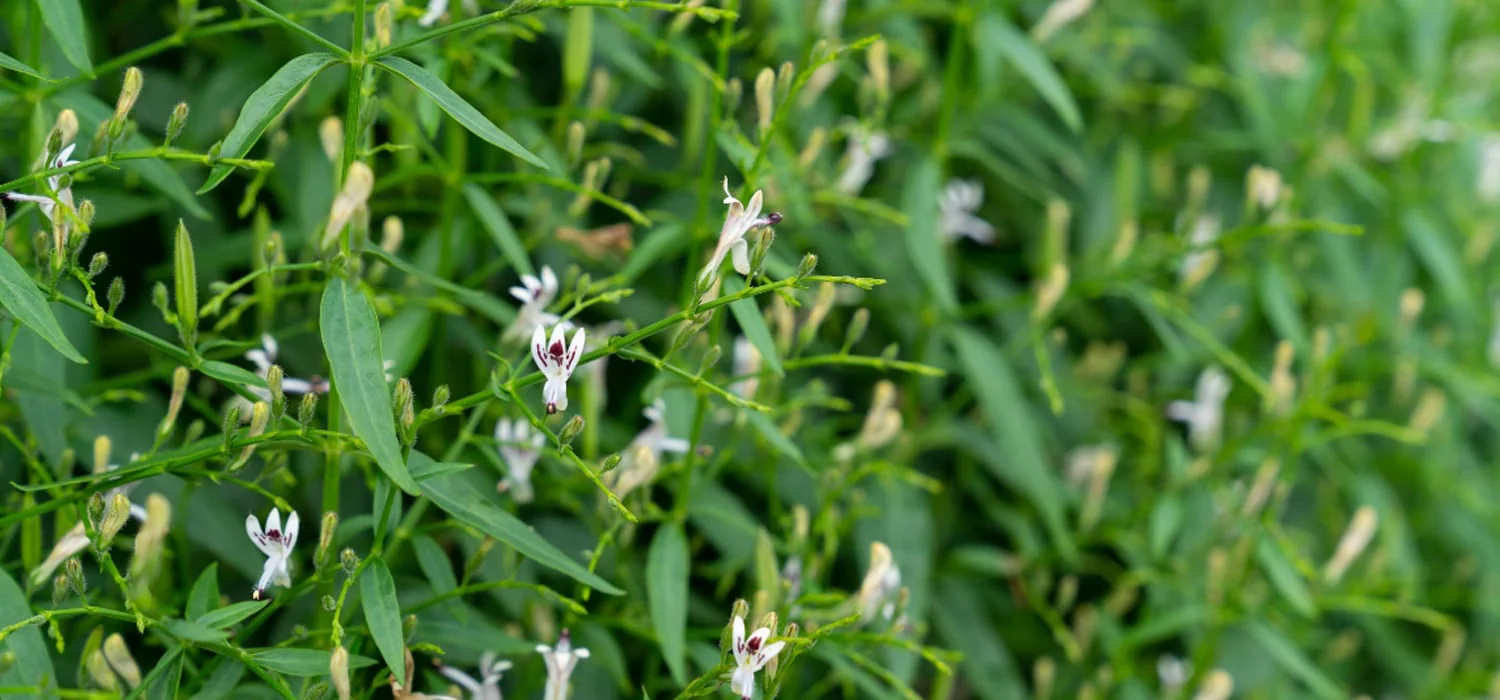
Andrographis paniculata, commonly known as Kalmegh or “King of Bitters,” is an Acanthaceae family herb widely used in traditional medicine systems including Ayurveda and Traditional Chinese Medicine. It is distributed across South and Southeast Asia and is traditionally used for hepatic, gastrointestinal, infectious, and inflammatory disorders.
Phytochemistry and active constituents
Kalmegh contains bioactive diterpene lactones, primarily andrographolide, along with neoandrographolide and 14-deoxyandrographolide. These compounds are responsible for its hepatoprotective, antioxidant, anti-inflammatory, and immunomodulatory activities. Andrographolide, the principal active constituent, is extensively studied for its role in modulating oxidative stress and inflammatory signaling pathways.
Mechanisms of hepatoprotective action
Andrographolide enhances antioxidant defenses by upregulating enzymes such as superoxide dismutase and catalase, while reducing lipid peroxidation. It suppresses inflammatory mediators including TNF-α, IL-6, and COX-2, and inhibits hepatic stellate cell activation, thereby preventing fibrosis progression. Additional constituents contribute synergistically to antimicrobial and cytoprotective effects.
Challenges in therapeutic translation
Despite strong preclinical evidence, clinical translation is limited by low bioavailability, rapid metabolism, poor stability, and variability in phytochemical content. These challenges hinder standardized dosing and reproducible therapeutic outcomes.
Nanocarrier-based drug delivery approaches
Nanocarrier systems such as liposomes and polymeric nanoparticles have been explored to enhance the solubility, stability, and bioavailability of Kalmegh-derived compounds. These systems improve targeted hepatic delivery; however, concerns remain regarding toxicity, scalability, and regulatory standardization.
Mechanisms of Kalmegh in fatty liver disease
Andrographis paniculata exerts hepatoprotective effects primarily through its key bioactive compound andrographolide.
- Anti-inflammatory activity:
Andrographolide suppresses pro-inflammatory mediators including TNF-α, IL-6, and COX-2, and inhibits NF-κB signaling, thereby reducing chronic hepatic inflammation associated with fatty liver disease and NASH.1
- Antioxidant effects:
Kalmegh scavenges reactive oxygen species (ROS) and reduces lipid peroxidation, limiting oxidative stress–induced hepatocyte injury. It also enhances endogenous antioxidant enzymes such as superoxide dismutase (SOD) and catalase.
- Antifibrotic and hepatoprotective actions:
Andrographolide inhibits hepatic stellate cell activation, thereby reducing fibrogenesis and preventing progression to cirrhosis. It also stabilizes hepatocyte membranes and promotes regeneration of damaged liver tissue.
- Metabolic and detoxification regulation:
Kalmegh modulates hepatic detoxification pathways by enhancing enzyme expression involved in xenobiotic clearance, supporting restoration of normal liver function and metabolic balance.
Other potential role
Kalmegh herb is traditionally used in Asia for its anti-inflammatory, hepatoprotective, and immunomodulatory properties. In the past decade, there has been growing interest in AP’s potential applications in the treatment of Metabolic Dysfunction-Associated Fatty Liver Diseases (MAFLD), also known as NAFLD, a condition characterized by surplus fat accumulation in the liver
- Hepatoprotective effects:
Andrographis paniculata shows strong hepatoprotective activity mainly via andrographolide. It reduces toxin- and diet-induced liver injury by lowering serum liver enzymes, decreasing lipid peroxidation (MDA), and restoring antioxidant defenses such as glutathione (GSH). Experimental studies also show reduced hepatic lipid accumulation and improved liver function under high-fat diet conditions.
- Anti-inflammatory and anti-fibrotic actions:
Andrographolide suppresses key pro-inflammatory cytokines including TNF-α, IL-1β, and IL-6, thereby attenuating hepatic inflammation. It inhibits major signaling pathways such as NF-κB and JAK/STAT, reducing progression from steatosis to non-alcoholic steatohepatitis (NASH). Additionally, it prevents hepatic stellate cell activation, limiting extracellular matrix deposition and fibrosis progression.
- Modulation of lipid metabolism:
Kalmegh regulates hepatic lipid homeostasis2 by downregulating lipogenic transcription factors such as SREBP-1c and enhancing triglyceride breakdown. This results in reduced hepatic fat accumulation and improved metabolic profiles in fatty liver disease models.
- Therapeutic applications in infections:
Kalmegh exhibits adjunct antimicrobial activity and may support management of respiratory, gastrointestinal, and upper airway infections. It demonstrates anti-inflammatory and analgesic effects, though it is recommended only as a complementary therapy under clinical supervision.
- Digestive system benefits:
Kalmegh improves digestion through mild laxative and choleretic effects, enhancing bile secretion and facilitating gastrointestinal clearance, thereby supporting overall digestive function.
Adverse drug effects of andrographolide, the main compound of Kalmegh
|
Category |
Adverse effects reported |
|
Gastrointestinal |
Nausea, vomiting, diarrhea, abdominal discomfort, anorexia |
|
Allergic / skin |
Urticaria, pruritus, skin rash |
|
Reproductive |
Reduced fertility, anti-spermatogenic effects, early pregnancy termination |
|
Hepatic |
Transient elevation of liver enzymes (rare) |
|
Neurological |
Headache, dizziness, fatigue |
|
Cardiovascular |
Hypotension, bradycardia (dose-dependent vasodilatory effect) |
|
Immunological |
Possible immunosuppression at very high doses |
|
Drug interactions |
CYP450 modulation (e.g., CYP3A4), interactions with anticoagulants and antihypertensives |
Nanocarrier strategies for fatty liver disease
Andrographis paniculata shows poor oral bioavailability in conventional formulations (tablets, capsules, syrups), leading to rapid systemic clearance and reduced therapeutic efficiency. This necessitates repeated dosing, which may increase adverse effects and reduce patient compliance. Nanotechnology-based delivery systems have emerged as a solution to improve stability, targeted delivery, and sustained release of andrographolide.
- Lipid-based nanoparticles:
Lipid-based nanoparticles (LNPs) enhance hepatic targeting by improving solubility, stability, and controlled release of andrographolide. They protect bioactives from degradation and sustain plasma levels, thereby improving therapeutic efficacy in non-alcoholic steatohepatitis (NASH). Co-encapsulation with antioxidants further enhances anti-inflammatory and anti-steatotic effects by reducing lipid accumulation and oxidative stress.
- Polymeric nanoparticles:
Biodegradable polymeric nanoparticles (e.g., PLGA, PLA, chitosan) enable sustained drug release, improved stability, and protection from enzymatic degradation. Surface functionalization (e.g., galactose, folate, mannose) allows hepatocyte-specific targeting via receptor-mediated uptake. PEGylation extends circulation time, while mucoadhesive properties enhance oral absorption. These systems support long-term management of metabolic-associated fatty liver disease.
- Solid lipid nanoparticles:
Solid lipid nanoparticles (SLNs) improve oral bioavailability and provide controlled drug release of andrographolide. Their lipid core enhances hepatic accumulation and protects the drug from oxidative and enzymatic degradation. SLN-based formulations demonstrate improved systemic exposure and sustained pharmacological activity, making them suitable for chronic liver disease management.
- Nanostructured lipid carriers:
Nanostructured lipid carriers (NLCs), composed of solid–liquid lipid mixtures, offer higher drug-loading capacity and improved stability compared to SLNs. They enhance hepatic delivery of anti-inflammatory and antifibrotic agents, reducing progression of steatosis to fibrosis. Their tunable physicochemical properties enable targeted liver-specific therapy with reduced off-target toxicity.
- Hybrid nanocarriers:
Lipid–polymer hybrid nanoparticles combine the structural stability of polymers with the biocompatibility of lipids, enabling dual drug loading and multi-target therapy. These systems can simultaneously modulate insulin resistance, inflammation, and fibrosis pathways in fatty liver disease. Advanced hybrid systems, including metal- and carbon-based nanocarriers, further enhance antioxidant and therapeutic efficiency.
- Exosome-based nanocarriers:
Exosomes are natural extracellular vesicles with high biocompatibility, low immunogenicity, and intrinsic cell-targeting ability. They enhance intracellular delivery of andrographolide and can cross biological barriers efficiently. Their ability to evade immune clearance and deliver bioactives directly to hepatocytes makes them promising candidates for treating NASH, cirrhosis, and systemic inflammatory disorders.
Conclusion
Andrographis paniculata (Kalmegh) is a promising hepatoprotective agent for fatty liver disease, primarily attributed to andrographolide. Its key pharmacological actions include antioxidant, anti-inflammatory, antifibrotic, and lipid-modulating effects, which collectively reduce hepatic steatosis, oxidative stress, and inflammation.
However, clinical translation is limited by poor oral bioavailability, rapid metabolism, and low systemic exposure. Nanocarrier-based delivery systems—such as lipid nanoparticles, solid lipid nanoparticles, polymeric nanoparticles, and hybrid nanocarriers—significantly improve solubility, stability, targeted hepatic delivery, and therapeutic efficacy while reducing dose-related toxicity.
Despite strong preclinical evidence, concerns regarding safety, potential drug interactions, and the absence of large-scale clinical trials remain. Future research should focus on standardized formulations, mechanistic validation at the molecular level, and well-designed clinical studies to establish its efficacy in fatty liver disease management.3
References:
- Cabrera D, Wree A, Povero D, et al. Andrographolide Ameliorates Inflammation and Fibrogenesis and Attenuates Inflammasome Activation in Experimental Non-Alcoholic Steatohepatitis. Sci Rep. 2017;7(1):3491. Published 2017 Jun 14. doi:10.1038/s41598-017-03675-z. https://pmc.ncbi.nlm.nih.gov/articles/PMC5471224/
- Trivedi NP, Rawal UM, Patel BP. Hepatoprotective effect of andrographolide against hexachlorocyclohexane-induced oxidative injury. Integr Cancer Ther. 2007;6(3):271-280. doi:10.1177/1534735407305985. https://pubmed.ncbi.nlm.nih.gov/17761640/
- Vikal A, Maurya R, Patel P, Kurmi BD. Andrographis paniculata in Fatty Liver Disease: Mechanisms, Nanocarrier Approaches, and Therapeutic Potential. Phytomedicine Plus. 2025 Oct 11:100903. https://www.sciencedirect.com/science/article/pii/S2667031325001745