
Introduction
Polycystic Ovarian Syndrome (PCOS) is one of the most common endocrine disorders affecting women during their reproductive years, with a prevalence ranging from 6% to 15%. The condition is characterized by irregular menstrual cycles, hyperandrogenism, and polycystic ovarian morphology identified on ultrasound. Beyond reproductive disturbances, PCOS is associated with an increased risk of metabolic syndrome, type 2 diabetes mellitus, and cardiovascular disease. Although the exact etiology remains unclear, obesity and insulin resistance are recognized as important contributors to its pathogenesis. 1
Hormonal and metabolic alterations in PCOS
Women with PCOS frequently exhibit significant hormonal and metabolic disturbances that contribute to both reproductive and long-term health complications.
Key abnormalities include:
- Elevated luteinizing hormone (LH) levels
- Normal or reduced follicle-stimulating hormone (FSH) levels
- Increased LH/FSH ratio
- Insulin resistance and associated metabolic dysfunction
These endocrine irregularities can adversely affect ovarian function, follicular development, and ovulation, thereby contributing to menstrual abnormalities and fertility-related concerns. 2
Current management strategies
The management of PCOS is primarily focused on symptom control and reduction of metabolic risk factors.
Common therapeutic objectives include:
- Reducing insulin resistance
- Lowering androgen levels
- Managing inflammatory manifestations
- Regulating menstrual cycles
Conventional pharmacological approaches include contraceptive hormones and insulin-sensitizing agents such as metformin. Alongside medical treatment, lifestyle interventions remain an essential component of management. Dietary modifications, increased physical activity, and behavioral measures are widely recognized as important strategies for improving overall outcomes. Interest in medicinal plants and nutritional interventions as complementary approaches has also increased in recent years. 3
Role of flaxseed in PCOS management
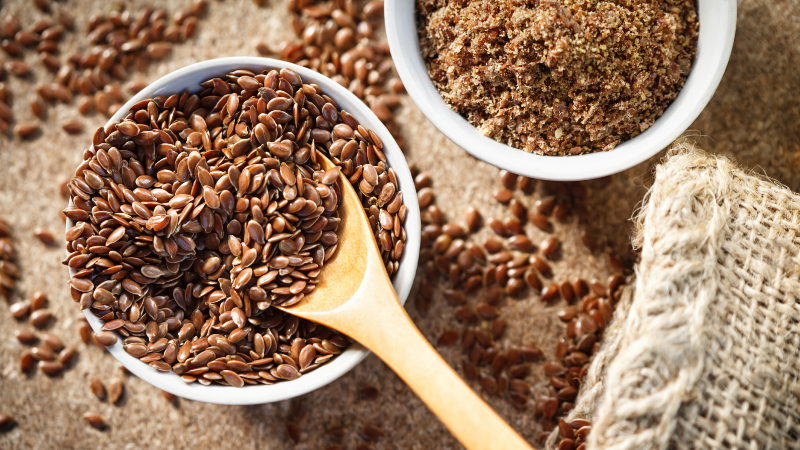
Flaxseed is a plant-based food rich in several biologically active constituents, including α-linolenic acid, phytoestrogenic lignans, and dietary fiber. These components have attracted attention because of their potential influence on hormonal balance and metabolic health.
The phytoestrogenic lignans present in flaxseed possess structural similarities to endogenous sex hormones. This characteristic may contribute to reduced estrogen production and increased levels of sex hormone-binding globulin (SHBG) in adipose tissue and the liver.
Flaxseed supplementation has been associated with favorable hormonal changes, including increased FSH levels and a reduction in the LH/FSH ratio. These effects suggest a potential role in supporting follicular development and ovulatory function in women with PCOS. 4
Conclusion
PCOS is a multifactorial endocrine disorder characterized by hormonal imbalance, insulin resistance, and reproductive dysfunction. While conventional management focuses on symptom control and metabolic regulation, complementary nutritional approaches are receiving increasing attention. Owing to its content of omega-3 fatty acids, phytoestrogenic lignans, and dietary fiber, flaxseed may support hormonal balance and reproductive function, making it a potentially valuable adjunct in the comprehensive management of PCOS.
References:
1. Chakrabarti J. Serum leptin level in women with polycystic ovary syndrome: correlation with adiposity, insulin, and circulating testosterone. Ann Med Health Sci Res. 2013;3(2):191-196. doi:10.4103/2141-9248.113660. https://pmc.ncbi.nlm.nih.gov/articles/PMC3728861/
2. Di Lorenzo M, Cacciapuoti N, Lonardo MS, et al. Pathophysiology and Nutritional Approaches in Polycystic Ovary Syndrome (PCOS): A Comprehensive Review. Curr Nutr Rep. 2023;12(3):527-544. doi:10.1007/s13668-023-00479-8. https://pmc.ncbi.nlm.nih.gov/articles/PMC10444658/
3. Legro RS, Arslanian SA, Ehrmann DA, et al. Diagnosis and treatment of polycystic ovary syndrome: an Endocrine Society clinical practice guideline. J Clin Endocrinol Metab. 2013;98(12):4565-4592. doi:10.1210/jc.2013-2350. https://pmc.ncbi.nlm.nih.gov/articles/PMC5399492/
4. Najdgholami Z, Sedgi FM, Ghalishourani SS, Feyzpour M, Rahimlou M. Flaxseed intervention and reproductive endocrine profiles in patients with polycystic ovary syndrome: an open-labeled randomized controlled clinical trial. Front Endocrinol (Lausanne). 2025;16:1531762. Published 2025 Apr 7. doi:10.3389/fendo.2025.1531762. https://pmc.ncbi.nlm.nih.gov/articles/PMC12010250/#s5