
Introduction
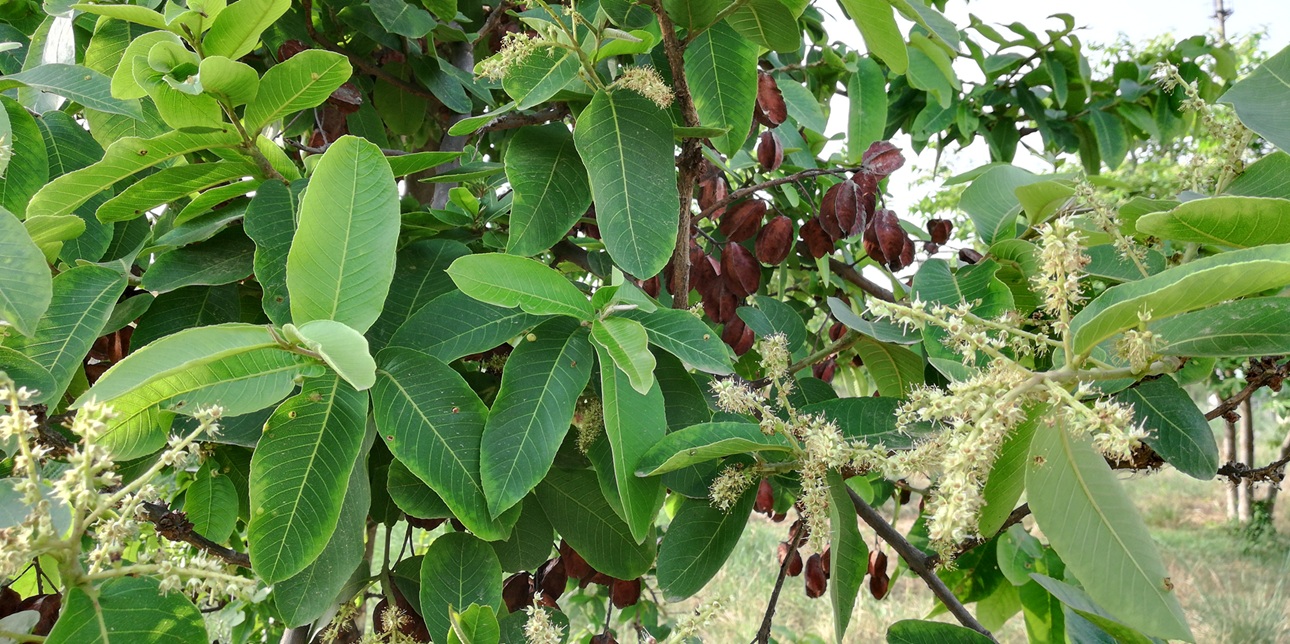
Terminalia arjuna is a medicinal plant widely used in Ayurveda for its cardioprotective properties. Native to the Indian subcontinent, it contains bioactive constituents such as flavonoids, tannins, and triterpenoids that exhibit antioxidant, anti-inflammatory, antimicrobial, and wound-healing activities.
Recent scientific evidence has validated its traditional use in cardiovascular disorders and expanded its potential applications to periodontal therapy. Its anti-inflammatory and antibacterial effects support reduction of periodontal pathogens and modulation of host inflammatory response, making it a promising candidate for herbal-based local drug delivery systems in periodontitis management.
Overall, Terminalia arjuna represents a pharmacologically significant plant with dual relevance in cardiovascular protection and oral health, supported by its diverse phytochemical profile and emerging evidence from modern research.
Phytochemical composition
Terminalia arjuna contains a diverse range of bioactive constituents responsible for its therapeutic properties. Major phytochemicals include tannins, which exhibit potent antioxidant and anti-inflammatory effects; flavonoids, which contribute to cardioprotective and lipid-lowering actions; and glycosides, which provide cardiotonic activity.1 The plant also contains triterpenoids such as ursolic acid, known for anticancer and antileishmanial properties, along with saponins that demonstrate immunomodulatory and anti-inflammatory effects. In addition, essential minerals further support its overall pharmacological profile. Collectively, these constituents underpin the broad therapeutic potential of T. arjuna, including its emerging application in periodontal drug delivery systems.
Phytochemical composition of Terminalia arjuna2:
|
Plant part |
Major chemical class |
Major constituents |
|
Stem bark |
Triterpenoids |
Arjunin, arjunic acid, arjunolic acid, arjungenin, terminic acid, arjunins (IV and V), arjunasides A–E, 2α,3β-dihydroxyurs-12,18-dien-28-O-β-D-glucopyranosyl ester |
|
Stem bark |
Glycosides |
Arjunetin, arjunoside I, arjunoside II, arjunaphthanoloside, terminolides |
|
Stem bark |
Flavonoids |
Arjunolone, arjunone, baicalein, luteolin, gallic acid, ethyl gallate, quercetin derivatives, pelargonidin, oligomeric proanthocyanidins |
|
Stem bark |
Tannins |
Pyrocatechols, punicallin, punicalagin, terchebulin, terflavin C, castalagin |
|
Stem bark |
Minerals/trace elements |
Calcium, aluminum, magnesium, silica, zinc, copper |
|
Roots |
Triterpenoids |
Arjunic acid, arjunolic acid, oleanolic acid, terminic acid |
|
Roots |
Glycosides |
Arjunoside I, arjunoside II, arjunoside III, arjunoside IV, 2α,19α-dihydroxy-urs-12-en-28-oic acid 28-O-β-D-glucopyranoside |
|
Leaves |
Sterols |
β-sitosterol |
|
Leaves |
Flavonoids |
Not fully characterized |
|
Leaves |
Alkaloids |
Not fully characterized |
|
Leaves |
Tannins |
Present (specific constituents not fully identified) |
Pharmacological activity of Terminalia arjuna
Cardiovascular effects:
Terminalia arjuna exerts cardioprotective actions through multiple mechanisms including antioxidant, anti-inflammatory, and membrane-stabilizing effects. Its oleanane-type triterpenoids (arjunic acid, arjunolic acid, arjunoglycosides) improve myocardial contractility, support diuresis, and modulate heart rate. The extract reduces oxidative stress, inhibits apoptosis via regulation of JNK, c-Jun, Bcl-2, Bax, and caspase-3 pathways, and enhances endothelial nitric oxide signaling. It also improves lipid metabolism, thereby reducing atherosclerotic risk and overall cardiovascular burden.
Antioxidant effect:
Arjuna exhibits strong free radical scavenging activity by preserving endogenous antioxidant enzymes such as superoxide dismutase, catalase, glutathione peroxidase, and glutathione. Arjunolic acid prevents lipid peroxidation and reduces oxidative myocardial injury. Additional constituents like arjungenin and arjunaphthanoloside further contribute to nitric oxide modulation and suppression of oxidative inflammatory pathways in cardiovascular tissues.
Antiplatelet effect:
Arjunolic acid inhibits thrombin-induced platelet aggregation and reduces thrombus formation, demonstrating antiplatelet activity comparable or superior to aspirin in experimental models. This effect is mediated through modulation of oxidative stress and inflammatory signaling involved in platelet activation.
Lipid-lowering effect:
T. arjuna improves lipid profiles by reducing total cholesterol, LDL, and triglycerides while increasing HDL levels. Mechanisms include inhibition of HMG-CoA reductase, enhanced hepatic cholesterol clearance, and downregulation of lipogenic enzymes, contributing to reduced cardiovascular risk.
Antihypertensive effect:
The bark extract induces vasodilation via improved endothelial function and enhanced nitric oxide production. It also reduces oxidative stress and inflammatory mediators, leading to decreased peripheral vascular resistance and improved blood pressure regulation.
Anticancer effect:
Arjuna exhibits antiproliferative and pro-apoptotic activity through antioxidant-mediated DNA protection, induction of cell cycle arrest (G0/G1 phase), and inhibition of angiogenesis. Arjunolic acid enhances antioxidant enzyme activity and selectively induces apoptosis in malignant cells without significant toxicity to normal cells.
Anti-inflammatory effect:
The plant suppresses inflammatory mediators such as nitric oxide, TNF-α, and IL-6 by inhibiting key signaling pathways including NF-κB. This contributes to reduced chronic inflammation and tissue protection.
Antibacterial effect:
T. arjuna shows broad-spectrum antibacterial activity against Gram-positive and Gram-negative organisms. Tannins, flavonoids, and phenolic compounds disrupt bacterial cell walls and inhibit microbial growth, supporting its antimicrobial potential.
Wound healing effect:
Tannins in the bark enhance collagen synthesis, accelerate wound contraction, and improve tensile strength of regenerated tissue. Experimental studies show wound closure rates comparable to standard topical agents, supporting its role in tissue repair.
Therapeutic uses of Terminalia arjuna
Cardiovascular disorders:
Clinical evidence supports its use in angina pectoris, coronary artery disease, and myocardial dysfunction. It improves exercise tolerance, reduces anginal episodes, and enhances myocardial performance.3
Congestive heart failure:
Regular administration improves functional class, increases diuresis, and enhances left ventricular function, contributing to better quality of life in heart failure patients.
Dyslipidemia and oxidative stress:
It significantly improves lipid parameters and reduces inflammatory markers such as C-reactive protein, thereby lowering cardiovascular risk.
Endothelial dysfunction:
Arjuna improves endothelial function, particularly in high-risk groups such as smokers, by enhancing nitric oxide bioavailability and vascular reactivity.
Other therapeutic benefits
Additional effects include anti-diabetic, anti-inflammatory, antioxidant, and gastroprotective actions, along with benefits in respiratory and infectious conditions.
Periodontal and dental applications:
T. arjuna shows potential in periodontal therapy due to its anti-inflammatory, antimicrobial, and wound healing properties. It inhibits plaque formation, suppresses oral pathogens, and supports gingival tissue regeneration, making it a candidate for herbal-based local drug delivery systems.
Safety and toxicity:
Although generally safe, high doses may cause gastrointestinal discomfort, hepatotoxicity, and potential interactions with anticoagulant drugs due to antiplatelet effects. Caution is advised in patients with hepatic or renal impairment, and standardized dosing is required for safe therapeutic use.
Conclusion
Terminalia arjuna is a pharmacologically important medicinal plant with well-established cardiovascular benefits supported by multiple experimental and clinical studies. Its rich phytochemical profile, particularly triterpenoids, flavonoids, and tannins, contributes to antioxidant, anti-inflammatory, antihypertensive, lipid-lowering, and antiplatelet activities. Beyond cardiovascular applications, it also demonstrates antimicrobial, wound-healing, and metabolic benefits, highlighting its broad therapeutic potential. However, further large-scale clinical trials and standardized formulations are needed to fully validate its efficacy, optimize dosing, and ensure safety in long-term use.
References:
- Ramesh P, Palaniappan A. Terminalia arjuna, a Cardioprotective Herbal Medicine-Relevancy in the Modern Era of Pharmaceuticals and Green Nanomedicine-A Review. Pharmaceuticals (Basel). 2023;16(1):126. Published 2023 Jan 13. doi:10.3390/ph16010126. https://pmc.ncbi.nlm.nih.gov/articles/PMC9865560/
- Rajaram V, Namasivayam A, Shanmugam R, et al. Terminalia arjuna: An overview of its magical properties. Bioinformation. 2024;20(12):2080-2085. Published 2024 Dec 31. doi:10.6026/9732063002002080. https://pmc.ncbi.nlm.nih.gov/articles/PMC11993416/
- Ramesh P, Palaniappan A. Terminalia arjuna, a Cardioprotective Herbal Medicine-Relevancy in the Modern Era of Pharmaceuticals and Green Nanomedicine-A Review. Pharmaceuticals (Basel). 2023;16(1):126. Published 2023 Jan 13. doi:10.3390/ph16010126. https://pmc.ncbi.nlm.nih.gov/articles/PMC9865560/