
Introduction
Type 2 Diabetes Mellitus (T2DM) is a complex metabolic disorder arising from an interplay of modifiable and non-modifiable risk factors. Modifiable determinants include dietary patterns, physical inactivity, and socioeconomic disparities, while non-modifiable influences contribute to disease susceptibility. The rising prevalence of diabetes and its complications has created a significant financial burden on global healthcare systems, a trend closely associated with increasing rates of obesity.1
Pathophysiology of type 2 diabetes mellitus
Diabetes mellitus is characterized by dysfunction in insulin secretion and impaired physiological action of insulin, leading to persistent elevation of plasma glucose levels (hyperglycemia). In T2DM, insulin resistance and defective insulin signaling pathways result in reduced cellular glucose uptake. This is further compounded by pancreatic beta-cell dysfunction, which collectively contributes to sustained hyperglycemia and progressive metabolic imbalance. 2
Role of natural compounds in metabolic regulation
Natural compounds are bioactive substances derived from plants, animals, minerals, and microorganisms. These agents have been widely utilized in traditional medicine systems for centuries, with a substantial proportion of the global population relying on them for primary healthcare needs. Their relevance in metabolic disorders lies in their diverse pharmacological actions and multi-target biological effects.
Antidiabetic potential of fenugreek (Trigonella foenum-graecum)
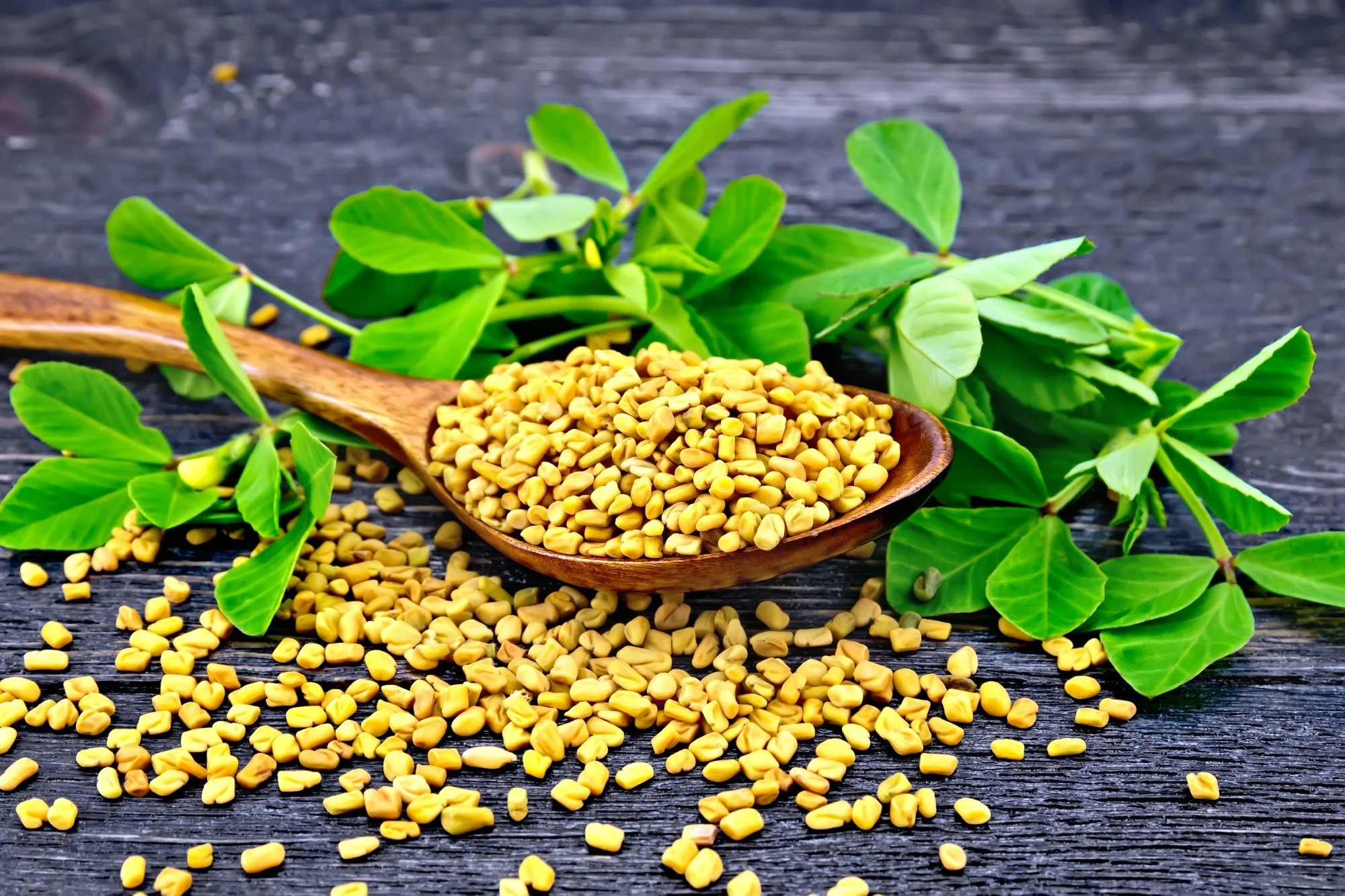
Fenugreek has been identified as a significant medicinal plant in the management of T2DM. It has been observed to improve glycemic control by reducing blood glucose levels and enhancing insulin sensitivity, particularly in obese and overweight individuals. 3
Key characteristics of fenugreek include:
- Seeds and leaves rich in macronutrients, vitamins, and minerals
- Presence of bioactive compounds such as alkaloids (trigonelline), flavonoids (quercetin, luteolin), saponins, and steroidal sapogenins
- Nutritionally dense composition containing carbohydrates, proteins, lipids, and volatile oils
- Contribution to digestive health alongside metabolic benefits
Pharmacological actions and therapeutic relevance
Fenugreek demonstrates multiple pharmacological properties relevant to metabolic and systemic health, including:
- Anti-inflammatory activity
- Antioxidant effects
- Hypoglycemic action
- Hypocholesterolemic activity
- Antiulcerogenic properties
Steroidal saponins such as diosgenin and gitogenin are considered principal active constituents responsible for its medicinal effects. Additionally, fenugreek has shown broader biological actions, including inhibition of cancer cell growth, induction of apoptosis, and modulation of gut microbiota homeostasis, indicating systemic regulatory potential beyond glycemic control.
Safety profile and microbiome considerations
Fenugreek is commonly consumed as part of dietary practices and is generally considered safe for ingestion. However, its safety profile is dose-dependent, and variations in study outcomes suggest the need for careful dosage consideration. Emerging evidence also highlights the role of fenugreek formulations in influencing gut microbiome composition, a key factor in metabolic regulation and overall health maintenance. 4
Conclusion
Fenugreek (Trigonella foenum-graecum) represents a nutritionally rich and pharmacologically active botanical agent with significant relevance in Type 2 Diabetes Mellitus. Its multifaceted actions—including glycemic control, insulin sensitization, and metabolic modulation—are supported by a diverse phytochemical profile. Additionally, its interaction with gut microbiota further enhances its therapeutic relevance. Collectively, fenugreek offers a promising integrative approach in the management of metabolic dysfunction in T2DM.
References:
1. Wu Y, He X, Zhou J, et al. Impact of healthy lifestyle on the risk of type 2 diabetes mellitus in southwest China: A prospective cohort study. J Diabetes Investig. 2022;13(12):2091-2100. doi:10.1111/jdi.13909. https://pmc.ncbi.nlm.nih.gov/articles/PMC9720205/
2. Yaribeygi H, Maleki M, Sathyapalan T, Jamialahmadi T, Sahebkar A. Pathophysiology of Physical Inactivity-Dependent Insulin Resistance: A Theoretical Mechanistic Review Emphasizing Clinical Evidence. J Diabetes Res. 2021;2021:7796727. Published 2021 Oct 7. doi:10.1155/2021/7796727. https://pmc.ncbi.nlm.nih.gov/articles/PMC8516544/
3. Robert SD, Ismail AA, Wan Rosli WI. Trigonella foenum-graecum seeds lowers postprandial blood glucose in overweight and obese individuals. J Nutr Metab. 2014;2014:964873. doi:10.1155/2014/964873. https://pmc.ncbi.nlm.nih.gov/articles/PMC4167814/
4. Haxhiraj M, White K, Terry C. The Role of Fenugreek in the Management of Type 2 Diabetes. Int J Mol Sci. 2024;25(13):6987. Published 2024 Jun 26. doi:10.3390/ijms25136987. https://pmc.ncbi.nlm.nih.gov/articles/PMC11240913/