
Introduction
Oxidative stress is a key pathological mechanism involved in the development of several chronic diseases, including metabolic disorders, neurodegeneration, cardiovascular diseases, cancer, and inflammatory conditions. It arises due to an imbalance between the production of reactive oxygen species (ROS) and the body’s antioxidant defense systems. Excess ROS can damage lipids, proteins, and DNA, leading to cellular dysfunction and tissue injury.
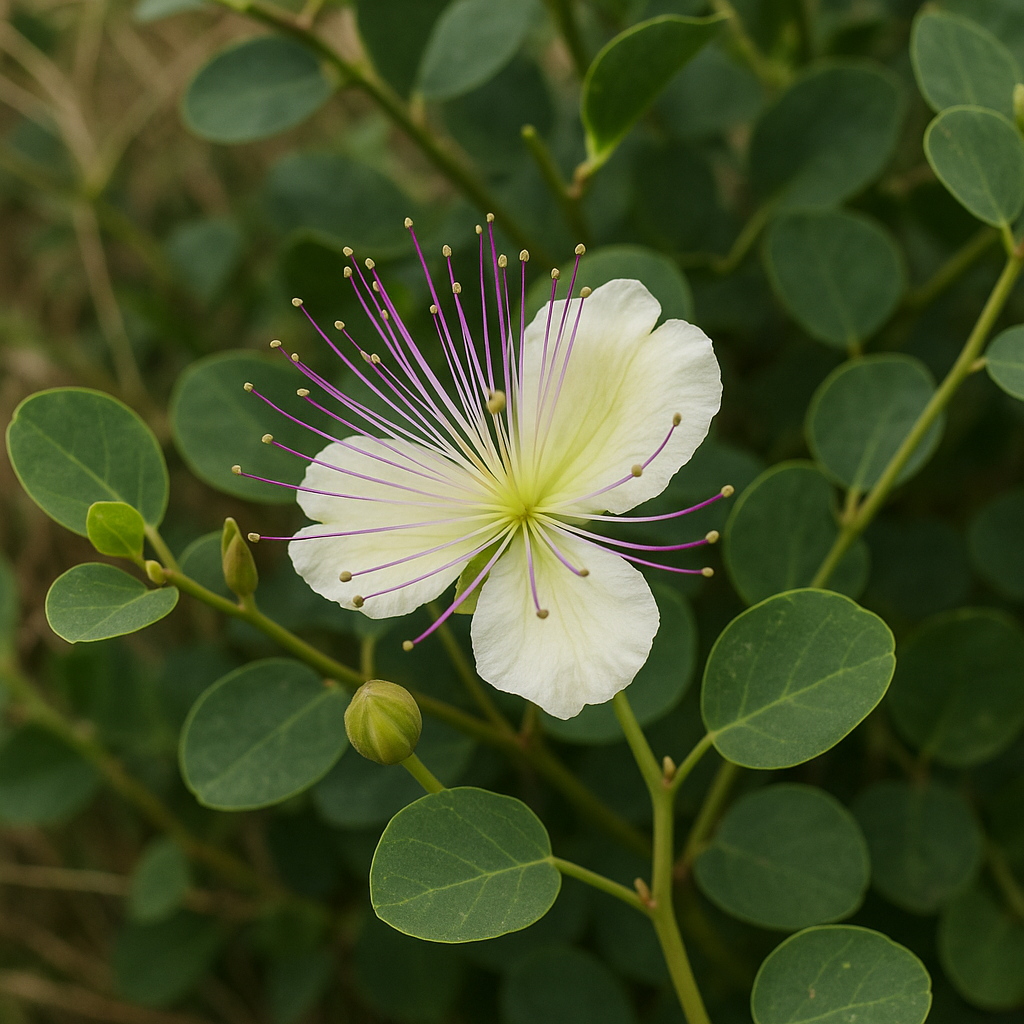
Plant-derived antioxidants are increasingly studied as natural modulators of oxidative stress. Among them, the hydroalcoholic extract of Capparis spinosa L. (caper bush) has gained attention for its potent free radical scavenging and cytoprotective properties.1
Phytochemical composition
The hydroalcoholic extract of Capparis spinosa contains a diverse range of bioactive compounds, including:
- Flavonoids (quercetin, rutin derivatives)
- Phenolic acids (caffeic acid, ferulic acid)
- Alkaloids
- Glucosinolates
- Tannins and carotenoids
These phytochemicals contribute significantly to its antioxidant and redox-regulating properties.
Mechanisms of oxidative stress modulation
Direct free radical scavenging:
One of the primary mechanisms of action is the direct neutralization of reactive oxygen species. Flavonoids and phenolic compounds donate hydrogen atoms or electrons to stabilize free radicals, thereby preventing oxidative chain reactions and cellular damage.
Enhancement of endogenous antioxidant defense:
The hydroalcoholic extract of Capparis spinosa supports the body’s internal antioxidant systems by upregulating key enzymes such as:
- Superoxide dismutase (SOD)
- Catalase (CAT)
- Glutathione peroxidase (GPx)
This strengthens cellular resistance against oxidative injury and improves redox balance.
Inhibition of lipid peroxidation:
Lipid peroxidation is a major consequence of oxidative stress that leads to membrane damage and loss of cellular integrity. Caper extract reduces malondialdehyde (MDA) formation, a marker of lipid peroxidation, thereby protecting cellular membranes and organelles.
Mitochondrial protection:
Mitochondria are both a major source and target of ROS. Bioactive compounds in Capparis spinosa help stabilize mitochondrial function, reduce electron leakage from the respiratory chain, and prevent oxidative damage-induced apoptosis.
Anti-inflammatory coupling with oxidative stress:
Oxidative stress and inflammation are closely linked. The extract modulates inflammatory mediators such as NF-κB, TNF-α, and IL-6, thereby reducing inflammation-induced ROS production and breaking the oxidative stress–inflammation cycle.2
Biological and therapeutic implications:
The oxidative stress–modulating effects of Capparis spinosa hydroalcoholic extract have important implications in several disease conditions:
- Metabolic dysfunction-associated steatotic liver disease (MASLD)
- Type 2 diabetes mellitus
- Neurodegenerative disorders (Alzheimer’s and Parkinson’s disease)
- Cardiovascular diseases
- Cancer and aging-related disorders3
By restoring redox balance, the extract may help prevent disease progression and support cellular health.
Experimental evidence overview
Preclinical studies have demonstrated that hydroalcoholic extracts of Capparis spinosa significantly reduce oxidative stress markers while increasing antioxidant enzyme activity in various biological models. These effects are strongly associated with its high flavonoid and phenolic content. Experimental findings also suggest improved tissue protection in liver, brain, and kidney models exposed to oxidative injury.
Conclusion
The hydroalcoholic extract of Capparis spinosa exhibits strong oxidative stress-modulating properties through free radical scavenging, enhancement of endogenous antioxidant enzymes, inhibition of lipid peroxidation, mitochondrial protection, and anti-inflammatory activity. These multi-targeted effects highlight its potential as a natural therapeutic agent in oxidative stress-related diseases. However, further clinical studies are required to confirm its efficacy, safety, and standardized therapeutic use in humans.4
Reference:
- Ostovar T, Rezaei S, Shokri-Afra H, et al. Effect of Capparis spinosa Fruit Hydroalcoholic Extract on Paraquat-Induced Pulmonary Fibrosis in the Rat. Int J Mol Cell Med. 2023;12(4):423-434. doi:10.22088/IJMCM.BUMS.12.4.423 https://pmc.ncbi.nlm.nih.gov/articles/PMC11240055/
- Ercan BC, Gursoy EN, Kaltalioglu K, Balabanli KB, Kecik M, Cevher SC. Capparis Spinosa and Glutamine Reduce Oxidative Stress via Nrf2/Ho-1 Pathway in Diabetic Wound Healing. Chem Biodivers. 2026 Apr;23(4):e71196. doi: 10.1002/cbdv.71196. PMID: 41958082. https://pubmed.ncbi.nlm.nih.gov/41958082/
- Moghadamnia Y, Mousavi Kani SN, Ghasemi-Kasman M, Kazemi Kani MT, Kazemi S. The Anti-cancer Effects of Capparis spinosa Hydroalcoholic Extract. Avicenna J Med Biotechnol. 2019;11(1):43-47. https://pmc.ncbi.nlm.nih.gov/articles/PMC6359694/
- Kalantari H, Foruozandeh H, Khodayar MJ, Siahpoosh A, Saki N, Kheradmand P. Antioxidant and hepatoprotective effects of Capparis spinosa L. fractions and Quercetin on tert-butyl hydroperoxide- induced acute liver damage in mice. J Tradit Complement Med. 2017;8(1):120-127. Published 2017 May 19. doi:10.1016/j.jtcme.2017.04.010 https://pmc.ncbi.nlm.nih.gov/articles/PMC5755993/