
Introduction
Alzheimer’s disease (AD) is a progressive neurodegenerative disorder marked by memory impairment, cognitive decline, behavioral disturbances, and loss of functional independence. Its pathophysiology involves multiple interconnected processes, including amyloid-β accumulation, tau hyperphosphorylation, synaptic dysfunction, mitochondrial failure, oxidative stress, and chronic neuroinflammation. Aging and chronic psychological stress further worsen neuronal vulnerability by dysregulating neuroendocrine and immune pathways.1
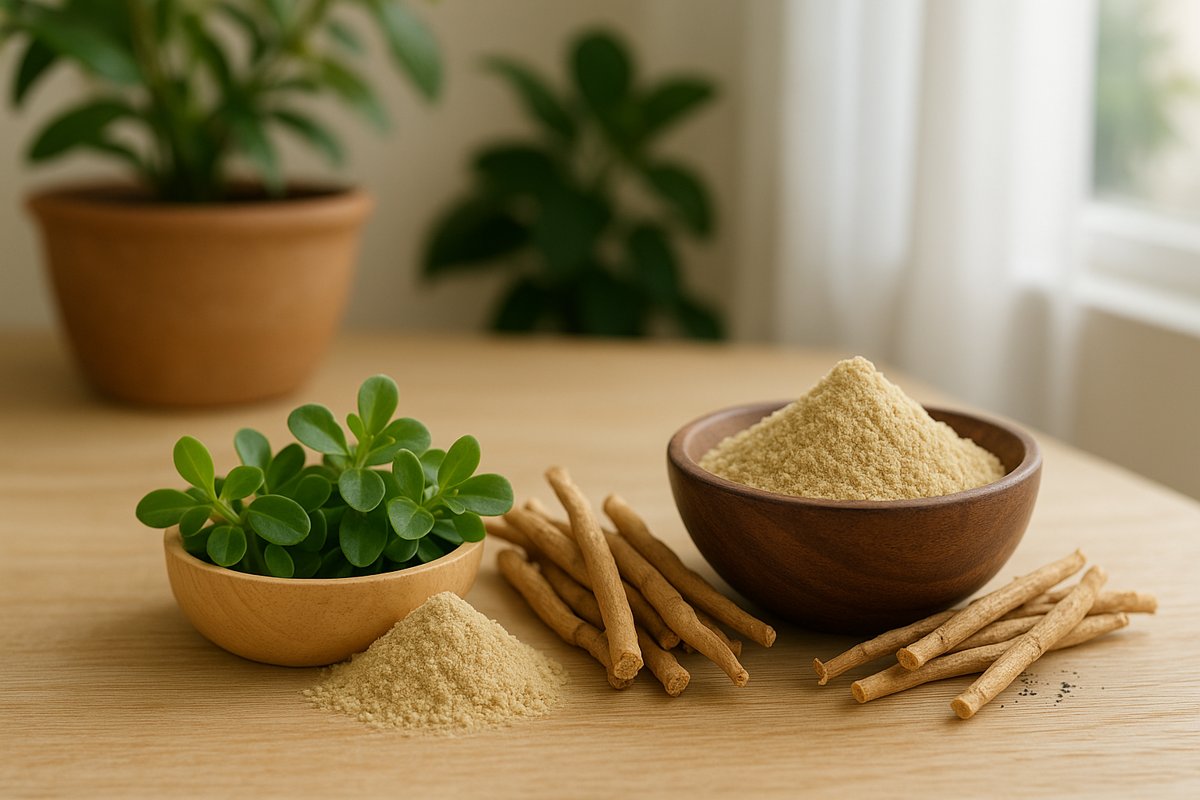
In Ayurveda, cognitive decline is primarily attributed to aggravated Vata Dosha, depletion of Ojas, and reduced Sattva guna, resulting in impaired Dhi (intellect), Dhriti (retention), and Smriti (memory). Medhya Rasayana herbs are a group of rejuvenative botanicals described to enhance cognition, protect neural tissue, and restore mental balance. Key herbs include Brahmi (Bacopa monnieri), Mandukaparni (Centella asiatica)2 , Shankhapushpi (Convolvulus pluricaulis), Ashwagandha (Withania somnifera), and Jatamansi (Nardostachys jatamansi).
Ayurvedic concept of medhya rasayana
Medhya Rasayana herbs are traditionally described as agents that:
- Enhance memory, intellect, and learning capacity
- Promote mental clarity and emotional stability
- Rejuvenate nervous system function
- Improve resilience against stress and aging-related decline
From an Ayurvedic perspective, these herbs counteract Vata aggravation and restore Ojas, thereby slowing cognitive deterioration and supporting longevity of mental functions.
Neuroprotective mechanisms in alzheimer’s disease
Medhya Rasayana herbs exert multi-target neuroprotective actions relevant to AD pathology.
Anti-amyloid and tau modulation:
These herbs are associated with modulation of amyloid precursor protein processing and reduction of amyloid-β aggregation.3 They also influence tau-related pathways, helping reduce neurofibrillary tangle formation and neuronal toxicity.
Anti-inflammatory effects:
Chronic neuroinflammation contributes significantly to AD progression. Medhya Rasayana herbs help regulate microglial activation and inflammatory cytokine release, thereby maintaining neuroimmune balance and limiting neuronal damage.
Antioxidant and mitochondrial support:
Oxidative stress and mitochondrial dysfunction accelerate neurodegeneration. These herbs enhance endogenous antioxidant systems, reduce reactive oxygen species, and support mitochondrial energy production essential for neuronal survival.
Synaptic plasticity enhancement:
Loss of synaptic connectivity is a key feature of cognitive decline. Medhya Rasayana herbs support synaptic integrity, neurotrophic signaling, and neuronal communication, thereby improving learning and memory functions.
Neurotransmitter regulation:
Alterations in acetylcholine, dopamine, and serotonin systems are implicated in AD-related cognitive and behavioral symptoms. These herbs help stabilize neurotransmitter balance, supporting cognition, mood, and attention.
Clinical and integrative perspectives
Medhya Rasayana herbs are potential adjuncts in Alzheimer’s disease due to their multi-target pharmacological actions. Their benefits are attributed to combined effects on oxidative stress, inflammation, neurotransmission, and neuronal survival pathways. Polyherbal formulations are frequently highlighted in recent literature for potential synergistic effects, where multiple herbs act on different pathological mechanisms simultaneously. However, variability in standardization, dosage, and long-term clinical validation remains a key limitation in translation to mainstream therapy.
Ayurvedic–modern integration
From an Ayurvedic standpoint, Alzheimer’s disease represents a deep depletion of Ojas and severe Vata imbalance, leading to progressive cognitive instability. Medhya Rasayana therapy aims not only to improve cognition but also to restore systemic and mental equilibrium.
Modern neuroscience aligns with this multi-factorial view, recognizing AD as a complex disorder requiring multi-target interventions rather than single-pathway drugs. Medhya Rasayana herbs fit into this framework due to their broad-spectrum neuroprotective and adaptogenic properties.
Conclusion
Medhya Rasayana herbs represent a significant integrative approach to Alzheimer’s disease management. Their neuroprotective actions include anti-amyloid effects, anti-inflammatory modulation, antioxidant defense, and enhancement of synaptic plasticity. While further clinical validation is required, current evidence supports their potential role as supportive agents in slowing cognitive decline and improving quality of life in Alzheimer’s disease. Their holistic action bridges traditional Ayurvedic neurorejuvenation concepts with modern neurobiological understanding of neurodegeneration.
Reference:
- Sen D, Rathee S, Pandey V, Jain SK, Patil UK. Comprehensive Insights into Pathophysiology of Alzheimer's Disease: Herbal Approaches for Mitigating Neurodegeneration. Curr Alzheimer Res. 2024;21(9):625-648. doi:10.2174/0115672050309057240404075003 https://pubmed.ncbi.nlm.nih.gov/38623983/
- Gregory J, Vengalasetti YV, Bredesen DE, Rao RV. Neuroprotective Herbs for the Management of Alzheimer's Disease. Biomolecules. 2021;11(4):543. Published 2021 Apr 8. doi:10.3390/biom11040543 https://pmc.ncbi.nlm.nih.gov/articles/PMC8068256/
- Kushwah S, Maurya NS, Kushwaha S, Scotti L, Chawade A, Mani A. Herbal Therapeutics for Alzheimer's Disease: Ancient Indian Medicine System from the Modern Viewpoint. Curr Neuropharmacol. 2023;21(4):764-776. doi:10.2174/1570159X21666230216094353 https://pmc.ncbi.nlm.nih.gov/articles/PMC10227917/