
Introduction
Modern life is increasingly characterized by physical, mental, environmental, and metabolic stressors. Rapid technological advancement, changing dietary patterns, exposure to pollutants, social isolation, and sedentary lifestyles have contributed to a growing burden of preventable chronic diseases. While industrialization has improved longevity, lifestyle-related disorders have emerged as major contributors to morbidity and mortality. Within this context, Tulsi occupies a unique position in Ayurveda as a holistic medicinal plant that supports health, resilience, and overall well-being. 1
Ayurvedic significance of Tulsi
Tulsi is an aromatic shrub belonging to the basil family and has long been integrated into Ayurvedic lifestyle practices. It is regarded as a plant that supports the body, mind, and spirit while helping individuals cope with the demands of daily life.
According to Ayurvedic principles:
- Tulsi possesses hot and bitter tastes.
- It penetrates deep tissues and helps dry excessive tissue secretions.
- It assists in normalizing Kapha and Vata.
- Daily consumption is believed to promote health, longevity, and general well-being.
- It is traditionally associated with improved complexion, voice quality, stamina, intelligence, emotional balance, and resistance to disease.
These attributes make Tulsi an important component of Ayurveda’s holistic approach to preventive healthcare. 2
Role in protection and adaptation
Many of the benefits of Tulsi are linked to its role in supporting the body's natural protective and restorative mechanisms. Its physiological actions are associated with a rich content of phenolic compounds and antioxidant properties. Among the different varieties, Krishna Tulsi is recognized for having higher phenolic content and antioxidant capacity.
The protective actions of Tulsi extend across multiple domains:
- Support against toxin-induced cellular damage.
- Assistance in maintaining physiological homeostasis during physical stress.
- Protection from the effects of environmental and occupational stressors.
- Support for healthy metabolic function in the presence of dietary and lifestyle challenges.
- Enhancement of the body's natural defense mechanisms against infective threats.
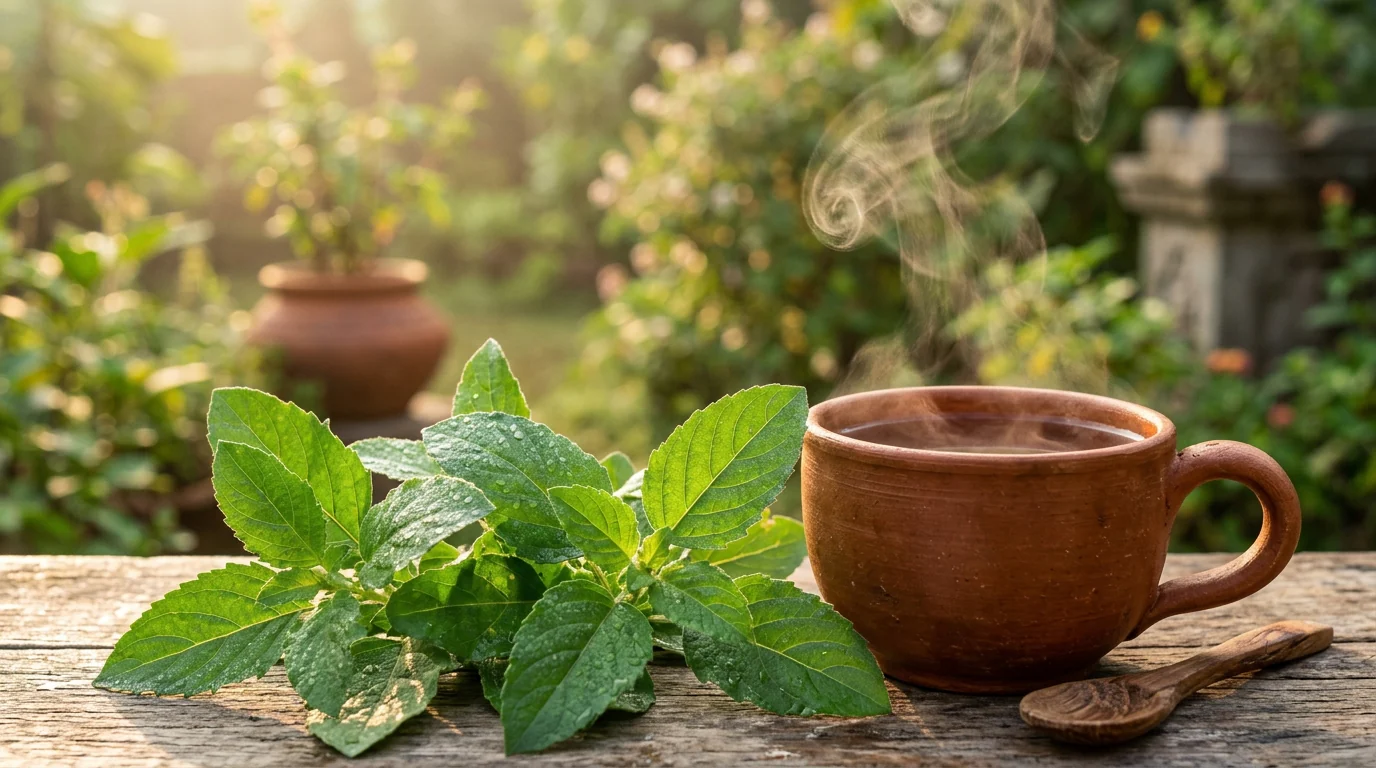
In addition, Tulsi is valued for its ability to support mental and emotional well-being during periods of psychological stress associated with modern living. Regular consumption of Tulsi tea is often compared to the benefits of yoga, as both promote relaxation, resilience, and a balanced state of mind. 3
Tulsi and connection with nature
Beyond its medicinal applications, Tulsi occupies a special place in daily life through its cultivation and reverence in the home. This practice fosters a meaningful connection with nature while supporting principles of ethical, ecological, and sustainable living.
Conclusion
Tulsi exemplifies Ayurveda’s integrated approach to health by addressing physical, metabolic, infective, and psychological stress simultaneously. Through its traditional use as a daily health-promoting herb, Tulsi supports resilience, adaptation, and overall well-being. Its continued relevance highlights the value of Ayurvedic lifestyle practices in addressing the challenges of modern life. 4
References:
1. Bast F, Rani P, Meena D. Chloroplast DNA phylogeography of holy basil (Ocimum tenuiflorum) in Indian subcontinent. ScientificWorldJournal. 2014;2014:847482. Published 2014 Jan 2. doi:10.1155/2014/847482. https://pmc.ncbi.nlm.nih.gov/articles/PMC3910118/
2. Pattanayak P, Behera P, Das D, Panda SK. Ocimum sanctum Linn. A reservoir plant for therapeutic applications: An overview. Pharmacogn Rev. 2010;4(7):95-105. doi:10.4103/0973-7847.65323. https://pmc.ncbi.nlm.nih.gov/articles/PMC3249909/
3. Siddique YH, Ara G, Beg T, Afzal M. Anti-genotoxic effect of Ocimum sanctum L. extract against cyproterone acetate induced genotoxic damage in cultured mammalian cells. Acta Biol Hung. 2007;58(4):397-409. doi:10.1556/ABiol.58.2007.4.7. https://www.akjournals.com/view/journals/018/58/4/article-p397.xml
4. Cohen MM. Tulsi - Ocimum sanctum: A herb for all reasons. J Ayurveda Integr Med. 2014;5(4):251-259. doi:10.4103/0975-9476.146554. https://pmc.ncbi.nlm.nih.gov/articles/PMC4296439/