
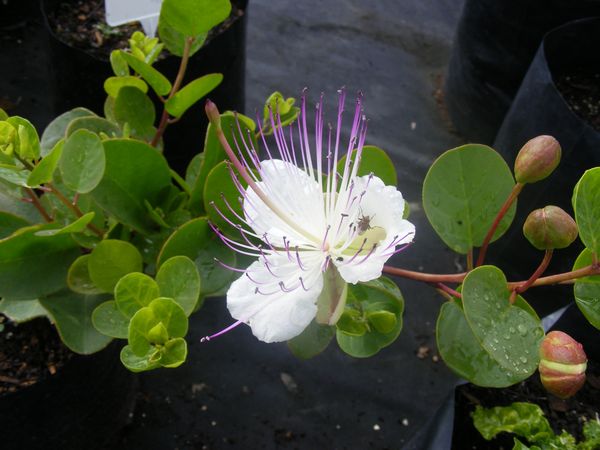
Introduction
Neurodegenerative disorders such as Alzheimer’s disease (AD), Parkinson’s disease, and vascular dementia are increasingly prevalent due to population aging and lifestyle-related metabolic stress. A common pathological hallmark in these conditions is oxidative stress, neuroinflammation, mitochondrial dysfunction, and cholinergic impairment, which collectively lead to progressive neuronal loss and cognitive decline. Medicinal plants rich in polyphenols and flavonoids have gained attention for their neuroprotective potential. Among them, Capparis spinosa L. (caper bush) has emerged as a promising source of neuroactive phytochemicals with antioxidant and anti-inflammatory properties.1
Phytochemical basis of neuroprotection
Capparis spinosa contains a diverse range of bioactive compounds, including flavonoids (quercetin, rutin), phenolic acids, alkaloids, glucosinolates, and carotenoids. These compounds exhibit strong antioxidant activity and play a key role in modulating neuronal signaling pathways. Flavonoids, in particular, are known to cross the blood–brain barrier and exert protective effects on neurons by regulating oxidative balance and synaptic function.
Mechanisms of neuroprotective action
Antioxidant and free radical scavenging activity:
Oxidative stress is a major contributor to neuronal injury. Phytochemicals in caper bush neutralize reactive oxygen species (ROS) and enhance endogenous antioxidant defense systems such as superoxide dismutase, catalase, and glutathione. This helps reduce lipid peroxidation and preserves neuronal membrane integrity.
Modulation of neuroinflammation:
Chronic neuroinflammation mediated by activated microglia plays a central role in neurodegeneration. Extracts of Capparis spinosa have shown the ability to suppress pro-inflammatory mediators such as TNF-α, IL-1β, and nitric oxide, thereby reducing inflammatory damage in the central nervous system.
Enhancement of cognitive function and neurotrophic support
Experimental evidence indicates that Capparis spinosa extract may improve learning and memory by increasing brain-derived neurotrophic factor (BDNF) levels. BDNF is essential for synaptic plasticity, neuronal survival, and cognitive performance. In animal models of memory impairment, caper extract has been shown to reverse cognitive deficits by supporting cholinergic function and neurotrophic signaling.2
Anti-acetylcholinesterase activity:
Cholinergic dysfunction is a key feature of Alzheimer’s disease. Certain phytochemicals in caper bush may inhibit acetylcholinesterase (AChE), leading to increased acetylcholine availability in synaptic clefts. This mechanism supports improved memory and attention processes.
Mitochondrial protection and cellular survival:
Neuronal cells are highly dependent on mitochondrial energy metabolism. Oxidative damage to mitochondria contributes to apoptosis and neurodegeneration. Capparis-derived flavonoids help stabilize mitochondrial function, reduce apoptosis signaling, and enhance neuronal survival under stress conditions.
Clinical and therapeutic relevance
Based on current evidence, Capparis spinosa phytochemicals may have potential applications in:
- Alzheimer’s disease and mild cognitive impairment
- Parkinsonian neurodegeneration
- Age-related cognitive decline
- Stress-induced neurotoxicity
- Neuroinflammatory disorders
Although findings are promising, most evidence remains preclinical, and further clinical trials are required to validate efficacy, safety, and standardized dosing.
Conclusion
Capparis spinosa possesses significant neuroprotective potential due to its rich phytochemical profile, particularly flavonoids and phenolic compounds. Its mechanisms include antioxidant activity, suppression of neuroinflammation, enhancement of neurotrophic factors, and support of cholinergic neurotransmission. These multifaceted actions suggest that caper bush may serve as a valuable natural candidate for the prevention and management of neurodegenerative disorders. Further clinical research is needed to translate these findings into therapeutic applications.3
Reference:
- Mohebali N, Shahzadeh Fazeli SA, Ghafoori H, Farahmand Z, MohammadKhani E, Vakhshiteh F, Ghamarian A, Farhangniya M, Sanati MH. Effect of flavonoids rich extract of Capparis spinosa on inflammatory involved genes in amyloid-beta peptide injected rat model of Alzheimer's disease. Nutr Neurosci. 2018 Feb;21(2):143-150. doi: 10.1080/1028415X.2016.1238026. Epub 2016 Oct 25. PMID: 27778760. https://pubmed.ncbi.nlm.nih.gov/27778760/
- Hosseini M, Mansouritorghabeh F, Beheshti F, Shahidpour F, Forouzanfar F, Rajabian A. Capparis spinosa Promoted BDNF and Antioxidant Enzyme Levels to Protect Against Learning and Memory Deficits Induced by Scopolamine. Cent Nerv Syst Agents Med Chem. 2023;23(2):109-118. doi:10.2174/1871524923666230719121439 https://pubmed.ncbi.nlm.nih.gov/37563815/
- Hosseini M, Mansouritorghabeh F, Beheshti F, Shahidpour F, Forouzanfar F, Rajabian A. Capparis spinosa Promoted BDNF and Antioxidant Enzyme Levels to Protect Against Learning and Memory Deficits Induced by Scopolamine. Cent Nerv Syst Agents Med Chem. 2023;23(2):109-118. doi: 10.2174/1871524923666230719121439. PMID: 37563815. https://pubmed.ncbi.nlm.nih.gov/37563815/