
Introduction
Type 2 diabetes mellitus (T2DM) is a major global health burden characterized by persistent hyperglycemia and associated with long-term microvascular and macrovascular complications, including cardiovascular disease, nephropathy, neuropathy, and retinopathy. Despite advances in pharmacotherapy, including sodium–glucose cotransporter 2 (SGLT2) inhibitors and glucagon-like peptide-1 (GLP-1) receptor agonists, a substantial proportion of patients fail to achieve or sustain optimal glycemic control, underscoring the need for adjunctive and integrative therapeutic approaches such as plant-based supplements and herbal extracts. Phytochemicals have been utilized for millennia for their therapeutic potential and are increasingly recognized for their pleiotropic actions in modulating key pathophysiological processes, including oxidative stress, insulin resistance, and chronic inflammation.1
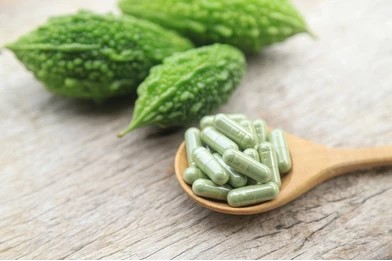
Momordica charantia (bitter melon) is a medicinal plant widely used in traditional systems of medicine for glycemic control. It contains bioactive constituents such as charantin, polypeptide-p, and vicine, which exhibit insulin-like and insulin-sensitizing properties. Phytotherapeutic supplementation with M. charantia has emerged as a potential add-on intervention to improve metabolic outcomes.2
Mechanisms of antidiabetic action
- Enhancement of peripheral glucose uptake:
Momordica charantia enhances glucose utilization in skeletal muscle and adipose tissue by promoting GLUT4 translocation, thereby improving insulin-dependent glucose disposal.
- Insulin secretagogue and beta cell support:
Bioactive peptides in M. charantia stimulate pancreatic β-cell activity and may enhance insulin secretion. Experimental evidence also suggests partial regeneration and preservation of β-cell mass under diabetic conditions.
- Modulation of hepatic glucose metabolism:
The plant reduces hepatic gluconeogenesis and glycogenolysis, contributing to decreased fasting plasma glucose levels.
- Improvement in insulin sensitivity:
Through activation of AMP-activated protein kinase (AMPK) and modulation of adipokines, M. charantia improves systemic insulin sensitivity, particularly in insulin-resistant states.3
- Antioxidant and anti-inflammatory effects:
Oxidative stress and chronic inflammation contribute to insulin resistance. M. charantia exerts antioxidant effects by scavenging reactive oxygen species and enhancing endogenous antioxidant enzymes, thereby improving metabolic efficiency.
Clinical relevance in patients on dual antidiabetic therapy
- Rationale for supplementation:
Patients on dual therapy (e.g., metformin combined with sulfonylureas, DPP-4 inhibitors, or SGLT2 inhibitors) may still exhibit elevated HbA1c levels due to progressive β-cell dysfunction and worsening insulin resistance. M. charantia supplementation may provide complementary mechanisms targeting multiple metabolic pathways.
- Glycemic outcomes:
Clinical and pilot studies have demonstrated modest reductions in fasting plasma glucose and postprandial glucose levels with M. charantia supplementation. Improvements in HbA1c have also been reported in some cohorts, particularly when used as an adjunct to standard therapy.
- Insulin dose optimization:
In insulin-requiring or insulin-augmented regimens, M. charantia may reduce overall insulin demand by enhancing endogenous insulin activity and peripheral glucose utilization.
Safety and tolerability
Momordica charantia is generally well tolerated;4 however, hypoglycemia may occur when combined with conventional antidiabetic drugs, particularly insulin or sulfonylureas. Gastrointestinal discomfort is the most commonly reported adverse effect. Standardization of extracts remains a key limitation in ensuring dose consistency and predictable therapeutic response.
Limitations and considerations
Variability in phytochemical composition, lack of large-scale randomized controlled trials, and potential herb–drug interactions limit its widespread clinical adoption. Further well-designed studies are required to establish optimal dosing, long-term safety, and patient selection criteria.
Conclusion
Phytotherapeutic supplementation with Momordica charantia offers a multi-targeted approach to improving glycemic control in patients with type 2 diabetes exhibiting suboptimal response to dual antidiabetic therapy.5 Its insulin-mimetic, insulinotropic, and insulin-sensitizing actions, combined with antioxidant effects, support its potential as an adjunctive therapy. However, clinical application should be individualized and closely monitored to minimize hypoglycemic risk and ensure therapeutic efficacy.
References:
- Bungãu SG, Popa VC. Between religion and science some aspects concerning illness and healing in antiquity. Transylvanian Review. 2015 Sep 1;24(3):3-18. https://www.researchgate.net/publication/286442576_Between_Religion_and_Science_Some_Aspects_Concerning_Illness_and_Healing_in_Antiquity
- Richter E, Geetha T, Burnett D, Broderick TL, Babu JR. The Effects of Momordica charantia on Type 2 Diabetes Mellitus and Alzheimer's Disease. Int J Mol Sci. 2023;24(5):4643. Published 2023 Feb 28. doi:10.3390/ijms24054643. https://pmc.ncbi.nlm.nih.gov/articles/PMC10002567/
- Hunie Tesfa K, Desalegn Gebeyehu C, Tadele Ewunetie A, et al. The role of AMPK signaling pathway in the pathogenesis of type 2 diabetes mellitus with its complications and related metabolic disorders. Metabol Open. 2025;28:100397. Published 2025 Sep 16. doi:10.1016/j.metop.2025.100397. https://pmc.ncbi.nlm.nih.gov/articles/PMC12492012/
- LiverTox®: Clinical and Research Information on Drug-Induced Liver Injury [Internet]. Bethesda (MD): National Institute of Diabetes and Digestive and Kidney Diseases; 2012-. Bitter Melon. [Updated 2023 Mar 20]. https://www.ncbi.nlm.nih.gov/books/NBK590483/
- Vesa CM, Ghitea TC, Radu A, et al. Phytotherapeutic Supplementation with Momordica charantia: Beneficial Effects in Patients with Suboptimal Glycemic Control on Double Antidiabetic Therapy-A Real-World Evidence Observational Study. Nutrients. 2026;18(2):309. Published 2026 Jan 19. doi:10.3390/nu18020309. https://pmc.ncbi.nlm.nih.gov/articles/PMC12844629/