
Introduction
Constipation is a common functional gastrointestinal disorder characterized by infrequent, difficult, or incomplete evacuation of stool. It is often associated with straining, hard stools, abdominal discomfort, and a persistent sense of incomplete evacuation.1 In Ayurvedic physiology, impaired functioning of Apana Vata is considered central to the pathogenesis of Vibandha, leading to disturbed bowel motility and stool retention. Considering the limitations and side effects associated with long-term use of conventional laxatives, Ayurvedic formulations such as Panchasakara Choorna have gained attention as safe and effective alternatives with multi-targeted gastrointestinal benefits.
Therapeutic rationale
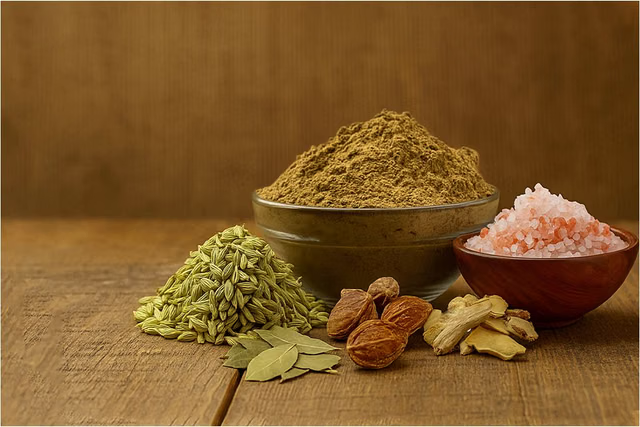
Panchasakara Choorna is a classical polyherbal formulation described in Ayurvedic texts such as Bhaishajya Saara Sangraha and Siddha Yoga Sangraha for the management of Vibandha. It comprises five key ingredients, each contributing synergistically to laxative, carminative, digestive, and anti-spasmodic effects. The formulation is characterized by properties such as Katu (pungent), Tikta (bitter), and Lavana (salty) Rasa; Laghu and Tikshna Guna; Ushna Veerya; and Katu Madhura Vipaka. These attributes collectively support Anulomana (normalization of bowel movement), Rechana (purgation), Deepana (enhancement of digestive fire), and Pachana (improvement of digestion), thereby correcting the underlying functional imbalance in Vibandha.
Pharmacological basis of action
Each constituent of Panchasakara Choorna contributes distinct pharmacodynamic actions:
- Swarnapatri (Cassia angustifolia) acts as a potent Virechaka due to sennosides, which are metabolized to active anthrone derivatives stimulating colonic peristalsis and increasing intestinal secretion. This supports effective bowel evacuation in functional constipation.
- Shunthi (Zingiber officinale) enhances gastrointestinal motility through its Deepana and Paachana properties. It has been shown to reduce gastrointestinal spasm and improve transit time, thereby facilitating stool passage while reducing abdominal discomfort.
- Shatapushpa (Anethum sowa) contributes carminative and antispasmodic actions through volatile oils, which enhance gastric motility, relieve intestinal colic, and improve digestive efficiency.
- Baalaharitaki (Terminalia chebula, unripe fruit) exerts mild laxative effects attributed to chebulinic compounds, promoting bowel regularity and improving intestinal clearance. It also supports detoxification and gut motility regulation.
- Saindhava Lavana (rock salt) functions as an osmotic agent that enhances intestinal fluid retention, softens stool, and stimulates digestive secretions, thereby improving bowel consistency and ease of evacuation.
Clinical evidence and outcomes
In an open-label, single-arm clinical trial involving 30 participants diagnosed with constipation, Panchasakara Choorna was administered at a dose of 3 g once daily at bedtime for two weeks.
- Assessments were conducted on days 0, 7, 14, and 21. Significant clinical improvement was observed in key symptoms, including straining during defecation, sensation of incomplete evacuation, anorectal blockage, and hard lumpy stools.
- Objective stool assessment using the Bristol Stool Scale demonstrated a shift from Type 1–2 stools (indicative of constipation) at baseline to type 3-4 stools (normal stool consistency) post-intervention. Importantly, no progression toward diarrheal stools (type 6-7) was observed, suggesting good tolerability and controlled laxative action without overt purgation.
- At follow-up on day 21, symptom recurrence was not statistically significant, indicating sustained therapeutic benefit. Overall, the formulation demonstrated a significant improvement in bowel habits and gastrointestinal comfort, with P <0.05 across key outcome measures.
Mechanistic interpretation
The observed clinical efficacy can be attributed to the combined actions of stimulant laxation (Cassia angustifolia), prokinetic and carminative effects (Zingiber officinale and Anethum sowa), stool softening and osmotic regulation, and mild herbal purgation with digestive correction (Terminalia chebula). Collectively, these mechanisms restore normal gut motility, reduce colonic stasis, and improve coordination of Apana Vata, thereby addressing the root functional pathology of Vibandha.
Conclusion
Panchasakara Choorna demonstrates significant laxative efficacy in the management of Vibandha (constipation), with clinically meaningful improvement in bowel frequency, stool consistency, and evacuation comfort. Its multimodal action-combining laxative, carminative, and digestive regulatory effects-supports both symptomatic relief and functional restoration of bowel physiology. The formulation appears safe, well-tolerated, and effective for short-term use, with sustained benefits observed during follow-up. These findings support its potential as a promising Ayurvedic intervention for functional constipation, warranting further large-scale and controlled clinical studies for broader validation.2
References:
- Wlodarczyk J, Wasniewska A, Fichna J, et al. Current Overview on Clinical Management of Chronic Constipation. J Clin Med. 2021;10(8):1738. Published 2021 Apr 16. doi:10.3390/jcm10081738 https://pmc.ncbi.nlm.nih.gov/articles/PMC8073140/
- Jain S, Shravana L. A clinical trial to evaluate the laxative effect of Panchasakara Choorna in the management of Vibandha with special reference to constipation. Journal of Ayurveda. 2025 Oct–Dec;19(4):332–338. doi:10.4103/joa.joa_302_23. https://journals.lww.com/joay/fulltext/2025/10000/a_clinical_trial_to_evaluate_the_laxative_effect.5.aspx