
Introduction
Ayurveda is a traditional system of medicine that originated in India over 3,000 years ago and focuses on maintaining balance between the mind, body, and spirit. It emphasizes longevity, disease prevention, and the body's innate healing ability. According to Ayurvedic principles, disease and inflammation arise from imbalances in the Doshas, making diet and lifestyle central components of maintaining health and restoring physiological equilibrium.1
Role of Doshas and diet in health
Within Ayurveda, the three Doshas—Vata, Pitta, and Kapha—exist in unique proportions in every individual. Disturbances in this balance may contribute to various disease processes.
Dietary management is considered a primary strategy for maintaining or re-establishing Dosha balance. Key dietary principles include:
- Consuming freshly prepared warm meals.
- Using herbs and spices to balance foods within a meal.
- Avoiding antagonistic food combinations, such as milk with bananas.
- Eating in a calm, relaxed, and mindful state.
Foods are not categorized as inherently beneficial or harmful; instead, they are viewed according to their capacity to aggravate or pacify specific Doshas based on their characteristics and physiological effects.2
Significance of Pitta Dosha and Ama
Pitta Dosha is regarded as the body's heat energy and plays a central role in digestion and metabolism. It primarily resides in the liver, where it governs Jatharagni (digestive fire) and supports digestion, metabolism, and nutrient absorption.
When Pitta becomes impaired, it may relocate to other tissues and manifest as conditions such as ulcers, skin disorders, and fever. Another important pathological factor in Ayurveda is Ama, which refers to undigested metabolic waste. Impaired digestion can lead to the accumulation of Ama, resulting in disturbance of all three Doshas and contributing to inflammation and disease processes.3
Role of herbs and medicinal formulations
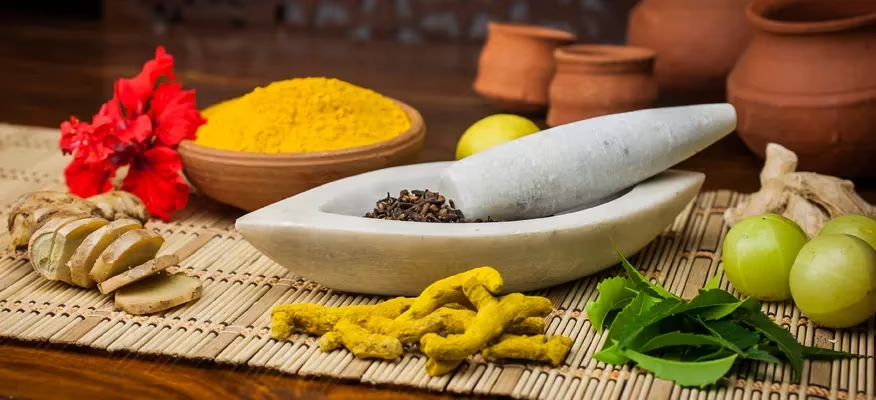
Herbs and spices are integral to Ayurvedic dietary recommendations, serving both nutritional and therapeutic functions.
Examples described in the literature include:
- Ginger, which supports digestion and is traditionally used in conditions such as indigestion, vomiting, cold, and cough.
- Slippery elm, licorice, and Triphala, which have demonstrated significant prebiotic properties and may influence gut microbiota composition.
- Guggulutikthaka Ghrita, which has been used in chronic inflammatory conditions and has shown effects on hyperglycemia, hyperlipidemia, and inflammation.
- Acacia arabica, which is used in gastrointestinal inflammatory conditions such as peptic ulcer disease to help restore mucosal balance.4
Relevance to gastrointestinal inflammatory disorders
Inflammatory disorders of the gastrointestinal tract remain a significant global health concern. Inflammatory bowel disease (IBD) encompasses conditions such as ulcerative colitis and Crohn's disease. Ulcerative colitis is characterized by inflammation and ulceration of the mucosa and submucosa of the large intestine and commonly presents with crypt abscesses in a continuous pattern.
Conclusion
Ayurveda places strong emphasis on digestive health, Dosha balance, and the prevention of Ama accumulation as fundamental components of disease management. Through individualized dietary practices and the use of medicinal herbs and formulations, Ayurvedic approaches offer a comprehensive framework for addressing gastrointestinal inflammation. The growing understanding of diet-herb interactions and their influence on gut health highlights the continued relevance of Ayurvedic principles in gastrointestinal care.5
References:
1. Guha A. Ayurvedic concept of food and nutrition. In: Proceedings of the National Seminar on Ayurveda and Nutrition; University of Connecticut School of Medicine, Farmington, CT. https://digitalcommons.lib.uconn.edu/cgi/viewcontent.cgi?article=1025&context=som_articles#:~:text=Ayurveda%20does%20not%20discriminate%20food,one%27s%20dosha%20and%20physical%20needs
2. Payyappallimana U, Venkatasubramanian P. Exploring Ayurvedic Knowledge on Food and Health for Providing Innovative Solutions to Contemporary Healthcare. Front Public Health. 2016;4:57. Published 2016 Mar 31. doi:10.3389/fpubh.2016.00057. https://pmc.ncbi.nlm.nih.gov/articles/PMC4815005/
3. Wallace RK. Ayurgenomics and Modern Medicine. Medicina (Kaunas). 2020;56(12):661. Published 2020 Nov 30. doi:10.3390/medicina56120661. https://pmc.ncbi.nlm.nih.gov/articles/PMC7760374/
4. Kuna L, Jakab J, Smolic R, Raguz-Lucic N, Vcev A, Smolic M. Peptic Ulcer Disease: A Brief Review of Conventional Therapy and Herbal Treatment Options. J Clin Med. 2019;8(2):179. Published 2019 Feb 3. doi:10.3390/jcm8020179. https://pmc.ncbi.nlm.nih.gov/articles/PMC6406303/
5. Vakiti S, Farriss L, Mehta H, et al. The Efficacy of Ayurvedic Herbs in the Prevention and Treatment of Inflammatory Bowel Disease: A Scoping Review. Cureus. 2025;17(5):e84410. Published 2025 May 19. doi:10.7759/cureus.84410. https://pmc.ncbi.nlm.nih.gov/articles/PMC12176073/#sec3