
Introduction
Medicinal plants have served as a primary source of therapeutics since ancient times and continue to contribute significantly to modern drug discovery. A large proportion of contemporary pharmaceuticals are derived directly or indirectly from plant sources. Phytomedicines are widely used due to their accessibility, affordability, and comparatively lower toxicity, and they remain integral to healthcare systems globally. According to WHO estimates, a substantial proportion of the global population relies on traditional plant-based medicines for primary healthcare.
India is recognized as a major biodiversity hotspot, harboring thousands of medicinal plant species and supporting traditional systems such as Ayurveda, Siddha, and Unani. Ayurveda alone documents hundreds of medicinal plants used for the management of diverse diseases. Similarly, traditional medicine systems in Africa, China, and other regions continue to depend heavily on herbal remedies, highlighting their global relevance.
Eclipta alba: botanical and ethnopharmacological overview
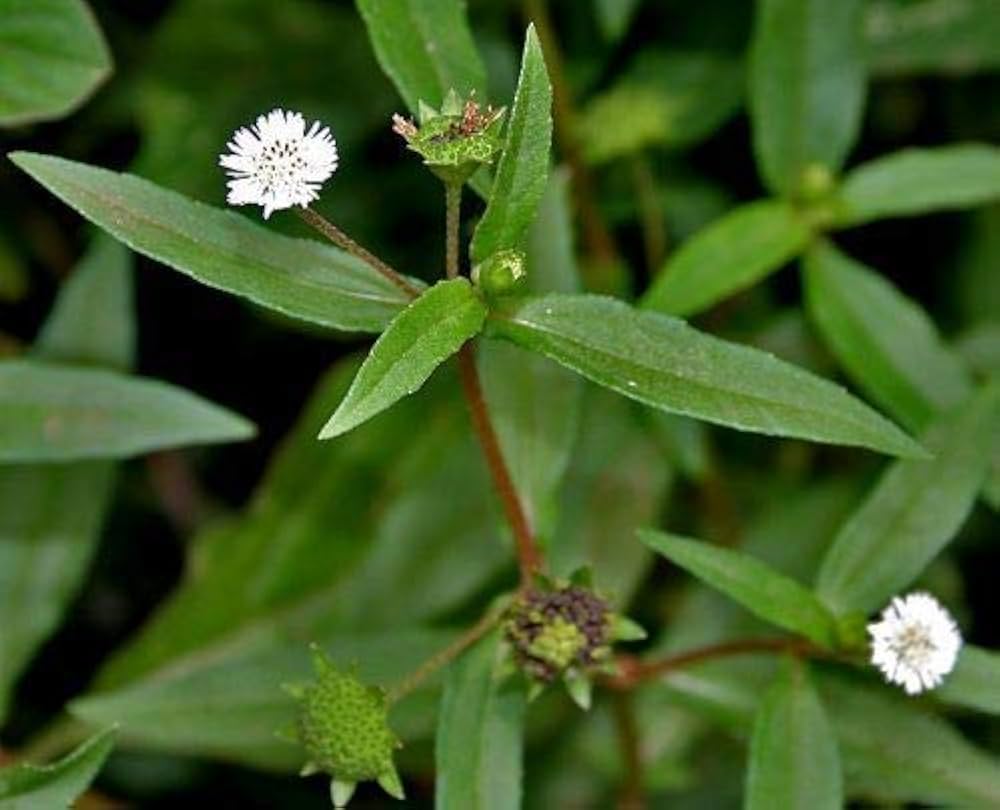
Eclipta alba (L.) Hassk., commonly known as Bhringaraj or False Daisy, belongs to the family Asteraceae. The genus name Eclipta is derived from the Greek word meaning “deficient,” referring to the absence of bristles on the fruit. The plant is widely distributed in tropical and subtropical regions and grows in moist habitats such as riverbanks and marshy areas.
In traditional medicine systems, it is known as Bhringaraj (Ayurveda), Bhangra (Unani), and Karisilanganni (Siddha). Classical Ayurvedic texts such as Bhavaprakasha describe its extensive therapeutic applications. It is traditionally regarded as a potent hepatoprotective and hair growth–promoting agent and is often referred to as the “King of Hair.”
Phytochemical profile
Eclipta alba contains a diverse range of bioactive constituents, including coumestans (wedelolactone, demethylwedelolactone), flavonoids (luteolin-7-O-glucoside), triterpenoids (oleanane and taraxastane derivatives), sterols (stigmasterol), and long-chain alcohols (hentriacontanol, heptacosanol). These phytochemicals contribute to its antioxidant, anti-inflammatory, hepatoprotective, and antimicrobial activities.
Phytochemical composition of Eclipta alba
Eclipta alba (Bhringraj) contains a diverse spectrum of bioactive phytoconstituents responsible for its pharmacological effects, including coumestans, flavonoids, alkaloids, saponins, terpenoids, sterols, phenolic acids, fatty acids, and amino acids.
- Coumestans:
Coumestans are the principal bioactive compounds, mainly wedelolactone and demethylwedelolactone derivatives. These coumestan lactones exhibit significant hepatoprotective, anti-inflammatory, and anticancer potential, largely concentrated in the aerial parts of the plant.
- Alkaloids:
The plant contains several steroidal and heterocyclic alkaloids such as verazine and ecliptalbine derivatives. These compounds contribute to cytoprotective and pharmacological activities, with reported roles in modulating cellular metabolism and oxidative stress.
- Flavonoids:
Key flavonoids include luteolin, apigenin, and their glycosides (e.g., luteolin-7-O-glucoside). These compounds are strong antioxidants and are associated with anti-inflammatory and anticancer activities.
- Saponins:
Triterpenoid saponins such as eclalbatin and eclalbasaponins (oleanane and taraxastane types) contribute to cytotoxic, antiviral, and immunomodulatory effects.
- Sterols:
Phytosterols including stigmasterol, β-sitosterol, and their glycosides are present in seeds and whole plant. These sterols support hormonal regulation and membrane stabilization.
- Terpenoids and glycosides:
Triterpenoids such as oleanolic acid, ursolic acid, α-amyrin, and β-amyrin, along with their glycosides, are widely distributed and contribute to hepatoprotective and anti-inflammatory properties.
- Phenolic acids:
Protocatechuic acid and 4-hydroxybenzoic acid provide antioxidant activity and reduce oxidative stress–mediated cellular damage.
- Sesquiterpene lactones:
Minor constituents include terthienyl derivatives with reported antimicrobial and cytotoxic properties.
- Fatty acids and volatile constituents:
Compounds such as n-hexadecanoic acid, octadecenoic acid derivatives, phytol, and long-chain hydrocarbons contribute to anti-inflammatory and membrane-modulating actions.
- Amino acids and polypeptides:
Essential amino acids including cysteine, glutamic acid, tyrosine, phenylalanine, and methionine support nutritional and metabolic functions.
Overall, the synergistic presence of these phytochemical classes underpins the broad therapeutic potential of Eclipta alba, particularly in hepatoprotection, antioxidation, and anti-inflammatory applications.
Therapeutic properties and traditional uses of Eclipta alba (Bhringraj)
- Dermatological and wound healing effects:
Eclipta alba is traditionally used for wound healing, cuts, ulcers, and inflammatory skin conditions.1 Topical application of its extracts or oil reduces local inflammation, promotes tissue repair, and alleviates pain. It is also widely used in dermatological disorders such as eczema, psoriasis, urticaria, and leprosy due to its anti-inflammatory, antimicrobial, and immunomodulatory properties.
- Neurological and analgesic actions:
The plant exhibits analgesic activity and is used in traditional systems for headache and pain relief. External application of Bhringraj oil on the scalp is reported to provide symptomatic relief in headaches and stress-related discomfort.
- Ophthalmic and otic uses:
In traditional medicine, Eclipta alba is used in ocular and otic formulations to relieve pain and inflammation.2 It is considered beneficial in maintaining ocular health and managing minor eye disorders.
- Gastrointestinal and hepatobiliary effects:
Bhringraj enhances digestive function by improving appetite and supporting gastrointestinal motility. It facilitates detoxification by promoting “ama” clearance and exhibits hepatoprotective and mild anthelmintic activity. Clinically, it is used in anorexia, jaundice, hepatomegaly, splenomegaly, piles, and abdominal discomfort.
- Hematological and metabolic effects:
The plant is traditionally used as a blood purifier and is indicated in anemia. It also promotes sweating and supports metabolic detoxification, contributing to overall systemic cleansing.
- Respiratory system benefits:
Eclipta alba demonstrates expectorant and mucolytic properties, making it useful in cough, cold, and bronchial congestion by facilitating mucus clearance.
- Renal and urinary effects:
It exhibits diuretic activity and is used in urinary tract disorders, particularly burning micturition, by promoting urine output and reducing irritation.
- Reproductive and systemic effects:
The plant is traditionally considered to possess aphrodisiac properties and is used as a general rejuvenative agent to enhance vitality and physical strength.
- Antipyretic and detoxifying action:
Due to its sudorific (sweat-inducing) and detoxifying properties, Eclipta alba is used in fever management and systemic cleansing, helping to reduce body temperature and eliminate toxins.
Overall, Eclipta alba demonstrates multi-system therapeutic actions supported by traditional Ayurvedic usage and modern pharmacological studies, particularly in hepatic, dermatological, and regenerative health applications.
Pharmacological and therapeutic activities of Eclipta alba (Bhringraj)
- Hepatoprotective activity:
Multiple experimental studies have confirmed the hepatoprotective potential of Eclipta alba. Alcoholic and hydroalcoholic extracts (62.5–500 mg/kg) significantly reverse carbon tetrachloride (CCl₄)- and paracetamol-induced hepatotoxicity in animal models. The effect is attributed to coumestans (wedelolactone, demethylwedelolactone) and saponins, which reduce lipid accumulation, inflammation, and necrotic changes while promoting hepatocyte regeneration and restoring serum biochemical markers and protein levels.
- Hair growth–promoting activity:
Topical application of petroleum ether and methanolic extracts enhances hair follicle proliferation and induces follicular hypertrophy in animal models. Increased keratinocyte activity and follicular density support its traditional use in alopecia, premature greying, and hair loss disorders.
- Anticancer activity:
In vitro studies using HepG2, C6 glioma, and A498 cell lines demonstrate that hydroalcoholic extracts inhibit cancer cell proliferation and induce cytotoxic effects, indicating potential anticancer activity.
- Antimicrobial and antioxidant activity:
Extracts of E. alba exhibit broad-spectrum antibacterial activity against both Gram-positive and Gram-negative pathogens, including E. coli, S. aureus, and P. aeruginosa. Alkaloid- and flavonoid-rich fractions contribute to antimicrobial effects. Additionally, significant antioxidant activity has been reported across solvent extracts, correlating with free radical scavenging capacity.
- Antiviral activity:
Hydroalcoholic extracts inhibit hepatitis C virus (HCV) RNA-dependent RNA polymerase, suppressing viral replication in vitro and indicating potential antiviral applications.
- Neuroprotective and memory-enhancing effects:
Preclinical studies show that E. alba improves learning and memory performance in behavioral models such as the elevated plus maze, suggesting neurocognitive benefits.
- Immunomodulatory activity:
Coumestan derivatives such as wedelolactone exhibit trypsin-inhibitory activity and immune regulatory effects, supporting immunomodulatory potential.
- Antistress and adaptogenic effects:
Experimental models indicate that E. alba reduces stress-induced biochemical alterations and improves stress tolerance, supporting its adaptogenic properties.
Conclusion
Eclipta alba (Bhringraj) is a widely used medicinal herb in traditional systems of medicine, valued for its broad therapeutic potential. It is particularly recognized for promoting hair growth and improving hair strength, supporting its extensive use in alopecia and related disorders. The plant contains diverse bioactive phytoconstituents, including coumestans, saponins, and alkaloids, which contribute to its reported pharmacological activities such as hepatoprotective, antimicrobial, antiviral, anti-stress, and immunomodulatory effects.
Traditionally, E. alba is employed across various ethnomedicinal systems, including Ayurveda, for the management of conditions such as jaundice, leprosy, eczema, psoriasis, elephantiasis, anorexia, piles, respiratory disorders, and splenomegaly. It is also consumed as a leafy vegetable in certain cultures, highlighting its nutritional relevance.
Overall, E. alba represents a pharmacologically important medicinal plant with multi-target therapeutic actions and holds significant potential as a source for future drug development.3
References:
- Jahan R, Al-Nahain A, Majumder S, Rahmatullah M. Ethnopharmacological Significance of Eclipta alba (L.) Hassk. (Asteraceae). Int Sch Res Notices. 2014;2014:385969. Published 2014 Oct 29. doi:10.1155/2014/385969. https://pmc.ncbi.nlm.nih.gov/articles/PMC4897414/
- Dudhat K, Wanjari A, Tajane Y, Khanke S. Antioxidant Effects of E. alba: A Narrative Review. J Pharm Bioallied Sci. 2024;16(Suppl 4):S4060-S4063. doi:10.4103/jpbs.jpbs_1389_24. https://pmc.ncbi.nlm.nih.gov/articles/PMC11805063/
- Kumari I, Kaurav H, Chaudhary GI. Eclipta alba (bhringraj): A promising hepatoprotective and hair growth stimulating herb. Asian Journal of Pharmaceutical and Clinical Research. 2021 May 31;14(7):16-23. https://www.researchgate.net/publication/353135492_ECLIPTA_ALBA_BHRINGRAJ_A_PROMISING_HEPATOPROTECTIVE_AND_HAIR_GROWTH_STIMULATING_HERB