
Introduction
Low back pain is a common symptom characterized by pain between the lower ribs and the gluteal folds. It may result from disorders affecting muscles, nerve roots, bones, joints, intervertebral discs, and abdominal organs. When pain persists for more than three months, it is considered chronic low back pain. The condition is becoming increasingly prevalent worldwide and is associated with smoking, obesity, sedentary occupations, and low socioeconomic status.
Ayurvedic perspective of low back pain
In Ayurveda, low back pain is described as Kati Soola and is considered one of the most common manifestations of musculoskeletal disorders.
Key Ayurvedic concepts include:
- Aggravation of Vata Dosha as the primary pathogenic factor
- Involvement of the musculoskeletal system due to Vata activation
- Role of the Shleshmadhara Kala in lubricating the vertebral joints
- Reduction in the lubricating function of Shleshaka Kapha leading to discomfort and restricted movement
- Dhatu Kshaya as an important contributor to Vata Prakopa and disease progression.
Clinical burden of chronic low back pain
Chronic low back pain represents a major public health concern.
Important observations include:
- Annual recurrence rates ranging from 20% to 44%
- Lifetime recurrence rates reaching up to 85%
- Increasing prevalence due to aging and expansion of the global population 1, 2
Role of yoga in chronic low back pain
Yoga has demonstrated therapeutic benefits in individuals with persistent low back pain.
Reported benefits include:
- Improved spinal flexibility
- Enhanced spinal strength
- Better physical performance
- Reduction in pain and disability
Evidence suggests that yoga may be more effective than physical therapy in improving therapeutic outcomes in chronic low back pain.
Kati Basti in low back pain management
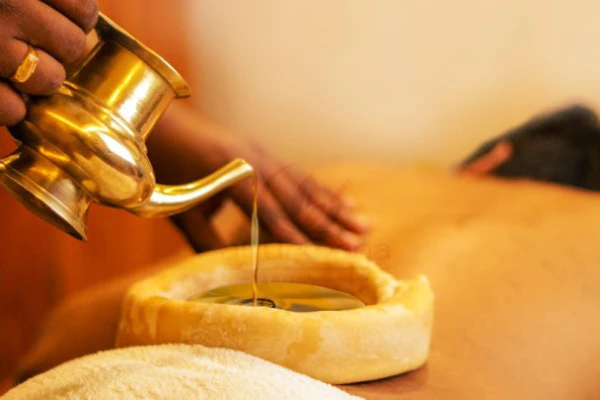
Kati Basti is a commonly used Ayurvedic intervention for musculoskeletal disorders and is considered a form of Snigdha Sveda involving synchronized Snehana and Svedana.
Its therapeutic actions include:
- Promotion of perspiration
- Elimination of Mala Dravya
- Provision of Snigdhata and Brimhana
- Local balancing of aggravated Vata Dosha
The therapy is particularly relevant in conditions associated with:
- Intervertebral disc degeneration
- Inflammation
- Irritation
- Compression
- Reduced Shleshaka Kapha lubricating function
Therapeutic relevance of Ksheerabala Taila
Ksheerabala Taila is frequently used in combination with Kati Basti for low back pain management.
The formulation contains:
- Cow milk
- Sesame oil
- Bala (Sida cordifolia)
Traditionally, it has been used in conditions such as:
- Hemiplegia
- Poliomyelitis
- Facial paralysis
- Sciatica
The formulation is referenced in Sahasrayogam, Charaka, and Ashtanga Hridaya.3
Future perspective
Research supports the beneficial effects of both yoga and Kati Basti in chronic low back pain. A randomized controlled trial demonstrated improvements in:
- Pain
- Disability
- Depression
- Physical performance
following both a residential yoga program and a yoga program combined with Kati Basti. These findings suggest that integrating Ayurvedic therapies with yoga may further enhance therapeutic effectiveness through complementary mechanisms of action.
Conclusion
Low back pain remains a common and recurrent musculoskeletal condition with significant functional impact. Ayurveda approaches the condition through correction of Vata imbalance and restoration of normal spinal function. Current evidence supports the use of Kati Basti and yoga in chronic low back pain, and their combined application may offer a promising integrative approach for long-term management.4
1. Dionne CE, Dunn KM, Croft PR, et al. A consensus approach toward the standardization of back pain definitions for use in prevalence studies. Spine (Phila Pa 1976). 2008;33(1):95-103. doi:10.1097/BRS.0b013e31815e7f94. https://journals.lww.com/spinejournal/abstract/2008/01010/a_consensus_approach_toward_the_standardization_of.16.aspx
2. Besen E, Young AE, Shaw WS. Returning to work following low back pain: towards a model of individual psychosocial factors. J Occup Rehabil. 2015;25(1):25-37. doi:10.1007/s10926-014-9522-9. https://pmc.ncbi.nlm.nih.gov/articles/PMC4333236/
3. Rao VN, Shankar T, Dixit SK, Ray AB. Standardisation of ksheerabala taila. Anc Sci Life. 1996;16(1):21-25. https://pmc.ncbi.nlm.nih.gov/articles/PMC3331133/
4. Bhatta M, Patil SS, Yadav SS, Somanadhapai S, Thapa R. Effects of yoga and add on Ayurvedic Kati Basti therapy for patients with chronic low back pain: A randomized controlled trial. J Ayurveda Integr Med. 2024;15(4):101030. doi:10.1016/j.jaim.2024.101030. https://pmc.ncbi.nlm.nih.gov/articles/PMC11388008/#sec3