
Introduction
Amavata is one of the most common chronic inflammatory joint disorders described in Ayurveda and is characterised by painful, swollen, and stiff joints due to the formation and accumulation of Ama in the body. It was first explained by Madhavakara.
Amavata is primarily associated with dushti or prakopa of Ama along with vitiation of Vata dosha and is often correlated with rheumatoid arthritis (RA) in modern medicine due to similarities in chronic inflammatory and systemic joint involvement. In advanced stages, it may be associated with muscle atrophy and osteoporosis.
Rheumatoid arthritis is a leading cause of disability and remains a major clinical challenge in both modern and Ayurvedic systems of medicine.1
Ayurvedic understanding of Amavata
Amavata develops due to long-term impairment of Agni (Mandagni), leading to formation of Ama. This Ama combines with vitiated Vata and enters the joints, resulting in pain, stiffness, and swelling. This pathological state is described as Amavata in Ayurveda.
Modern medical perspective of rheumatoid arthritis
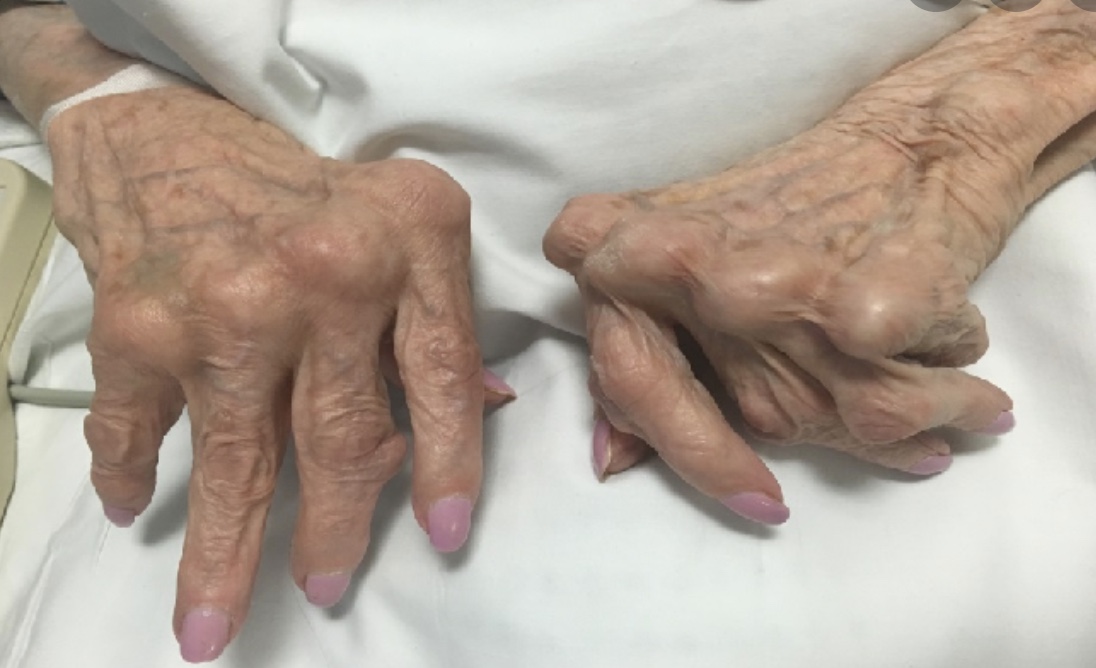
Rheumatoid arthritis is an autoimmune chronic inflammatory disorder in which the immune system fails to recognize self-antigens and attacks joint structures.
It is characterised by:
- Predominant involvement of peripheral joints
- Symmetrical joint distribution
- Progressive synovial inflammation leading to cartilage and bone destruction
- Synovial invasion as a key feature of disease progression.
Epidemiology and clinical burden
In India, the prevalence of rheumatoid arthritis is estimated at approximately 0.7%. The disease most commonly begins in middle age, and women are affected approximately 2.3 times more frequently than men. RA remains a significant cause of long-term disability globally.2
Clinical features and progression
Clinical features include prolonged morning stiffness, joint pain, swelling, and symmetrical arthritis.
With progression, the disease may show:
- Extra-articular involvement such as lung complications
- Structural deformities including swan neck deformity, boutonnière deformity, ulnar deviation, zig-zag deformity, and piano key deformity
- Variable disease course ranging from slow progression to rapidly erosive arthritis
These changes often result in significant functional disability.
Limitations of conventional treatment
Conventional management includes NSAIDs, glucocorticoids, DMARDs, and biological agents.
Although these treatments reduce inflammation and improve symptoms, they have limitations:
- No complete cure
- Gastrointestinal, hepatic, renal, neural, and bone marrow toxicity
- Suboptimal long-term disease control in progressive cases.
Ayurvedic and integrative treatment approach
Management focuses on correction of Agni and reduction of Ama formation.
Core therapeutic principles include:
- Langhana (fasting)
- Swedana (sudation)
- Tikta and Katu rasa drugs
- Deepana (digestive stimulation)
- Virechana (purgation therapy)
- Basti (medicated enema therapy)
Common formulations used include Simhanada Guggulu, Rasnasaptaka Kwatha, Vata Gajankusha Rasa, Brihat Vata Chintamani, and Amavatari Rasa, traditionally used for their anti-inflammatory and disease-modifying effects.
Conclusion
Amavata and rheumatoid arthritis represent closely related chronic inflammatory joint disorders with progressive disability. While modern therapies provide symptomatic relief, their limitations restrict long-term outcomes. Ayurveda offers a complementary approach focused on metabolic correction and systemic detoxification, and integrative strategies may provide improved long-term management options.3
1. Shetty AJ, Rashmi R. Literature review of Amavata with respect to rheumatoid arthritis. AYURPUB (International Ayurveda Publications). 2024;9(1):2427-2430. https://www.ayurpub.com/wp-content/uploads/2024/02/2427-2430.pdf
2. Kumawat A, Jaiswal RT, Ram M. A literature review of Amavata and its management through Ayurveda. J Ayurveda Integr Med Sci. 2024;9(7). https://jaims.in/jaims/article/view/3523/5359
3. Kanojia A, Mishra AK, Pedhekar SR. Clinical and therapeutic approaches to Amavata: an integrative review with special reference to rheumatoid arthritis. Int J Ayurvedic Herb Med. 2025;15(2):4880-4889. doi:10.47191/ijahm/v15i2.18. https://www.interscience.org.uk/images/article/v15-i2/18ijahm.pdf