
Introduction
Psychological stress has become a major health burden in modern society, contributing to anxiety disorders, mood instability, cognitive impairment, sleep disturbances, and metabolic dysfunction. Chronic stress activates the hypothalamic–pituitary–adrenal (HPA) axis, resulting in prolonged cortisol elevation and disruption of neuroendocrine homeostasis. These changes negatively influence emotional regulation, immune balance, and cognitive performance.
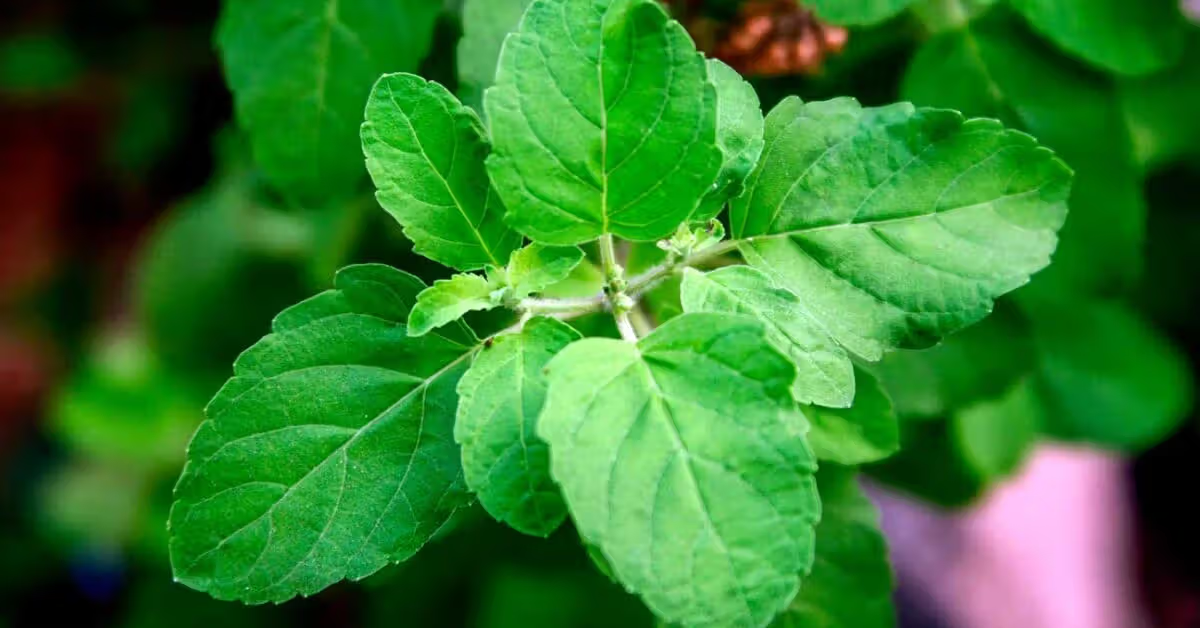
In Ayurveda, stress-related disorders are primarily associated with aggravated Vata and Pitta Dosha, increased Rajas, and reduced Ojas, leading to mental instability and reduced resilience. Tulsi (Ocimum sanctum / Ocimum tenuiflorum) is a classical Rasayana and adaptogenic herb widely used for promoting mental calmness, emotional stability, and systemic balance.1
Ayurvedic perspective of tulsi
In Ayurvedic texts, Tulsi is described as a sacred herb with Ushna Virya (hot potency) and Katu-Tikta Rasa (pungent-bitter taste). It is traditionally used to support both physical and mental health, particularly in conditions involving stress, respiratory disorders, and metabolic imbalance.
From a psychological perspective, Tulsi is considered beneficial because it:
- Pacifies aggravated Vata, reducing restlessness and anxiety
- Helps regulate Pitta, supporting emotional control and reducing irritability
- Enhances Sattva guna, promoting clarity and mental stability
- Supports Ojas, improving resilience to stress
These properties make it a key herb in Ayurvedic lifestyle-based stress management.
Psychological stress and emotional well-being
Chronic psychological stress disrupts emotional processing through neuroendocrine and neurochemical pathways. Elevated cortisol levels affect limbic system functioning, leading to:
- Increased anxiety and worry
- Emotional reactivity and mood swings
- Reduced stress tolerance
- Sleep disturbances and fatigue
- Cognitive slowing and poor concentration
Tulsi is traditionally used to counter these effects by promoting mental equilibrium and emotional grounding.
Effects on neuroendocrine balance
The neuroendocrine system plays a central role in stress adaptation. Dysregulation of the HPA axis leads to sustained hormonal imbalance, affecting both brain function and systemic physiology.2
Tulsi is conceptually understood to support neuroendocrine balance through:
Modulation of stress response pathways:
Tulsi helps normalize exaggerated stress responses by supporting adaptive regulation of the HPA axis, thereby reducing excessive physiological arousal.
Regulation of cortisol dynamics:
It is associated with improved balance of stress hormones, helping prevent prolonged cortisol elevation that contributes to anxiety and fatigue.
Support of neurotransmitter stability:
Tulsi influences neurotransmitter systems involved in mood regulation, including pathways associated with relaxation, attention, and emotional stability.
Reduction of oxidative and inflammatory stress:
Chronic psychological stress increases oxidative load and inflammatory signaling. Tulsi supports antioxidant defense mechanisms, contributing to neuronal and systemic protection.
Restoration of emotional homeostasis:
By improving stress adaptability, Tulsi supports emotional regulation, reducing overreaction to stressors and enhancing psychological resilience.
Emotional well-being and cognitive effects
Tulsi is widely regarded as a “mind-calming adaptogen” that supports emotional well-being without causing sedation. Its effects are traditionally described as:
- Promoting calm alertness
- Enhancing mood stability
- Supporting mental clarity and focus
- Reducing nervous tension
- Improving stress coping capacity
These effects make it suitable for individuals experiencing chronic stress, emotional exhaustion, or lifestyle-related mental fatigue.
Clinical relevance
Tulsi may be considered as a supportive intervention in:
- Chronic psychological stress3
- Anxiety and emotional instability
- Stress-related sleep disturbances
- Mild depressive symptoms
- Cognitive fatigue associated with stress
It is best used as part of a holistic approach that includes lifestyle regulation, dietary balance, and stress management practices.
Conclusion
Tulsi (Ocimum sanctum) is a significant Ayurvedic Rasayana herb with important implications in psychological stress management and neuroendocrine balance.4 Classical Ayurvedic concepts emphasize its role in promoting emotional stability, mental clarity, and systemic resilience. Contemporary scientific understanding supports its adaptogenic, neuroprotective, and stress-modulating properties. Together, these perspectives highlight Tulsi as a valuable natural agent for improving emotional well-being and restoring stress-related neuroendocrine imbalance.
Reference:
- Cohen MM. Tulsi - Ocimum sanctum: A herb for all reasons. J Ayurveda Integr Med. 2014;5(4):251-259. doi:10.4103/0975-9476.146554 https://pmc.ncbi.nlm.nih.gov/articles/PMC4296439/
- Bhattarai K, Bhattarai R, Pandey RD, Paudel B, Bhattarai HD. A Comprehensive Review of the Phytochemical Constituents and Bioactivities of Ocimum tenuiflorum. ScientificWorldJournal. 2024;2024:8895039. Published 2024 Oct 22. doi:10.1155/2024/8895039 https://pmc.ncbi.nlm.nih.gov/articles/PMC11521583/
- Jamshidi N, Cohen MM. The Clinical Efficacy and Safety of Tulsi in Humans: A Systematic Review of the Literature. Evid Based Complement Alternat Med. 2017;2017:9217567. doi:10.1155/2017/9217567 https://pmc.ncbi.nlm.nih.gov/articles/PMC5376420/
- Vasincu A, Rusu RN, Ababei DC, et al. The Neuroprotective Potential of Ocimum Plant Species: Seasoning the Mind with Sweet and Holy Basil. Nutrients. 2025;17(17):2877. Published 2025 Sep 5. doi:10.3390/nu17172877 https://pmc.ncbi.nlm.nih.gov/articles/PMC12430141/