
Introduction
Vitex negundo, commonly known as Nirgundi or the five-leaved chaste tree, is a tall, aromatic shrub belonging to the Lamiaceae family. It is widely distributed across the Indian subcontinent and is indigenous to parts of Asia as well as Eastern and Southern Africa. Recognised in traditional medicine systems across South and Southeast Asia, the plant has been used extensively for diverse therapeutic applications.
Botanical characteristics and distribution
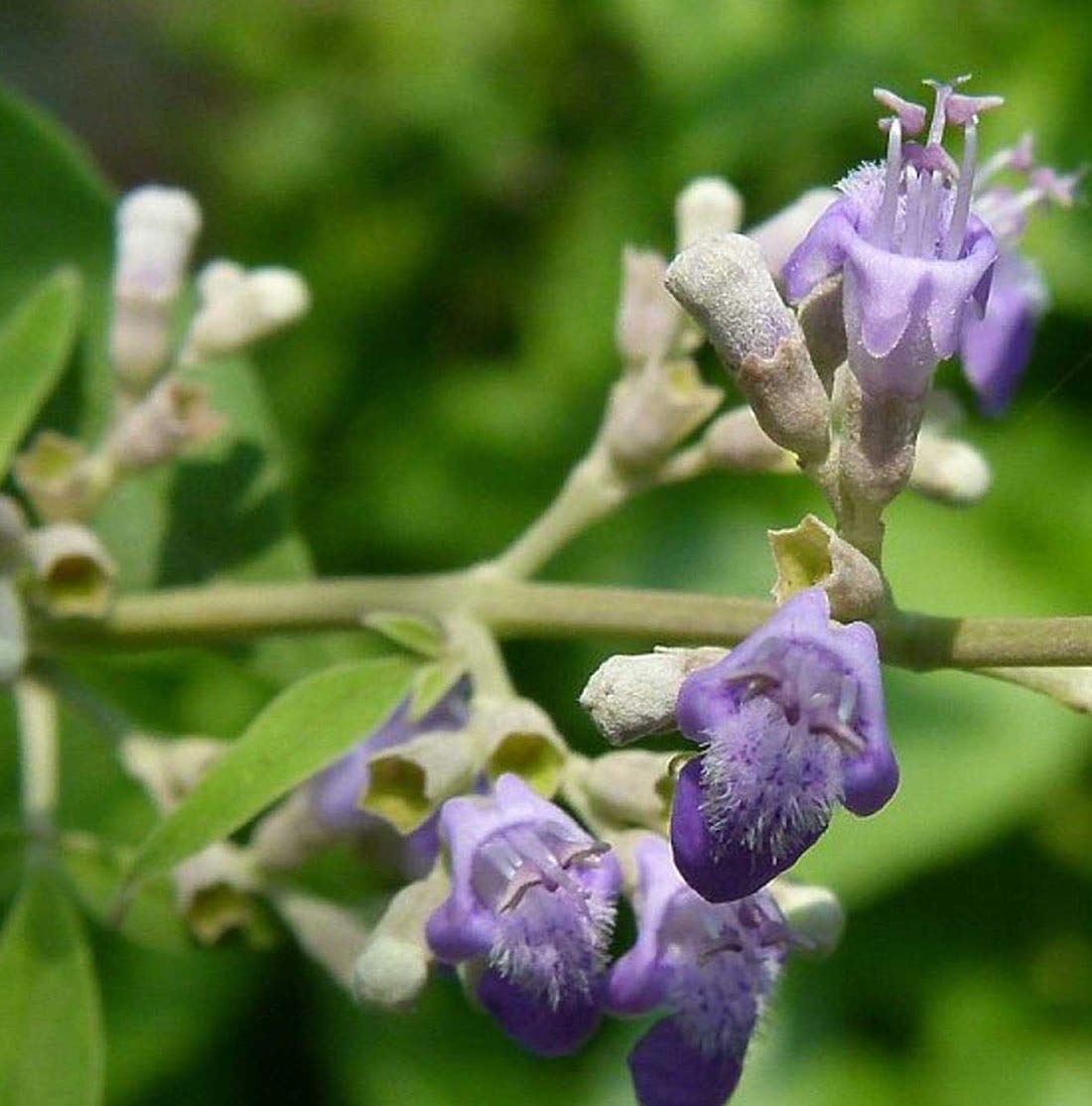
- Vitex negundo is a woody, fragrant shrub with dense, four-sided tomentose branches
- It is identified by light purple flowers arranged in panicle inflorescences
- Common names include horseshoe Vitex, Chinese chaste tree, and five-leaved chaste tree
- The plant is widely distributed across the Indian subcontinent and other tropical regions
- Medicinally, various parts such as fruits, leaves, stalks, seeds, flowers, vegetables, cereals, and nuts are utilised.1
Phytochemical composition and bioactive relevance
- The plant is rich in multiple secondary metabolites distributed across all parts, from root to fruit
- Flavonoids are the primary bioactive compounds identified in Vitex negundo
- These flavonoids are utilised in skincare products, cosmetics, natural colouring agents, and anti-wrinkle formulations
- Their natural origin, affordability, and ease of application support their use as therapeutic agents.2
Therapeutic properties and biological actions
- Flavonoid-rich extracts demonstrate anti-inflammatory activity, potentially reducing disease burden associated with inflammatory conditions
- The plant has been traditionally used in the management of multiple disorders, including cancer
- Reported properties include anti-cancer potential and blood pressure-lowering effects
- Hypertension is clinically relevant due to its association with increased risk of cardiovascular disease, a leading global cause of mortality.3
Anticancer potential and pharmacological considerations
- Flavonoids in Vitex negundo are associated with anti-cancer activity and multi-targeted biological effects
- Their mechanism may involve interaction with multiple signalling pathways when used in combination
- However, limitations such as poor bioavailability, rapid metabolism, non-targeted delivery, and potential impact on healthy cells restrict full clinical translation
- A combined flavonoid approach has been suggested to enhance anticancer efficacy through synergistic mechanisms
Conclusion
Vitex negundo represents a phytochemically rich medicinal shrub with significant traditional and emerging therapeutic relevance. Its flavonoid content underpins anti-inflammatory, antihypertensive, and anticancer properties. Despite promising biological activity, pharmacokinetic limitations restrict its full clinical potential. Further refinement in formulation strategies, including combination-based approaches, may enhance its therapeutic applicability in integrative and evidence-informed practice.4
References:
1. Roy A, Khan A, Ahmad I, et al. Flavonoids a Bioactive Compound from Medicinal Plants and Its Therapeutic Applications. Biomed Res Int. 2022;2022:5445291. Published 2022 Jun 6. doi:10.1155/2022/5445291. https://pmc.ncbi.nlm.nih.gov/articles/PMC9192232/
2. Carrillo-Martinez EJ, Flores-Hernández FY, Salazar-Montes AM, Nario-Chaidez HF, Hernández-Ortega LD. Quercetin, a Flavonoid with Great Pharmacological Capacity. Molecules. 2024;29(5):1000. Published 2024 Feb 25. doi:10.3390/molecules29051000. https://pmc.ncbi.nlm.nih.gov/articles/PMC10935205/
3. James A, Wang K, Wang Y. Therapeutic Activity of Green Tea Epigallocatechin-3-Gallate on Metabolic Diseases and Non-Alcoholic Fatty Liver Diseases: The Current Updates. Nutrients. 2023;15(13):3022. Published 2023 Jul 3. doi:10.3390/nu15133022. https://pmc.ncbi.nlm.nih.gov/articles/PMC10346988/
4. Garg G, Chaudhary S, Khatana K, Bharadwaj A. Flavonoids extract from Vitex negundo inhibit autophagy by targeting PI3K/AKT/mTOR/p70S6K/ULK signaling cascade in cancerous cells. World J Exp Med. 2025;15(3):104678. Published 2025 Sep 20. doi:10.5493/wjem.v15.i3.104678. https://pmc.ncbi.nlm.nih.gov/articles/PMC12781703/