
Introduction
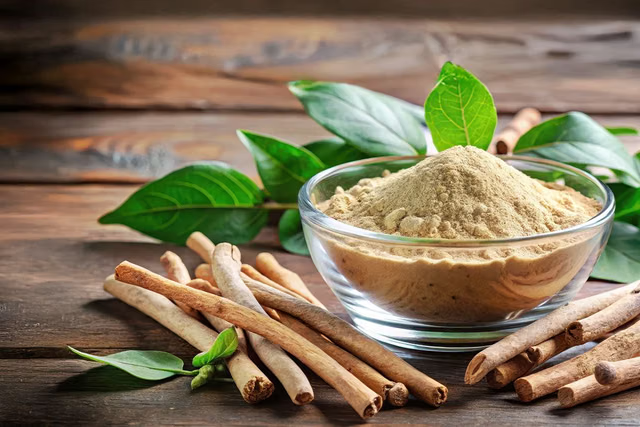
Ashwagandha (Withania somnifera), commonly known as Indian ginseng or winter cherry, is one of the most important medicinal herbs in Ayurveda. Classified as a Rasayana (rejuvenating herb), Ashwagandha has been traditionally used to promote physical vitality, mental well-being, and resilience to stress.1 In recent years, its anxiolytic (anti-anxiety) potential has gained significant attention due to increasing interest in natural approaches to stress and anxiety management.
Ayurvedic perspective
According to Ayurveda, anxiety is often associated with an imbalance of Vata Dosha, which governs the nervous system, movement, and mental activity.2 Excessive Vata may manifest as nervousness, restlessness, insomnia, fear, and excessive worrying. Ashwagandha is considered a balancing herb that helps stabilize Vata while nourishing the body and mind. Its Medhya Rasayana properties support cognitive function, emotional stability, and mental clarity.
Mechanism of action
Modern research suggests that Ashwagandha exerts its anxiolytic effects through multiple pathways. The herb contains bioactive compounds known as withanolides, which may help regulate the body's stress response. Ashwagandha is recognized as an adaptogen, meaning it enhances the body's ability to cope with physical and psychological stress. Studies indicate that it may reduce cortisol levels, improve neurotransmitter balance, and modulate the hypothalamic-pituitary-adrenal (HPA) axis, thereby contributing to reduced anxiety and improved emotional well-being.
Clinical evidence
Several clinical studies have demonstrated the effectiveness of Ashwagandha in reducing symptoms of stress and anxiety. Participants receiving standardized Ashwagandha extracts have reported significant improvements in perceived stress, anxiety scores, sleep quality, and overall quality of life. Research also suggests that Ashwagandha may be beneficial for individuals experiencing generalized stress, work-related anxiety, and mild to moderate anxiety disorders. While results are promising, larger and long-term studies are needed to establish standardized treatment guidelines.
Ayurvedic applications
In Ayurvedic practice, Ashwagandha is commonly administered as a powder (churna), tablet, capsule, or medicated formulation. It is often combined with milk, ghee, or other herbal preparations to enhance absorption and therapeutic effects. The herb is frequently recommended for individuals experiencing chronic stress, fatigue, insomnia, nervous exhaustion, and anxiety-related symptoms. Its rejuvenating action not only supports mental health but also promotes physical strength and immune function.
Safety and precautions
Ashwagandha is generally well tolerated when used in recommended doses. Mild side effects such as gastrointestinal discomfort, nausea, or drowsiness may occur in some individuals. Pregnant women, individuals with autoimmune disorders, and those taking sedatives or thyroid medications should consult a healthcare professional before using Ashwagandha. It should not replace prescribed medical treatment for severe anxiety disorders without professional supervision.3
Conclusion
Ashwagandha represents a valuable Ayurvedic intervention for managing anxiety and stress. Through its adaptogenic, neuroprotective, and rejuvenating properties, it offers a holistic approach to supporting mental health. Integrating traditional Ayurvedic wisdom with contemporary clinical evidence highlights Ashwagandha's potential as a complementary option for anxiety management and overall well-being.4
References:
- Dawane J, Seok S, Dhande P, et al. Evaluation of the Anxiolytic and Antidepressant Effects of Standardized Ashwagandha (Withania somnifera) Root Extract in Wistar Rats. Prev Nutr Food Sci. 2024;29(4):414-421. doi:10.3746/pnf.2024.29.4.414 https://pmc.ncbi.nlm.nih.gov/articles/PMC11699580/
- Arumugam V, Vijayakumar V, Balakrishnan A, et al. Effects of Ashwagandha (Withania Somnifera) on stress and anxiety: A systematic review and meta-analysis. Explore (NY). 2024;20(6):103062. doi:10.1016/j.explore.2024.103062 https://pubmed.ncbi.nlm.nih.gov/39348746/
- Fatima K, Malik J, Muskan F, et al. Safety and efficacy of Withania somnifera for anxiety and insomnia: Systematic review and meta-analysis. Hum Psychopharmacol. 2024;39(6):e2911. doi:10.1002/hup.2911 https://pubmed.ncbi.nlm.nih.gov/39083548/
- Akhgarjand C, Asoudeh F, Bagheri A, et al. Does Ashwagandha supplementation have a beneficial effect on the management of anxiety and stress? A systematic review and meta-analysis of randomized controlled trials. Phytother Res. 2022;36(11):4115-4124. doi:10.1002/ptr.7598 https://pubmed.ncbi.nlm.nih.gov/36017529/