
Introduction
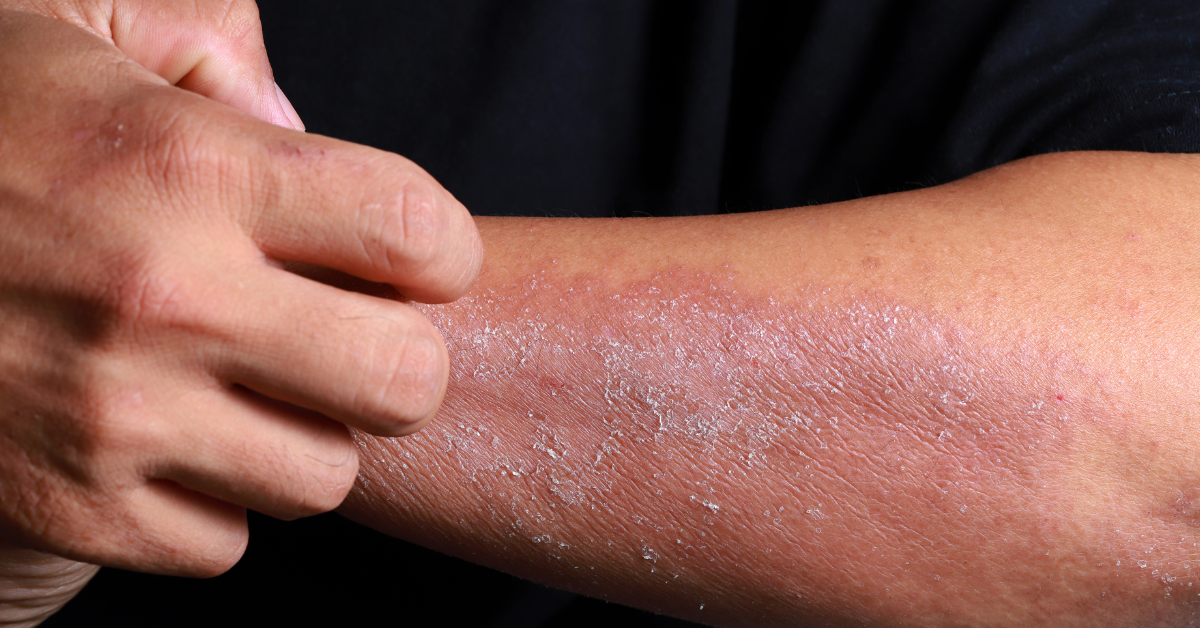
Vicharchika is classified as one of the Kshudra Kushthas and is considered a manifestation of Rakta Pradoshaja Vikaras, indicating involvement of blood vitiation in its pathogenesis. Clinically, it aligns with eczema, a chronic inflammatory skin disorder characterized by persistent or recurrent rashes with a tendency for exacerbations and remission. Due to its chronic and recurrent nature, complete management requires strategies aimed at both disease control and prevention of recurrence.
Disease nature and therapeutic considerations
Being a subtype of Kushtha, Vicharchika often follows a prolonged clinical course with frequent relapses. This necessitates a comprehensive therapeutic approach that not only addresses symptomatic relief but also focuses on eradication of the underlying pathological factors. In this context, repeated Shodhana (bio-purification) is identified as a primary therapeutic principle to eliminate disease from its root level.
Among the various Panchakarma modalities, Virechana (systemic purgation) holds particular relevance in skin disorders where Pitta and Rakta involvement is predominant. This purification approach is considered beneficial in restoring physiological balance and reducing disease recurrence tendency. 1
Purification-based therapeutic regimen
A structured therapeutic sequence involving Koshtha Shuddhi is utilized as a preparatory step before administering restorative formulations. Mild purgation using Aragvadha (Cassia fistula) along with Hima (cold infusion) is employed to facilitate internal cleansing and prepare the system for further therapy.
Following purification, a Rasayana formulation comprising Guduchi (Tinospora cordifolia) and Bhringaraja (Eclipta alba) is administered. This is combined with supportive measures including Shirishadi decoction and Snuhyadi Lepa, forming a multi-modal therapeutic approach aimed at skin restoration and systemic balance.
Therapeutic outcomes and clinical relevance
Implementation of Virechana Karma prior to Rasayana administration has been associated with improved clinical outcomes. The sequential use of systemic purification followed by rejuvenative and topical therapies contributes to enhanced therapeutic response and increased cure rates in Vicharchika. 2
Conclusion
Vicharchika represents a chronic relapsing skin disorder with strong involvement of Rakta and Pitta dosha pathways. Ayurvedic management emphasizes systemic purification through Shodhana, particularly Virechana, followed by Rasayana and supportive herbal therapies. This integrated approach not only addresses symptom relief but also supports long-term disease control and recurrence prevention, reinforcing the importance of purification-based strategies in chronic dermatological conditions.
References:
1. Kaur M, Chandola HM. Role of rasayana in cure and prevention of recurrence of vicharchika (eczema). Ayu. 2010;31(1):33-39. doi:10.4103/0974-8520.68207. https://pmc.ncbi.nlm.nih.gov/articles/PMC3215319/
2. Kaur M, Chandola H. Role of Virechana Karma in cure and prevention of recurrence of Vicharchika (Eczema). Ayu. 2012;33(4):505-510. doi:10.4103/0974-8520.110526. https://pmc.ncbi.nlm.nih.gov/articles/PMC3665194/#abstract1