
Introduction
Cancer remains one of the leading causes of mortality worldwide, characterized by uncontrolled cellular proliferation, evasion of apoptosis, angiogenesis, and metastatic spread. Conventional therapies such as chemotherapy and radiotherapy are often limited by toxicity, resistance, and non-specific effects on healthy tissues. As a result, there is growing interest in plant-derived compounds as potential sources of safer and multi-targeted anticancer agents.
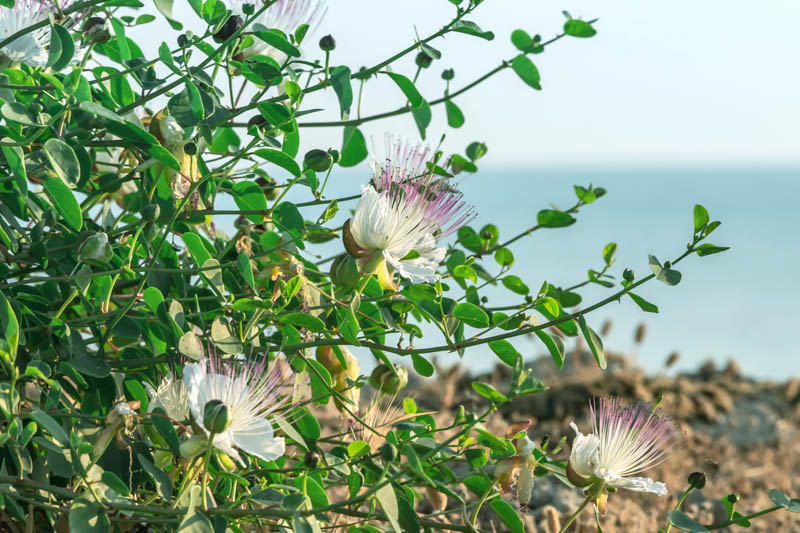
Among medicinal plants, Capparis spinosa L. (caper bush) has gained attention due to its rich phytochemical profile and diverse biological activities. Hydroalcoholic extracts of this plant have demonstrated promising cytotoxic effects against several cancer cell lines in experimental studies.1
Phytochemical basis of anticancer activity
The hydroalcoholic extract of Capparis spinosa contains a variety of bioactive compounds, including:
- Flavonoids (especially quercetin derivatives)
- Phenolic acids
- Alkaloids
- Glucosinolates
- Tannins
Among these, quercetin is considered a major active component, known for its antioxidant and antiproliferative properties. These phytochemicals contribute to the plant’s ability to interfere with cancer cell survival pathways.
Mechanisms of anticancer action
Induction of apoptosis:
One of the primary mechanisms of caper extract is the induction of programmed cell death (apoptosis) in cancer cells. Hydroalcoholic extracts have been shown to reduce viability of cancer cell lines such as HeLa (cervical cancer), MCF-7 (breast cancer), and Saos-2 (osteosarcoma), suggesting activation of intrinsic apoptotic pathways.
Inhibition of cell proliferation:
Caper extracts demonstrate antiproliferative activity by disrupting the cell cycle progression. This leads to suppression of uncontrolled mitotic division and reduced tumor growth potential in vitro.
Antioxidant-mediated cancer prevention:
Oxidative stress plays a major role in DNA damage and tumor initiation. The strong antioxidant capacity of Capparis spinosa hydroalcoholic extract helps neutralize reactive oxygen species, thereby reducing mutation risk and limiting cancer progression.
Modulation of cancer-related signaling pathways:
Flavonoids such as quercetin interact with multiple molecular targets involved in carcinogenesis, including pathways regulating inflammation, apoptosis, and cell survival. This multi-target action enhances its potential as a chemopreventive agent.
Selective cytotoxicity:
Experimental studies indicate that caper extracts exhibit selective cytotoxic effects, affecting cancer cells more strongly than normal fibroblast cells, suggesting a favorable therapeutic index.2
Clinical and therapeutic relevance
Although most evidence is preclinical, the findings suggest that Capparis spinosa hydroalcoholic extract may have potential applications in:
- Chemoprevention strategies
- Adjunct therapy in cancer treatment
- Development of plant-based anticancer agents
- Oxidative stress-related tumor prevention3
However, further in vivo and clinical studies are necessary to establish safety, effective dosage, and therapeutic efficacy in humans.
Conclusion
The hydroalcoholic extract of Capparis spinosa exhibits promising anticancer properties through multiple mechanisms, including apoptosis induction, antiproliferative effects, antioxidant activity, and modulation of cancer-related signaling pathways. Its rich flavonoid content, particularly quercetin, plays a central role in these effects. While current evidence is mainly experimental, caper bush represents a valuable candidate for future development of plant-based anticancer therapies.
Reference:
- Moghadamnia Y, Mousavi Kani SN, Ghasemi-Kasman M, Kazemi Kani MT, Kazemi S. The Anti-cancer Effects of Capparis spinosa Hydroalcoholic Extract. Avicenna J Med Biotechnol. 2019;11(1):43-47. https://pmc.ncbi.nlm.nih.gov/articles/PMC6359694/
- Nazer MR, Jahanbakhsh S, Ebrahimi K, et al. Cytotoxic and Antileishmanial Effects of Various Extracts of Capparis spinosa L. Turk J Pharm Sci. 2021;18(2):146-150. doi:10.4274/tjps.galenos.2020.87259 https://pmc.ncbi.nlm.nih.gov/articles/PMC8100784/
- Bacchetti T, Campagna R, Sartini D, et al. C. spinosa L. subsp. rupestris Phytochemical Profile and Effect on Oxidative Stress in Normal and Cancer Cells. Molecules. 2022;27(19):6488. Published 2022 Oct 1. doi:10.3390/molecules27196488 https://pmc.ncbi.nlm.nih.gov/articles/PMC9573631/