
Introduction
Embelia ribes Burm. f. (family Myrsinaceae), commonly known as Vidanga, is a woody shrub widely used in traditional medicine systems. It is distributed across South and Southeast Asia, including India, Sri Lanka, China, Thailand, Vietnam, Malaysia, and neighboring regions. The plant has long been valued for diverse therapeutic properties such as analgesic, anthelmintic, antioxidant, antibacterial, antidiabetic, anticancer, antihyperlipidemic, wound healing, and anti-spermatogenic activities.
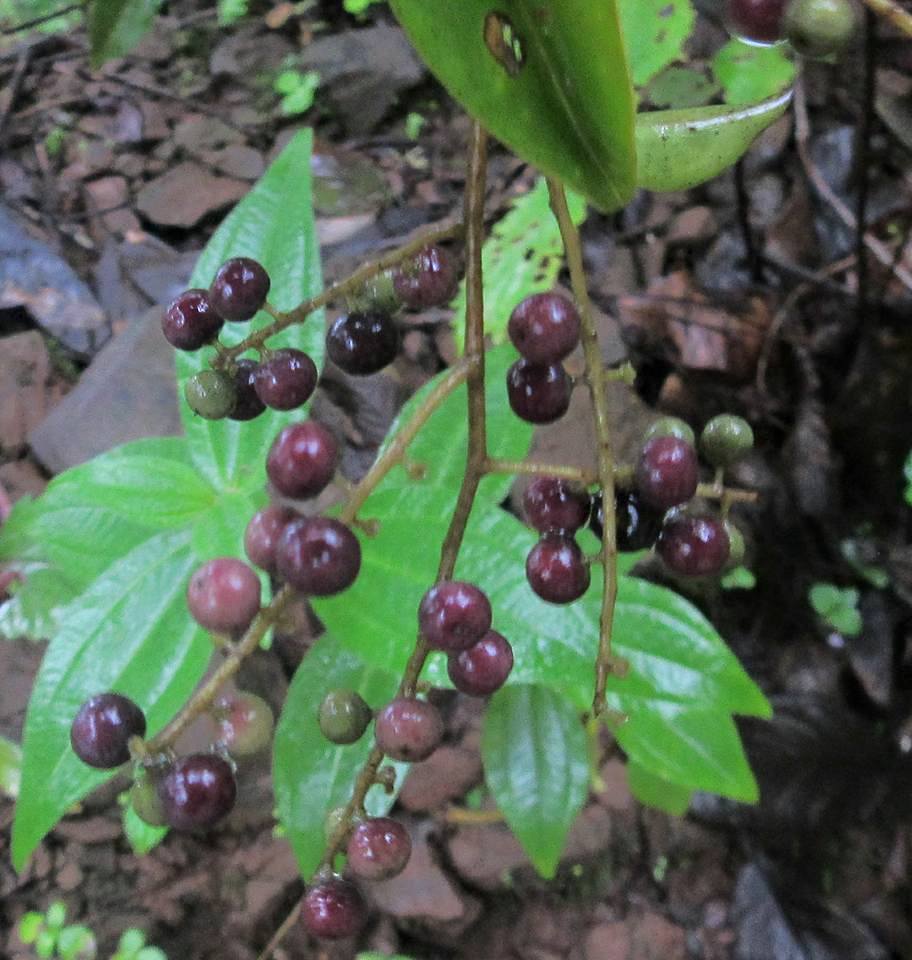
The mature fruits are globular berries that appear dark red to nearly black, with a small apical beak and persistent five-lobed calyx. Anatomically, the fruit exhibits a warty epicarp, a parenchymatous mesocarp with stony cells and vascular bundles, and a sclereid-rich endocarp enclosing a single seed. Calcium oxalate crystals and starch grains are also present.
Embelin (2,5-dihydroxy-3-undecyl-1,4-benzoquinone) is the principal bioactive compound of the genus Embelia, associated with multiple pharmacological activities including antioxidant, anti-inflammatory, anticancer, antihyperglycemic, and radioprotective effects.
The growing global acceptance of herbal and ethnic medicines has increased scientific interest in E. ribes. However, the existing literature remains fragmented, necessitating a consolidated overview of its traditional uses, phytochemistry, and pharmacological potential.
Traditional uses
Traditional medicine systems, particularly Ayurveda and other Asian ethnomedicines, have utilized E. ribes for over millennia. Different plant parts—fruits, seeds, roots, bark, and leaves—are used in varied formulations such as powders, pastes, oils, and decoctions.
Key traditional applications include:
- Paste for oral hygiene, dental caries prevention, and skin disorders
- Powder for infections, indigestion, constipation, epilepsy, and blood purification
- Oil for wound healing and dermatological conditions
- Root decoction for cardiac disorders and mental illness
The plant has also been used as a carminative, diuretic, anthelmintic, and rejuvenating agent, as well as in conditions like gastritis, bloating, vomiting, and weight management. Seeds and fruits are particularly valued for anthelmintic and metabolic benefits, while leaves are used for antimicrobial and respiratory ailments.
These traditional claims have guided modern pharmacological investigations aimed at validating efficacy and identifying active constituents.
Phytochemistry and distribution
Phytochemical analysis of E. ribes reveals a rich profile of bioactive compounds, including embelin, vilangin, embeliaflavosides, embelialkylresorcinols, flavonoids, alkaloids, phenolics, saponins, and carbohydrates.
The fruit contains notable structural components such as calcium oxalate crystals, lignified sclereids, and lipid-rich tissues. Embelin remains the most extensively studied constituent due to its broad pharmacological spectrum.
Other important derivatives include vilangin (a dimeric form of embelin), christembine (alkaloid), and various phenolic and flavonoid compounds contributing to antioxidant activity.
Essential oils, extracts, and nanotechnology applications
Aqueous extract:
Aqueous fruit extracts contain essential oils, alkaloids, flavonoids, phenolics, proteins, carbohydrates, and saponins. These constituents are largely responsible for antioxidant and metabolic effects observed in experimental models.1
Embelin isolation:
Embelin is commonly isolated using solvent extraction techniques involving n-hexane, petroleum ether, methanol, and dichloromethane, followed by crystallization. Characterization is performed using IR spectroscopy, HPTLC, and LC–MS, confirming its quinone-based structure.2
Ethanolic extract:
Ethanolic extracts yield embelin-rich fractions. Chromatographic separation (TLC and silica gel column chromatography) enables purification, followed by structural confirmation via IR and NMR spectroscopy. These extracts have also been formulated into topical gels and oral suspensions for experimental therapeutic use.
Green synthesis of nanoparticles:
Seed extracts of E. ribes have been used for eco-friendly synthesis of gold and silver nanoparticles. These nanoparticles exhibit antioxidant, antimicrobial, and cytotoxic activities. Characterization techniques include UV–Vis spectroscopy, DLS, FTIR, TEM, and XRD.
Gold nanoparticles typically range from 10–30 nm, while silver nanoparticles range from 5–35 nm. These nanostructures demonstrate free radical scavenging and anticancer activity, suggesting potential biomedical applications.3
Vilangin:
Vilangin, a dimeric derivative of embelin, exhibits antioxidant and anticancer activity. It is synthesized via condensation of embelin with formaldehyde under acidic conditions, producing crystalline products with confirmed structural integrity through spectroscopic techniques.
Pharmacological properties
Wound healing:
Embelin and ethanolic extracts enhance wound contraction, epithelialization, collagen formation, and tensile strength. Histological studies confirm improved tissue regeneration and reduced inflammation.
Antidiabetic activity:
E. ribes extracts and embelin significantly reduce blood glucose, lipid levels, and oxidative stress in experimental diabetic models. They improve insulin sensitivity, restore pancreatic architecture, and enhance antioxidant enzyme activity. Effects are comparable to standard antidiabetic drugs in several studies.
Anti-obesity activity:
Extracts and embelin reduce body weight, visceral fat accumulation, lipid peroxidation, and blood pressure in high-fat diet models. They also regulate adipokines and inflammatory markers such as TNF-α and leptin, improving metabolic homeostasis.4
Cardioprotective effects:
Both aqueous and alcoholic extracts reduce myocardial damage, improve cardiac enzymes, and enhance endogenous antioxidants in myocardial injury models. They protect against ischemia-induced oxidative stress.
Antioxidant activity:
Embelin exhibits strong radical scavenging activity, particularly against superoxide and hydroxyl radicals. It modulates antioxidant enzymes such as SOD, CAT, and GPx, and reduces lipid peroxidation. Its antioxidant potential is comparable or superior to standard antioxidants in experimental systems.
Neuroprotective effects:
Embelin improves learning, memory, and cognitive performance in Alzheimer’s and ischemia models. It inhibits cholinesterases (AChE, BChE) and BACE-1, and modulates amyloid clearance pathways, suggesting multi-target neuroprotective action.
Anxiolytic and antidepressant effects:
Embelin shows anxiolytic activity in behavioral models by modulating GABAergic signaling. It also reduces immobility time in depression models, demonstrating antidepressant-like effects comparable to standard drugs.
Antipsychotic and anticonvulsant activity:
Embelin modulates neurotransmitter levels (dopamine, serotonin, noradrenaline) and reduces seizure susceptibility in experimental models, indicating CNS-stabilizing properties.
Antimicrobial activity:
Extracts and embelin exhibit bactericidal effects against Gram-positive organisms and moderate activity against Gram-negative bacteria. Antifungal effects are also reported against multiple pathogenic species.
Anticancer and antiproliferative effects:
Embelin inhibits cancer cell proliferation through multiple mechanisms, including suppression of NF-κB, PI3K/Akt, STAT3, and Wnt/β-catenin pathways. It induces apoptosis, inhibits angiogenesis, and enhances mitochondrial-mediated cell death in various cancer models including breast, prostate, lung, and glioma.
Antiviral activity:
Embelin demonstrates inhibitory effects against influenza viruses and herpes simplex virus by blocking viral entry, replication, and oxidative stress pathways.
Other activities:
Additional effects include antifertility, antihyperhomocysteinemic, anti-aging, hepatoprotective, and anti-inflammatory properties, largely mediated through antioxidant and metabolic regulatory mechanisms.
Toxicological profile
Experimental studies indicate a relatively wide safety margin for embelin at moderate doses. However, high or prolonged exposure may lead to organ-specific effects in animal models, including reproductive and developmental toxicity. Pregnant and pediatric use requires caution due to limited safety data.
Future perspectives and conclusions
Embelia ribes is a pharmacologically rich medicinal plant with extensive traditional use and scientifically validated therapeutic potential. Its bioactive compounds, particularly embelin and vilangin, demonstrate broad-spectrum antioxidant, antidiabetic, anticancer, neuroprotective, and antimicrobial activities.
Despite promising findings, current evidence is largely preclinical. Further research is needed to elucidate detailed molecular mechanisms, optimize formulations, assess pharmacokinetics, and conduct clinical trials to confirm safety and efficacy in humans.
Integration of traditional knowledge with modern pharmacological approaches may establish E. ribes as a valuable candidate for future drug development and therapeutic applications.5
References:
- Bhandari U, Ansari MN. Protective effect of aqueous extract of Embelia ribes Burm fruits in middle cerebral artery occlusion-induced focal cerebral ischemia in rats. Indian J Pharmacol. 2008;40(5):215-220. doi:10.4103/0253-7613.44153. https://pmc.ncbi.nlm.nih.gov/articles/PMC2792627/
- Kumara Swamy HM, Krishna V, Shankarmurthy K, et al. Wound healing activity of embelin isolated from the ethanol extract of leaves of Embelia ribes Burm. J Ethnopharmacol. 2007;109(3):529-534. doi:10.1016/j.jep.2006.09.003. https://pubmed.ncbi.nlm.nih.gov/17034970/
- Dhayalan M, Denison MI, L AJ, Krishnan K, N NG. In vitro antioxidant, antimicrobial, cytotoxic potential of gold and silver nanoparticles prepared using Embelia ribes. Nat Prod Res. 2017;31(4):465-468. doi:10.1080/14786419.2016.1166499. https://pubmed.ncbi.nlm.nih.gov/27104858/
- Nazish I, Ansari SH, Arora P. Antiobesity actions of Embelia ribes. Pharmacognosy Journal. 2012 Nov 1;4(32):73-80. https://www.sciencedirect.com/science/article/abs/pii/S0975357512800137
- Sharma V, Gautam DNS, Radu AF, Behl T, Bungau SG, Vesa CM. Reviewing the Traditional/Modern Uses, Phytochemistry, Essential Oils/Extracts and Pharmacology of Embelia ribes Burm. Antioxidants (Basel). 2022;11(7):1359. Published 2022 Jul 13. doi:10.3390/antiox11071359. https://pmc.ncbi.nlm.nih.gov/articles/PMC9311956/