
Introduction
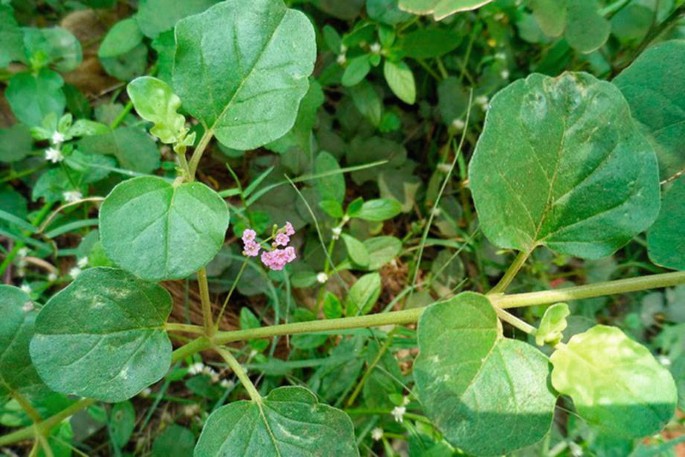
Boerhaavia diffusa L. (Nyctaginaceae), commonly known as spreading hogweed or Punarnava, is a perennial prostrate medicinal herb widely distributed in tropical regions. The term “Punarnava” denotes “rejuvenation,” reflecting its traditional use as a rasayana drug for restoration of vitality, immunity enhancement, and tissue regeneration. The plant exhibits seasonal dormancy with regeneration during the monsoon, supporting its ethnomedicinal association with renewal and resilience.
Phytochemical profile
The plant is rich in diverse bioactive constituents across different plant parts, including phenolics (punarnavoside, trans-caftaric acid, boerhavic acid), rotenoids (boeravinones A–J), flavonoids (quercetin, kaempferol, boerhavone), isoflavonoids, alkaloids (punarnavine), steroids (β-ecdysone, boerhavisterol), lignans (liriodendrin, syringaresinol derivatives), and fatty acids. These compounds collectively contribute to its broad pharmacological potential.
Pharmacological relevance
Boerhaavia diffusa demonstrates significant antioxidant activity by modulating oxidative stress pathways, thereby mitigating cellular damage associated with chronic disorders such as neurodegenerative diseases, cardiovascular diseases, and metabolic syndromes. Its pharmacological profile also includes antidiabetic, antimicrobial, anti-inflammatory, hepatoprotective, and immunomodulatory effects, which are primarily attributed to its polyphenolic and rotenoid-rich composition.
Therapeutic significance
The antioxidant and cytoprotective properties of B. diffusa support its traditional use in aging-related disorders and systemic rejuvenation. Its ability to counter oxidative stress and regulate metabolic imbalance underpins its relevance in the management of chronic degenerative conditions.
Ethnomedicinal usage
Boerhaavia diffusa L. (Punarnava) is traditionally described as a cooling and bitter herb with broad rejuvenating (rasayana) properties. It is widely used in Ayurveda and ethnomedicine as a tonic that enhances vitality, strength, and systemic resilience.
Pharmacologically, it exhibits diuretic, laxative, expectorant, stomachic, diaphoretic, and emetic actions. Traditionally, it is employed in the management of gastrointestinal disorders (diarrhea, dysentery, abdominal pain), hepatobiliary diseases (jaundice, hepatic congestion, ascites), renal disorders (edema, nephropathy, urinary complications), respiratory conditions (asthma, cough, pneumonia), and hematological and systemic conditions such as anemia and splenomegaly.
It is also used as a blood purifier, wound-healing agent, and uterine tonic, particularly in postpartum hemorrhage. Topical application of root paste is reported for ulcers, edema, skin disorders, and inflammatory swellings, while detoxifying and antivenom uses are described for insect and snake bites.
Pharmacological properties
Different parts of B. diffusa (root, leaf, stem, flower, fruit, and seed) are used in traditional and modern formulations due to their diverse phytochemical composition. The plant contains a wide spectrum of bioactive compounds responsible for its therapeutic potential.
Leaves are consumed as a nutraceutical vegetable in some regions due to their protein, essential fatty acids, vitamins (C and B-complex), and mineral (calcium) content. Pharmacological studies have validated multiple activities, including antioxidant, anti-inflammatory, antidiabetic, antimicrobial, hepatoprotective, nephroprotective, cardioprotective, diuretic, anticancer, and immunomodulatory effects.
A list of bioactive properties of BD-extracts to counter metabolic disorders
|
Pharmacological activity |
Dosage |
Result |
|
Antidiabetic and hypoglycemic property |
Methanol & aqueous root extract (200 mg/kg) |
Reduced blood glucose by 9.91% (aqueous) and 18.88% (methanol); improved peripheral glucose uptake and β-cell insulin secretion |
|
Antidiabetic effect |
Methanol & aqueous root extract |
Reduced TC, TG, VLDL, LDL; increased HDL; improved lipid profile and pancreatic function1 |
|
Antidiabetic effect |
Methanol extract (100–200 mg/kg) |
Reduced glucose, SGOT, SGPT, ALP; improved insulin, liver glycogen, and antioxidant enzymes (SOD, CAT, GPx) |
|
Antidiabetic effect |
Ethanol leaf extract (500 mg/kg) |
Normalized renal/hepatic markers; improved lipid profile similar to glibenclamide |
|
Antihyperglycemic effect |
Ethyl acetate, ethanol, aqueous extract (100–250 μg/mL) |
Inhibited glucose absorption, enhanced muscle uptake; strong antioxidant and anti-lipidemic activity |
|
Antidiabetic effect |
Methanol leaf extract |
Reduced glucose and HbA1c; increased insulin and GLUT2 expression; improved glycogen metabolism |
|
Antidiabetic effect |
Methanol root extract |
Reduced FBG, HbA1c; improved antioxidant enzymes and lipid metabolism markers |
|
Antidiabetic effect (combination therapy) |
Methanol root extract + W. somnifera (200 mg/kg/day) |
Improved glucose, TG, TC, LDL, HDL; synergistic effect with weight gain improvement |
|
Cytotype-based antidiabetic activity |
Methanol extracts of root, stem, leaf |
Diploid type showed highest antidiabetic activity; higher ploidy reduced phytoconstituent levels |
- Hypolipidemic property:
|
Activity |
Dosage |
Result |
|
Hypolipidemic effect |
70% ethanol root extract |
Reduced TC (34.39%), TG (42.13%), LDL (48.30%); improved antioxidant enzymes (CAT, SOD, GR) |
|
Cardiometabolic protection |
Whole plant extract (150 mg/kg, 45 days) |
Normalized TG, TC, FFA, LDL, VLDL; improved HDL and cardiac biochemical markers |
- Antiobesity property:
|
Activity |
Dosage |
Result |
|
Antiobesity effect |
n-hexane, n-butanol, chloroform, hydroalcoholic fractions (200 mg/kg/day) |
Water fraction significantly reduced body weight and fat pad mass; other fractions showed minimal effect |
Reported antimicrobial and antiparasitic activities of BD
|
Dose / Extract |
Microbe and parasite |
Salient observation |
|
Methanol and aqueous root extract |
Bacillus subtilis, Staphylococcus aureus, Escherichia coli, Klebsiella pneumoniae, Pseudomonas aeruginosa |
Methanol extract showed higher activity than aqueous; stronger effect on Gram-positive bacteria; max inhibition (17.5 mm) against S. aureus |
|
Aqueous extracts (leaf, stem, root) |
Human bacterial pathogens |
Sensitivity order: S. typhi > S. aureus > E. coli; root > leaf > stem in activity |
|
Methanol extracts (di-, tetra-, octaploid plant parts) |
B. subtilis, S. aureus, E. coli, K. pneumoniae, P. aeruginosa |
Diploid extract showed highest inhibition (27.7 mm against S. aureus); lowest against P. aeruginosa (2.0 mm) |
|
BD extract |
Mycobacterium tuberculosis H37Rv (RAW 264.7, A549, NuLi-1, BEAS-2B cells) |
Reduced inflammatory mediators and NO; selective cytotoxicity in infected macrophages; safe in normal lung cells |
|
Ethanol leaf extract |
Pseudomonas aeruginosa |
Strong antibacterial and anti-biofilm activity confirmed with in silico docking studies |
Reported anti-inflammatory and curing properties of BD
|
Sl. No. |
Dose |
Salient observation |
|
Anti-inflammatory and analgesic properties |
||
|
1 |
Punarnavasava (ayurvedic liquid) |
Inhibited carrageenan-induced paw edema, cotton pellet granuloma, formalin pain, and pyloric ligation ulceration |
|
2 |
Pet. ether, dichloromethane, ethanol and water extracts (200 mg/kg b.w.) |
Ethanol extract showed strongest anti-inflammatory and analgesic activity in formalin and acetic acid pain models |
|
3 |
Pet. ether root extract (500, 1000 mg/kg p.o.) |
Reduced paw edema (32.31% at 500 mg/kg; 62.88% at 1000 mg/kg); indomethacin showed 77.07% inhibition |
|
4 |
Aqueous leaf extract (200, 400 mg/kg) |
Dose-dependent reduction of acute and subacute inflammation via inhibition of inflammatory mediators |
|
5 |
Rotenoid-rich fraction + phosphatidylcholine fraction |
Showed 64% in vivo anti-inflammatory activity; enhanced boeravinone B bioavailability |
|
2. Anti-arthritis property |
||
|
1 |
Petroleum ether, chloroform, methanol, aqueous root extracts |
Methanol extract improved paw swelling, body weight, and hematological parameters; 400 mg/kg most effective |
|
3. Wound healing |
||
|
1 |
Methanol (ME) and chloroform (CE) leaf extracts |
ME improved keratinocyte migration and reduced wound area by 91% by day 14; caffeic acid and D-pinitol involved |
|
4. Antiulcerative and antacid properties |
||
|
1 |
Punarnavasava (ayurvedic formulation) |
Reduced gastric secretion, acidity, and ulcer index; effect superior to ranitidine |
|
5. Anticataract property |
||
|
1 |
Alcoholic root extract (100–400 mg/kg, 28 days) |
Delayed galactose-induced cataract via reduced galactitol accumulation and aldose reductase inhibition |
Reported anticancer and antiproliferative properties of BD
|
Dose |
Salient observation |
|
Punarnavine (15 mg/kg bw/d) |
Inhibited endothelial proliferation, migration, and tube formation; downregulated VEGF-A, MMP-2 and MMP-9; reduced ascitic fluid (60.94%) and tumor volume (86.40%); strong anti-angiogenic and anti-tumor activity |
|
Ethanol leaf extract (250, 500 mg/kg) |
Increased survival (31.12 ± 1.0 and 33.12 ± 0.9 days vs 18.40 ± 1.41 control); reduced tumor volume; normalized hematological parameters |
|
Methanolic leaf extract (25–200 μg/mL) |
Dose-dependent cytotoxicity (13.9%–52.86%); IC50 = 69.18 μg/mL with reduced cell viability |
|
Methanolic (ME) and aqueous (AE) extracts |
Strong cytotoxicity (IC50 30–36 μg/mL); ME showed higher apoptotic DNA fragmentation than AE |
|
BD extract (800 μg/mL) |
Exhibited ~65.1 ± 1.2% cytotoxicity after 48 h incubation |
Protective role against metabolic disorders
Diabetes mellitus is a major global metabolic disorder, affecting over 422 million people worldwide (WHO, 2023), with a high burden in low- and middle-income countries. It is associated with significant morbidity, mortality (~1.5 million deaths/year), and increased susceptibility to infections such as tuberculosis and HIV. Rapid lifestyle transitions, sedentary behavior, and dietary changes have contributed to the rising prevalence, particularly in India.
Experimental studies demonstrate that Boerhaavia diffusa (BD) root, stem, and leaf extracts exert significant antidiabetic effects in streptozotocin (STZ)-induced models by reducing hyperglycaemia, improving lipid profile, and restoring antioxidant enzyme activity (SOD, CAT, GPx). Methanolic and ethanolic extracts also normalize hepatic enzymes (ALT, AST, ALP), indicating protection against diabetes-associated liver injury.
Further, BD enhances glucose homeostasis by inhibiting intestinal glucose absorption, increasing peripheral glucose uptake, and restoring hepatic glycogen content. Its antioxidant-mediated action counteracts oxidative stress–induced β-cell dysfunction and enzymatic inactivation. Overall, BD shows multi-target metabolic benefits, largely attributed to its strong free radical scavenging and cytoprotective properties.
Anti-inflammatory, anti-cataract, and wound-healing properties
Methanolic leaf extract of Boerhaavia diffusa (BD) exhibits significant anti-inflammatory and antioxidant activities, largely attributed to its rich polyphenolic and flavonoid content. These bioactive constituents inhibit key inflammatory pathways, including 5-lipoxygenase (5-LOX)-mediated leukotriene synthesis, and suppress arachidonic acid metabolism, thereby reducing the production of pro-inflammatory mediators. In addition, their free radical scavenging properties contribute to attenuation of oxidative stress–driven tissue damage.
BD phytoconstituents, including flavonoids, saponins, and phenolics, also demonstrate membrane-stabilizing and enzyme-modulatory effects that support tissue repair processes. Experimental evidence further indicates its therapeutic potential in cataract prevention through inhibition of aldose reductase activity and reduced sorbitol accumulation, as well as in enhancing wound healing and gastric mucosal protection via improved antioxidant defense and anti-inflammatory modulation.
Discussion
It is indicated that Boerhaavia diffusa (BD) is most extensively studied for organ-protective effects, followed by metabolic disorders, anti-inflammatory activity, antimicrobial and antiparasitic effects (8), and anticancer potential, supporting its broad pharmacological relevance.
Advanced extraction and analytical approaches, particularly chromatographic techniques such as HPTLC, have enabled efficient profiling and standardization of BD phytoconstituents. Notably, compounds like eupalitin-3-O-β-D-galactopyranoside have demonstrated hepatoprotective activity against chemical-induced toxicity and can be isolated in measurable yield using optimized solvent systems, supporting scalable phytopharmaceutical development.
The increasing global burden of metabolic disorders, particularly diabetes, driven by sedentary lifestyle, dietary imbalance, and stress, underscores the need for complementary therapeutic strategies. Preclinical evidence suggests that BD exerts significant antidiabetic effects by modulating glucose metabolism, oxidative stress, and biochemical markers, as summarized in experimental studies. However, translation into clinical practice requires robust, evidence-based validation.
Despite extensive pharmacological reporting, mechanistic insights into specific bioactive compounds remain limited, particularly regarding antimicrobial and disease-modifying actions. Further studies focusing on molecular targets, signaling pathways, pharmacokinetics, and toxicological profiling of isolated constituents are essential to establish therapeutic specificity and safety.
Conclusion and future prospects
Boerhaavia diffusa exhibits broad-spectrum pharmacological activities, including hepatoprotective, renoprotective, cardioprotective, antidiabetic, anti-inflammatory, antimicrobial, anticancer, and antiparasitic effects. However, most evidence remains preclinical, with limited mechanistic and clinical validation.
Future research should prioritize molecular-level characterization of bioactive phytoconstituents, standardized extraction protocols, and well-designed clinical trials. In particular, elucidation of compound–target interactions and pharmacodynamic pathways will be critical to translating BD into evidence-based therapeutic applications.2
References:
- Vasundhara CC, Devi SG. Effect of ethanolic extract of leaves of Boerhavia diffusa on carbohydrate metabolising enzymes, renal and hepatic markers in streptozotocin-induced diabetic rats. Int. J. Pharm. Clin. Res. 2018;10(2):43-7. https://impactfactor.org/PDF/IJPCR/10/IJPCR,Vol10,Issue2,Article2.pdf
- Das S, Singh PK, Ameeruddin S, et al. Ethnomedicinal values of Boerhaavia diffusa L. as a panacea against multiple human ailments: a state of art review. Front Chem. 2023;11:1297300. Published 2023 Nov 14. doi:10.3389/fchem.2023.1297300. https://pmc.ncbi.nlm.nih.gov/articles/PMC10682173/