
Introduction
Free radicals are implicated in the pathogenesis of multiple chronic disorders, including insulin resistance, diabetes, and cardiovascular disease. Under physiological conditions, they contribute to intracellular signalling, inflammatory responses, and immune regulation. However, when their production exceeds antioxidant defence capacity, oxidative stress develops, leading to cellular dysfunction, apoptosis, and tissue damage. Antioxidant mechanisms play a protective role by neutralising free radicals and reducing disease risk. 1
Oxidative stress and metabolic dysfunction
Oxidative stress may arise not only from free radical overproduction but also from chronic hyperglycaemia. Sustained elevated glucose levels contribute to cellular injury, pancreatic β-cell dysfunction, and insulin resistance, thereby promoting the onset of diabetes. Long-term hyperglycaemia is further associated with complications such as retinopathy, nephropathy, neuropathy, and increased risk of cardiovascular disease, infections, and cancer progression.
Postprandial hyperglycaemia is particularly associated with increased cardiovascular risk and mortality. Therapeutic strategies targeting post-meal glucose elevation have been linked to improved metabolic outcomes and reduced cardiovascular events. 2
Role of α-glucosidase in carbohydrate metabolism
α-Glucosidases are enzymes located in the brush border of enterocytes and are responsible for hydrolysing carbohydrates into glucose. Inhibition of these enzymes slows glucose release from dietary carbohydrates, delays absorption, and reduces postprandial hyperglycaemia. Although α-glucosidase inhibitors are clinically effective, their use may be associated with gastrointestinal adverse effects such as diarrhoea, abdominal discomfort, and flatulence.
Trikatuk formulation and composition
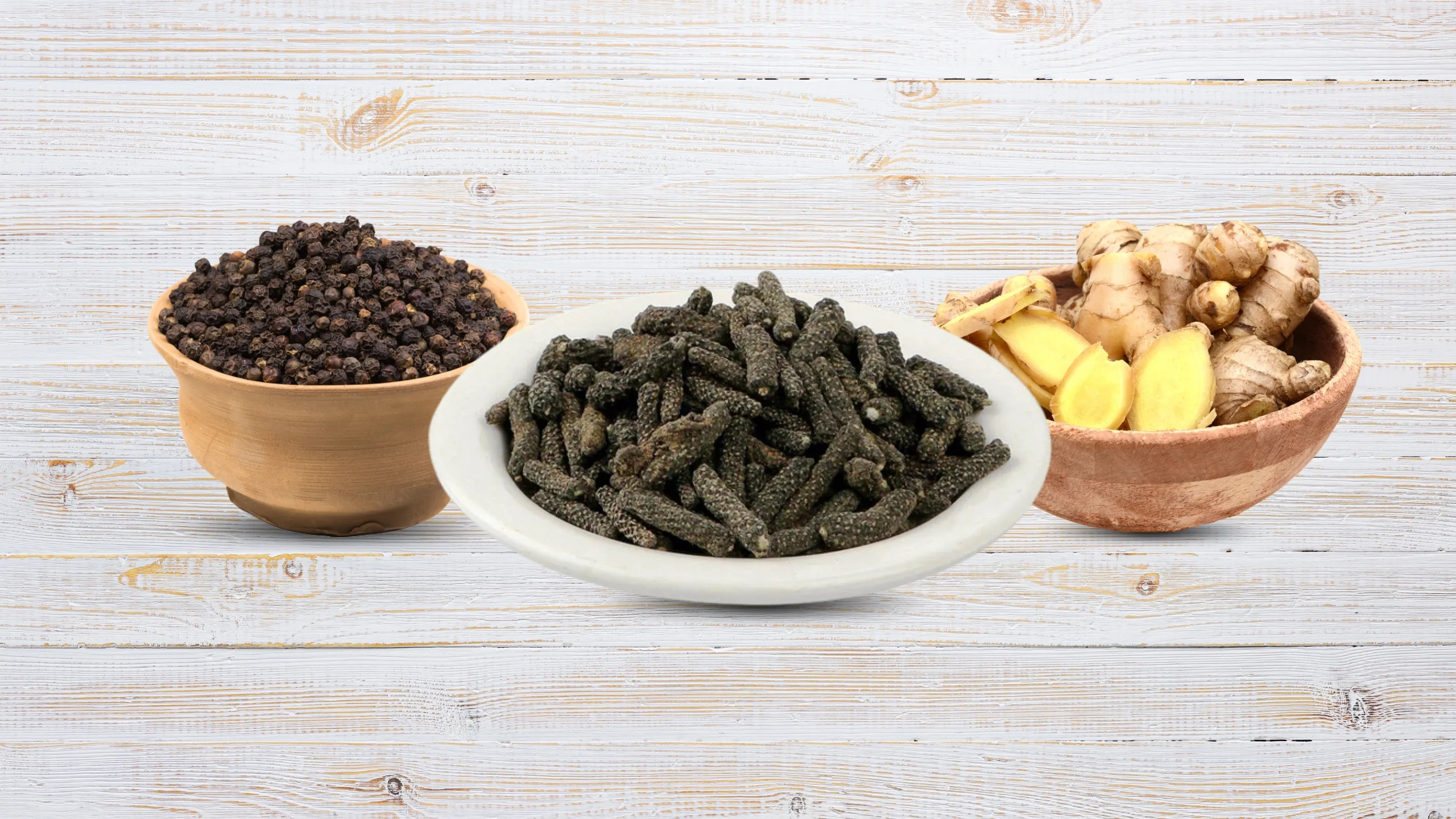
Trikatuk is a traditional formulation widely used in Thai medicine and is conceptually comparable to the Ayurvedic formulation Trikatu. It consists of three herbs in equal proportions:
- Piper nigrum L. (fruits)
- Piper retrofractum Vahl (fruits)
- Zingiber officinale Roscoe (rhizomes)
In Trikatu, Piper longum L. replaces Piper retrofractum, representing a key distinction between the two formulations.
The individual herbs within Trikatuk have been traditionally utilised in diabetes management, with supportive scientific evidence for their metabolic effects. Preparation methods include formulation through direct powder blending or by combining individual herbal extracts according to defined ratios, with both approaches influencing the overall potency of the final product.
Functional properties and mechanistic potential
Trikatuk demonstrates dual functional activity, primarily as an antioxidant and an α-glucosidase inhibitor. The functional contribution of each component is attributed to its phytochemical profile:
- Zingiber officinale contributes significantly to antioxidant activity due to its high total phenolic and flavonoid content.
- Piper nigrum and Piper retrofractum contribute predominantly to α-glucosidase inhibition, attributed to their piperine content.
This synergistic interaction supports both oxidative stress reduction and modulation of carbohydrate digestion, indicating a multi-target metabolic effect.
Conclusion
Trikatuk represents a multi-herbal formulation with combined antioxidant and α-glucosidase inhibitory properties that support metabolic regulation. Its mechanistic actions across oxidative stress reduction and postprandial glycaemic control highlight its potential relevance in diabetes management strategies. Further consideration of formulation methods and phytochemical synergy may enhance its application in metabolic health support. 3
References:
1. Mahjoub S, Masrour-Roudsari J. Role of oxidative stress in pathogenesis of metabolic syndrome. Caspian J Intern Med. 2012;3(1):386-396. https://pmc.ncbi.nlm.nih.gov/articles/PMC4600138/
2. Dirir AM, Daou M, Yousef AF, Yousef LF. A review of alpha-glucosidase inhibitors from plants as potential candidates for the treatment of type-2 diabetes. Phytochem Rev. 2022;21(4):1049-1079. doi:10.1007/s11101-021-09773-1. https://pmc.ncbi.nlm.nih.gov/articles/PMC8364835/
3. Nutmakul T, Chewchinda S. Synergistic effect of Trikatuk, a traditional Thai formulation, on antioxidant and alpha-glucosidase inhibitory activities. Heliyon. 2023;9(1):e13063. Published 2023 Jan 18. doi:10.1016/j.heliyon.2023.e13063. https://pmc.ncbi.nlm.nih.gov/articles/PMC9873688/#sec5