Introduction
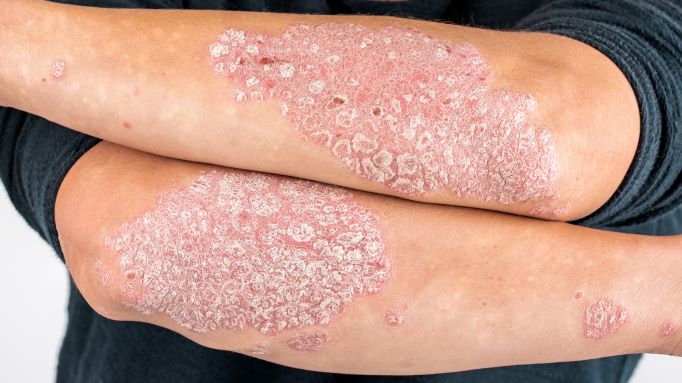
Psoriasis is a chronic immune-mediated inflammatory skin disorder characterized by epidermal hyperproliferation, aberrant keratinocyte differentiation, and persistent activation of the IL-23/Th17 immune axis. Central to its pathogenesis are pro-inflammatory cytokines including TNF-α, IL-17, IL-23, and IL-6, along with NF-κB–driven signaling cascades and oxidative stress–mediated tissue injury. These pathways collectively contribute to plaque formation, scaling, and chronic relapsing inflammation.
In recent years, Curcuma longa (turmeric), particularly its bioactive constituent curcumin, has gained significant scientific attention as a multi-target phytotherapeutic agent in psoriasis due to its anti-inflammatory, antioxidant, anti-proliferative, and immunomodulatory properties.1 Clinical and preclinical evidence suggests its role as a supportive adjunct in mild to moderate as well as systemic psoriasis management.
Phytochemical profile of Curcuma longa
Turmeric rhizomes contain a complex mixture of biologically active compounds, primarily curcuminoids and volatile oils.
Major bioactive constituents:
- Curcuminoids: curcumin, demethoxycurcumin, bisdemethoxycurcumin
- Volatile oils: turmerone, atlantone, zingiberene
- Polyphenols and flavonoid-like compounds
Curcumin is the principal pharmacologically active component and is responsible for most of the observed anti-psoriatic effects.
Pathophysiology of psoriasis relevant to curcumin action
- Immune dysregulation:
Psoriasis is driven by hyperactivation of dendritic cells and T-helper cells, particularly Th1 and Th17 subsets, leading to excessive production of IL-17 and IL-23.
- Cytokine amplification via NF-κB signaling:
NF-κB activation sustains chronic inflammation through increased expression of TNF-α, IL-6, and IL-1β, promoting keratinocyte activation.
- Keratinocyte hyperproliferation:
Abnormal epidermal turnover results in plaque formation and impaired skin barrier function.
- Oxidative stress involvement:
Reactive oxygen species (ROS) contribute to lipid peroxidation, inflammatory signaling, and disease persistence.
Mechanisms of therapeutic action of curcumin in psoriasis
- Immunomodulatory effects:
Curcumin downregulates Th1/Th17-mediated immune responses and reduces cytokine overproduction, particularly TNF-α, IL-17, and IL-6, thereby restoring immune balance in psoriatic lesions.
- NF-κB pathway inhibition:
Curcumin suppresses NF-κB activation, leading to reduced transcription of pro-inflammatory mediators and attenuation of chronic cutaneous inflammation.
- Anti-proliferative effects on keratinocyte:
Curcumin inhibits excessive keratinocyte proliferation and induces apoptosis in hyperactive epidermal cells, thereby reducing plaque thickness and scaling.
- Antioxidant and cytoprotective effects:
It scavenges reactive oxygen species and enhances endogenous antioxidant defenses, reducing oxidative injury and improving skin barrier integrity.2
- Anti-angiogenic and anti-inflammatory signaling modulation:
Curcumin modulates multiple signaling pathways including STAT3, MAPK, and COX-2, contributing to reduced inflammation and vascular changes in psoriatic skin.
Experimental and clinical evidence
Preclinical evidence:
Animal models of imiquimod-induced psoriasis demonstrate that curcumin reduces erythema, scaling, epidermal thickness, and inflammatory cytokine expression. It also improves histopathological features of psoriatic lesions.
Clinical evidence:
- Clinical trials show improvement in Psoriasis Area and Severity Index (PASI) scores with curcumin supplementation.
- Both oral and topical formulations have demonstrated reduction in lesion severity and inflammatory markers.
- Curcumin is generally well tolerated and safe as an adjunct therapy,3 although bioavailability remains a major limitation.
Recent analyses suggest that curcumin may be more effective as an adjunct in moderate to severe psoriasis, particularly when used with enhanced delivery systems.
Therapeutic role in psoriasis management
Adjunct anti-inflammatory therapy:
Curcumin helps reduce erythema, scaling, and inflammatory plaque burden when used alongside standard therapies.
Immunomodulatory phytotherapy:
It restores immune homeostasis by modulating Th17-mediated inflammation.
Topical and systemic disease control support:
Topical formulations aid in local lesion control, while oral curcumin provides systemic anti-inflammatory effects.
Oxidative stress reduction strategy:
Curcumin reduces oxidative damage, slowing disease progression and recurrence.
Clinical relevance and limitations
Despite promising results, curcumin faces several translational challenges:
- Low oral bioavailability
- Poor skin penetration in topical forms
- Variability in formulations
- Limited large-scale randomized controlled trials
Novel delivery systems such as nanoparticles, liposomes, and microemulsions are being investigated to overcome these limitations.
Conclusion
Curcuma longa (turmeric) and its principal bioactive compound curcumin demonstrate significant therapeutic potential in psoriasis through multi-targeted mechanisms, including immunomodulation, NF-κB inhibition, antioxidant activity, and suppression of keratinocyte hyperproliferation. Current evidence supports its role as a safe and promising adjunct in psoriasis management; however, further large-scale clinical trials and advanced formulation development are required to establish standardized therapeutic protocols and optimize clinical efficacy.
References:
- Zafar A, Lahori D, Namit AF, et al. Curcumin in Inflammatory Complications: Therapeutic Applications and Clinical Evidence. Int J Mol Sci. 2025;26(19):9366. Published 2025 Sep 25. doi:10.3390/ijms26199366. https://pmc.ncbi.nlm.nih.gov/articles/PMC12524702/
- Nardo VD, Gianfaldoni S, Tchernev G, et al. Use of Curcumin in Psoriasis. Open Access Maced J Med Sci. 2018;6(1):218-220. Published 2018 Jan 21. doi:10.3889/oamjms.2018.055. https://pmc.ncbi.nlm.nih.gov/articles/PMC5816303/
- Zhang S, Wang J, Liu L, et al. Efficacy and safety of curcumin in psoriasis: preclinical and clinical evidence and possible mechanisms. Front Pharmacol. 2022;13:903160. Published 2022 Aug 29. doi:10.3389/fphar.2022.903160. https://pmc.ncbi.nlm.nih.gov/articles/PMC9477188/