
Introduction
Polycystic ovary syndrome (PCOS) is a common endocrine disorder affecting approximately one in five women of reproductive age. It is characterized by enlarged ovaries containing multiple small peripheral cysts and is associated with reproductive, metabolic, and psychological disturbances. The condition frequently presents with infertility, hyperandrogenism, insulin resistance, dysglycemia, obesity, anxiety, and depression, making it a multifaceted health concern requiring comprehensive management.
Clinical features of PCOS
PCOS manifests through a broad spectrum of symptoms and metabolic abnormalities that can significantly affect a woman's quality of life.
Key clinical characteristics include:
- Enlarged ovaries with multiple small cysts.
- Reproductive dysfunction, including infertility.
- Hyperandrogenic manifestations.
- Metabolic disturbances such as insulin resistance and dysglycemia.
- Association with obesity.
- Psychological symptoms including anxiety and depression.
The complex nature of PCOS highlights the need for therapeutic approaches capable of addressing multiple pathological pathways simultaneously. 1
Composition of Kanchnar Guggulu
Kanchnar Guggulu is a widely used Ayurvedic polyherbal formulation that has gained importance in the management of PCOS.
Its key ingredients include:
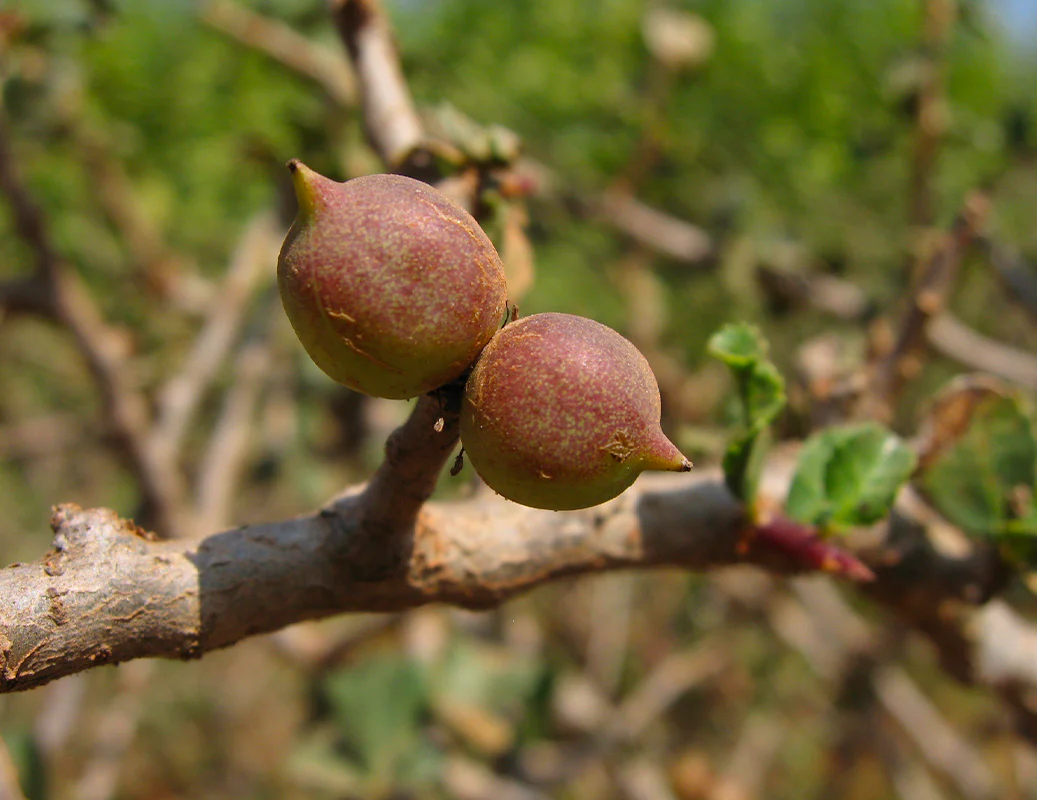
- Guggulu (Commiphora mukul) resin
- Black Pepper (Piper nigrum) fruit
- Ginger (Zingiber officinale) root
- Kanchnar (Bauhinia variegata) bark
- Haritaki (Terminalia chebula) fruit
- Pippali (Piper longum) fruit
The formulation combines multiple medicinal ingredients, reflecting the Ayurvedic principle of utilizing synergistic herbal combinations to address complex disease processes. 2
Phytochemical basis of therapeutic action
The therapeutic relevance of Kanchnar Guggulu is supported by the presence of several bioactive phytochemicals that demonstrate interactions with biological targets associated with PCOS.
Important phytochemical constituents include:
- α-Curcumene
- Shogaol
- α-Cadinene
- O-Xylene
- p-Cymene
- β-Terpineol
These compounds exhibit binding affinity with proteins involved in disease processes and contribute to the formulation’s broad-spectrum therapeutic potential. Their interactions provide insight into the multi-targeted nature of Kanchnar Guggulu, supporting its role in addressing the diverse clinical manifestations of PCOS.
Therapeutic relevance in PCOS
PCOS is a heterogeneous disorder involving endocrine, metabolic, and reproductive dysfunction. The complex phytochemical profile of Kanchnar Guggulu suggests a multidimensional mode of action that aligns with the multifactorial nature of the condition. The formulation's combination of herbal ingredients and bioactive compounds highlights its potential role in supporting the management of various pathological processes associated with PCOS. 3
Conclusion
PCOS is a prevalent endocrine disorder characterized by reproductive, metabolic, and psychological manifestations. Kanchnar Guggulu, a classical Ayurvedic polyherbal formulation containing Guggulu, Kanchnar, Haritaki, Pippali, and other medicinal ingredients, possesses a diverse phytochemical profile with potential multi-targeted therapeutic actions. Its broad-spectrum composition reflects an integrative Ayurvedic approach to addressing the complex pathophysiology of PCOS.
References:
1. Ajmal N, Khan SZ, Shaikh R. Polycystic ovary syndrome (PCOS) and genetic predisposition: a review article. Eur J Obstet Gynecol Reprod Biol X. 2019;3:100060. doi:10.1016/j.eurox.2019.100060. https://www.sciencedirect.com/science/article/pii/S2590161319300948
2. Behera SK, Modi PK, Karthikkeyan G, Pervaje SK, Pervaje R, Raju R, et al. From LC-MS/MS metabolomics profiling of Kanchanara Guggulu to molecular docking and dynamics simulation of quercetin pentaacetate with aldose reductase. Bioinformation. 2021;17(11):911-915. https://www.bioinformation.net/017/97320630017911.pdf
3. Ghosh S, Maity A, Roy B, Thakur S. Evaluation of the therapeutic potential of Kanchanar Guggulu for PCOS management: Integrating network pharmacology, transcriptomics, molecular docking, and molecular dynamics simulation. In Silico Research in Biomedicine. 2025;1:100134. https://www.sciencedirect.com/science/article/pii/S3050787125001325