
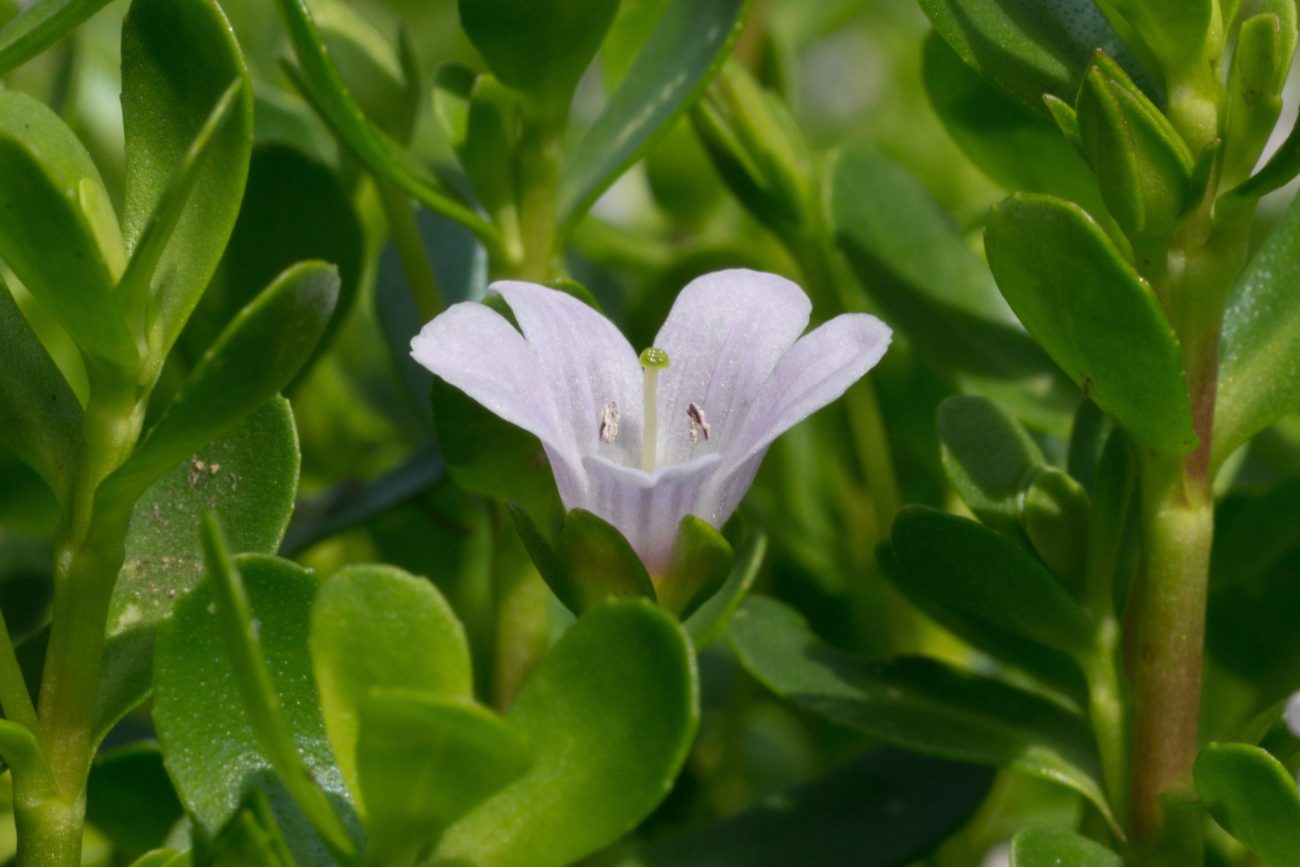
Introduction
Stress-induced cognitive dysfunction is increasingly common in modern clinical practice, characterized by impaired attention, reduced memory performance, mental fatigue, and decreased executive functioning. Chronic psychological stress disrupts neurocognitive balance through dysregulation of neurotransmitters, increased oxidative stress, and altered neuroendocrine activity. In Ayurveda, such conditions are often associated with aggravated Vata and Pitta Dosha, along with impaired Sattva (mental clarity) and dominance of Rajas (mental hyperactivity). Brahmi (Bacopa monnieri), a classical Medhya Rasayana, is traditionally recommended for enhancing intellect, calming the mind, and improving cognitive resilience under stress.1
Ayurvedic perspective on brahmi
In Ayurveda, Brahmi is described as a potent Medhya Rasayana, meaning a rejuvenative herb that enhances memory, intellect, comprehension, and retention. Classical texts attribute its action to its ability to promote Sattva guna, reduce mental agitation, and restore balance in disturbed mental states.2
Ayurvedic principles suggest that stress-related cognitive dysfunction arises due to:
- Aggravated Vata Dosha affecting mental processing speed and memory
- Excess Rajas leading to restlessness and poor attention
- Depletion of Ojas, resulting in mental fatigue and reduced resilience
Brahmi is traditionally used to counter these imbalances by promoting mental stability, enhancing focus, and supporting restorative sleep, thereby indirectly improving cognition.
Pharmacological and neurocognitive actions
Contemporary understanding of Bacopa monnieri suggests that its neurocognitive benefits are linked to multiple mechanisms affecting brain function and stress regulation.3 These include modulation of neurotransmitter systems involved in learning and memory, regulation of stress-response pathways, and enhancement of neuronal communication.
Brahmi is considered to support cognitive performance by:
- Promoting synaptic communication in brain regions involved in memory and learning
- Modulating neurotransmitters associated with attention and mood regulation
- Supporting adaptive responses to psychological and environmental stress
- Enhancing neuronal resilience against oxidative and inflammatory stress
These combined actions make it relevant in conditions where stress negatively impacts cognitive efficiency and mental clarity.
Stress and cognitive dysfunction: Integrated view
Stress-induced cognitive dysfunction involves a complex interaction between psychological stressors and neurobiological responses. Chronic stress is known to impair hippocampal function, reduce attentional control, and disrupt working memory. From an Ayurvedic perspective, this reflects a disturbance in Manasika Dosha balance and depletion of mental strength.
Brahmi’s role in such conditions is conceptualized as a mind stabilizer, helping to:
- Reduce excessive mental activity and overthinking
- Improve attention span and cognitive clarity
- Support emotional regulation under stress
- Enhance adaptive coping and mental endurance
Thus, Brahmi is not only viewed as a cognitive enhancer but also as a stress-modulating rasayana that restores equilibrium between mental effort and mental recovery.
Contemporary research insights
Bacopa monnieri is a plant with neuroprotective and adaptogenic potential. Its effects are broadly associated with antioxidant activity, modulation of stress pathways, and improvement in cognitive performance domains such as attention, learning, and memory. Research also highlights its role in reducing stress-related biochemical changes and supporting neuronal plasticity, particularly in conditions involving chronic psychological stress and cognitive fatigue.
However, responses vary depending on standardization, dosage, and duration of use, and most cognitive benefits are observed with sustained administration over time.
Clinical relevance
Brahmi may be considered in clinical practice as a supportive intervention for:
- Stress-related cognitive impairment
- Mild memory and attention difficulties
- Mental fatigue associated with chronic stress
- Anxiety-related concentration deficits
- Burnout-related cognitive slowing
Its role is best understood as part of a holistic management strategy that includes stress reduction techniques, lifestyle modification, and mental health support.4
Conclusion
Brahmi (Bacopa monnieri) holds a significant position in Ayurveda as a Medhya Rasayana for enhancing cognitive function and restoring mental balance. In stress-induced cognitive dysfunction, it offers a dual conceptual benefit: neurocognitive support through improved mental clarity and stress modulation through restoration of psychological equilibrium. Contemporary scientific understanding aligns broadly with these traditional claims, highlighting its role in supporting memory, attention, and stress resilience. Brahmi thus represents a valuable integrative approach in managing stress-related cognitive decline when used within a holistic therapeutic framework.
Reference:
- Valotto Neto LJ, Reverete de Araujo M, Moretti Junior RC, et al. Investigating the Neuroprotective and Cognitive-Enhancing Effects of Bacopa monnieri: A Systematic Review Focused on Inflammation, Oxidative Stress, Mitochondrial Dysfunction, and Apoptosis. Antioxidants (Basel). 2024;13(4):393. Published 2024 Mar 25. doi:10.3390/antiox13040393 https://pmc.ncbi.nlm.nih.gov/articles/PMC11047749/
- Walker EA, Pellegrini MV. Bacopa monnieri. [Updated 2023 Mar 17]. In: StatPearls [Internet]. Treasure Island (FL): StatPearls Publishing; 2026 Jan-. Available from: https://www.ncbi.nlm.nih.gov/books/NBK589635/
- Vinod A, Sathianarayanan S, Babu AE, Sadanandan P, Venu AK, Venkidasamy B. Bacopa monnieri for Disorders Affecting Brain: Current Perspectives. Curr Top Med Chem. 2022;22(23):1909-1929. doi:10.2174/1568026622666220119111538 https://pubmed.ncbi.nlm.nih.gov/35043757/
- Fatima U, Roy S, Ahmad S, et al. Investigating neuroprotective roles of Bacopa monnieri extracts: Mechanistic insights and therapeutic implications. Biomed Pharmacother. 2022;153:113469. doi:10.1016/j.biopha.2022.113469 https://pubmed.ncbi.nlm.nih.gov/36076495/