
Introduction
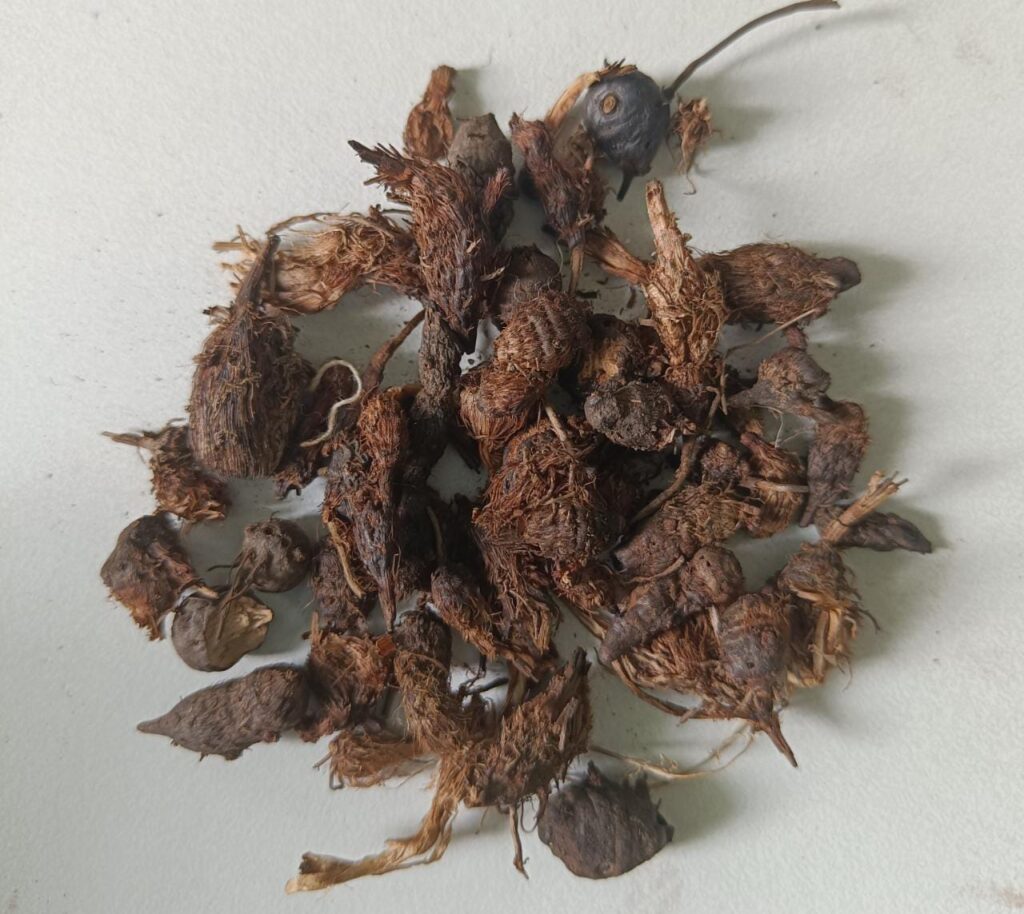
The Ayurvedic concept of Abhava-Pratinidhi Dravya provides a practical framework for substituting a rare or unavailable medicinal plant (Abhava Dravya) with another herb possessing comparable properties and therapeutic actions (Pratinidhi Dravya). This principle ensures continuity of treatment while maintaining therapeutic efficacy. Musta (Cyperus rotundus) is one such widely used medicinal plant in Ayurveda and serves as an important example of this concept because of its close similarity in properties and actions to Ativisha.
Ayurvedic attributes of Musta
Musta is recognized for its broad therapeutic utility and distinctive pharmacological profile in Ayurveda.
- Rasa (taste): Katu (pungent), Tikta (bitter), and Kashaya (astringent)
- Guna (properties): Laghu (light) and Ruksha (dry)
- Virya (potency): Shita (cold)
- Vipaka (post-digestive effect): Katu (pungent)
Its therapeutic actions include:
- Kapha-Pittahara (pacification of Kapha and Pitta)
- Dipana (enhancement of digestive fire)
- Pachana (digestion of undigested material)
- Grahi (absorption of excess fluid)
- Jwarahara (antipyretic)
- Atisaraghna (antidiarrheal)
- Kanduhara (anti-itching)
Because of these properties, Musta is extensively used in the management of fever, diarrhea, thirst, inflammation, tastelessness, helminthiasis, indigestion, and obesity.1,2
Role of Musta in diarrhea management
Among its many therapeutic applications, Musta is particularly valued as an Atisaraghna and Grahi drug. Ayurvedic lexicons describe its ability to enhance Agni, thereby supporting gastrointestinal health and helping manage disorders of the digestive tract.
The antidiarrheal activity of Musta appears to extend beyond direct antimicrobial action. Its aqueous decoction has demonstrated inhibition of bacterial toxin production associated with enteropathogenic and enterotoxigenic organisms. The activity is linked to modulation of factors involved in bacterial virulence, including toxin production and colonization, rather than direct destruction of microorganisms. This supports the traditional Ayurvedic understanding of Musta as a drug that restores gastrointestinal balance and function. 3
Additional observations have shown that extracts of Musta rhizome can suppress the frequency of diarrheal episodes and delay the onset of diarrhea. These effects further reinforce its classical use in conditions characterized by excessive bowel movements and fluid loss. 4
Conclusion
Musta occupies an important place in Ayurvedic therapeutics owing to its digestive, absorptive, and antidiarrheal properties. Its close similarity to Ativisha supports its role as a Pratinidhi Dravya under the principle of Abhava-Pratinidhi Dravya. The herb’s ability to promote Agni, regulate gastrointestinal function, and reduce diarrheal manifestations highlights its enduring relevance in the Ayurvedic management of digestive disorders.5
References:
1. Ukani MD, Mehta NK, Nanavati DD. Aconitum heterophyllum (ativisha) in ayurveda. Anc Sci Life. 1996;16(2):166-171. https://pmc.ncbi.nlm.nih.gov/articles/PMC3331153/
2. Venkatasubramanian P, Kumar SK, Nair VS. Cyperus rotundus, a substitute for Aconitum heterophyllum: Studies on the Ayurvedic concept of Abhava Pratinidhi Dravya (drug substitution). J Ayurveda Integr Med. 2010;1(1):33-39. doi:10.4103/0975-9476.59825. https://pmc.ncbi.nlm.nih.gov/articles/PMC3149390/
3. Daswani PG, Birdi TJ, Antia NH. Study of the action of Cyperus rotundus root decoction on the adherence and enterotoxin production of diarrhoeagenic Escherichia coli. Indian J Pharmacol. 2001;33(2):116-117. doi:10.4103/IJPHA_2001332_116. https://journals.lww.com/iphr/citation/2001/33020/study_of_the_action_of_cyperus_rotundus_root.13.aspx
4. Uddin SJ, Mondal K, Shilpi JA, Rahman MT. Antidiarrhoeal activity of Cyperus rotundus. Fitoterapia. 2006;77(2):134-136. doi:10.1016/j.fitote.2004.11.011. https://linkinghub.elsevier.com/retrieve/pii/S0367-326X(05)00235-2
5. Nagarajan M, Kuruvilla GR, Kumar KS, Venkatasubramanian P. Pharmacology of Ativisha, Musta and their substitutes. J Ayurveda Integr Med. 2015;6(2):121-133. doi:10.4103/0975-9476.146551. https://pmc.ncbi.nlm.nih.gov/articles/PMC4484047/