
Introduction
Psoriasis is a chronic immune-mediated inflammatory skin disorder characterized by keratinocyte hyperproliferation, dysregulated differentiation, and sustained activation of innate and adaptive immune pathways, particularly the Th1/Th17 axis and NF-κB–driven cytokine signaling networks. Recent evidence highlights the central role of oxidative stress, endothelial dysfunction, and persistent inflammatory cytokine release (TNF-α, IL-17, IL-23, IL-6) in the pathogenesis of plaque psoriasis, making immunomodulatory and antioxidant-based therapeutic strategies increasingly relevant.
In this context, Azadirachta indica (Neem) has gained significant attention due to its multi-targeted anti-inflammatory, immunomodulatory, antimicrobial, and antioxidant properties, which may be beneficial in chronic inflammatory dermatoses including psoriasis.1
Phytochemical profile of Azadirachta indica
Neem contains a broad spectrum of bioactive compounds responsible for its therapeutic actions. Key constituents include2:
- Limonoids: azadirachtin, nimbin, nimbolide, gedunin
- Flavonoids: quercetin, rutin
- Phenolics and tannins: gallic acid derivatives
- Fatty acids and volatile oils (neem oil fraction)
These phytochemicals demonstrate strong free radical scavenging, anti-proliferative, and immune-regulatory effects, which are mechanistically relevant in psoriasis-related inflammation and keratinocyte dysregulation.
Pathophysiology of plaque psoriasis relevant to immunomodulation
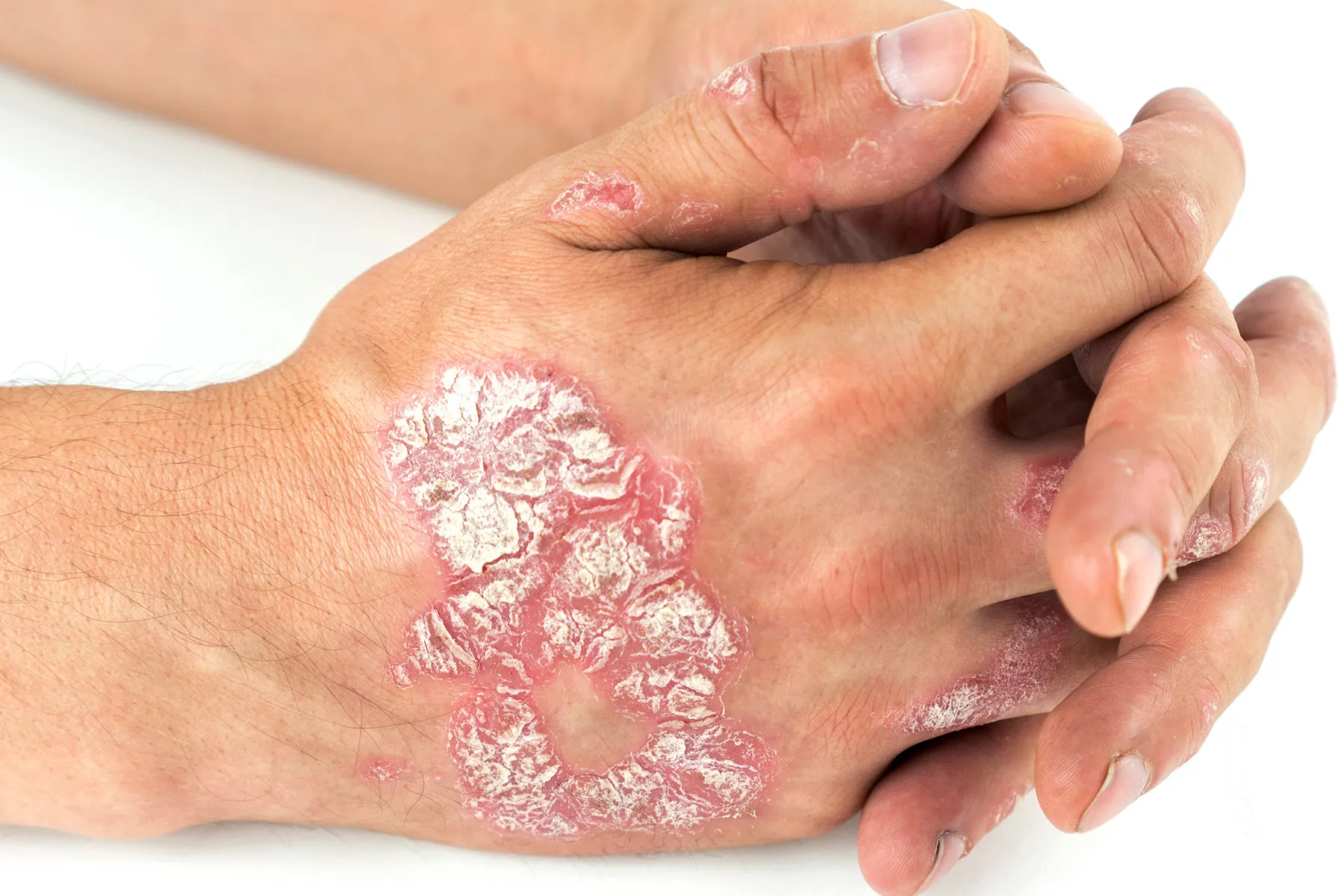
Plaque psoriasis involves a complex immunopathological cascade characterized by:
- Th1/Th17 immune axis activation:
Overactivation of Th17 cells leads to excessive IL-17 and IL-23 signaling, driving keratinocyte proliferation and sustained epidermal inflammation.
- NF-κB mediated cytokine amplification:
NF-κB signaling promotes transcription of pro-inflammatory mediators including TNF-α, IL-6, and IL-1β, maintaining chronic cutaneous inflammation.
- Oxidative stress and keratinocyte hyperproliferation:
Increased reactive oxygen species (ROS) contribute to lipid peroxidation, DNA damage, and abnormal epidermal turnover.
- Skin microbiome dysregulation:
Altered microbial colonization further exacerbates local immune activation and barrier dysfunction.
Mechanisms of immunomodulatory action of neem in psoriasis
- Modulation of pro-inflammatory cytokines (therapeutic role):
Neem exhibits significant suppression of inflammatory mediators including TNF-α, IL-6, and IL-1β. This reduces inflammatory signaling in psoriatic plaques and attenuates disease severity by downregulating NF-κB–dependent transcription pathways.
- Regulation of T-cell mediated immune response (therapeutic role):
Bioactive compounds in neem may help restore immune balance by modulating Th1/Th17 polarization and enhancing regulatory T-cell (Treg) activity, thereby reducing autoimmune-driven keratinocyte proliferation.
- Antioxidant and anti-oxidative stress effects (therapeutic role):
Neem scavenges reactive oxygen species and enhances endogenous antioxidant defenses, reducing oxidative stress–induced epidermal damage and supporting restoration of skin barrier integrity.
- Anti-proliferative effects on keratinocytes (therapeutic role):
Limonoids such as nimbolide demonstrate inhibitory effects on abnormal keratinocyte proliferation, thereby contributing to reduction in plaque thickness and scaling.
- Antimicrobial and skin microbiome modulation (therapeutic role):
Neem exhibits broad-spectrum antimicrobial activity, which may reduce secondary bacterial colonization in psoriatic lesions and improve overall skin inflammation control.
Experimental and emerging evidence
Recent pharmacological and experimental studies on neem-based formulations suggest:
- Reduction in inflammatory mediators and oxidative stress markers in skin inflammation models
- Improved wound healing and epidermal regeneration in topical applications
- Enhanced anti-inflammatory activity when combined with other medicinal plants or advanced delivery systems (e.g., nanoparticle or gel-based formulations)
- Synergistic immunomodulatory effects in polyherbal preparations used for dermatological disorders
These findings support neem’s potential as a multi-target natural therapeutic agent in inflammatory dermatoses, including psoriasis.
Therapeutic role in plaque psoriasis
Neem may be clinically relevant in psoriasis management through the following roles:
- Adjunct anti-inflammatory therapy:
Helps reduce erythema, scaling, and plaque thickness by suppressing inflammatory cytokine cascades.
- Immunomodulatory agent:
Supports immune homeostasis by regulating Th1/Th17 imbalance and reducing autoimmune activation.
- Topical barrier-repair and antimicrobial agent:
Promotes skin healing, reduces secondary infection risk, and improves epidermal integrity.
- Oxidative stress modulator:
Reduces ROS-mediated tissue damage, slowing disease progression and recurrence.
Clinical relevance and limitations
Although neem demonstrates promising pharmacological activity in psoriasis models, clinical translation remains limited due to:
- Lack of large-scale randomized controlled trials
- Variability in extract standardization and formulation
- Limited pharmacokinetic and dose-response data
- Need for validated topical and systemic delivery systems
Therefore, neem should currently be considered a supportive phytotherapeutic agent rather than a standalone therapy in psoriasis management.
Conclusion
Azadirachta indica (Neem) exhibits significant therapeutic potential in inflammatory plaque psoriasis3 through its immunomodulatory, antioxidant, anti-inflammatory, antimicrobial, and anti-proliferative mechanisms. By targeting key pathogenic pathways such as NF-κB signaling, cytokine dysregulation, and oxidative stress, neem represents a promising natural adjunct in integrative dermatological therapy. However, further well-designed clinical studies are required to establish its efficacy, safety, and standardized therapeutic application in psoriasis management.
References:
- Tufail T, Bader Ul Ain H, Ijaz A, et al. Neem (Azadirachta indica): A Miracle Herb; Panacea for All Ailments. Food Sci Nutr. 2025;13(9):e70820. Published 2025 Sep 1. doi:10.1002/fsn3.70820. https://pmc.ncbi.nlm.nih.gov/articles/PMC12400164/
- Alzohairy MA. Therapeutics Role of Azadirachta indica (Neem) and Their Active Constituents in Diseases Prevention and Treatment. Evid Based Complement Alternat Med. 2016;2016:7382506. doi:10.1155/2016/7382506. https://pmc.ncbi.nlm.nih.gov/articles/PMC4791507/
- More NB, Sharma N, Pulivendala G, Bale S, Godugu C. Natural product topical therapy in mitigating imiquimod-induced psoriasis-like skin inflammation-underscoring the anti-psoriatic potential of Nimbolide. Indian J Pharmacol. 2021;53(4):278-285. doi:10.4103/ijp.IJP_591_20. https://pmc.ncbi.nlm.nih.gov/articles/PMC8411965/