
Introduction
Chronic psychological stress is a growing health concern linked with impaired memory, reduced attention span, emotional instability, and decreased executive functioning. Persistent stress activates neuroendocrine pathways, particularly the hypothalamic–pituitary–adrenal (HPA) axis, leading to elevated cortisol levels, oxidative stress, and neuroinflammatory changes. These alterations negatively affect hippocampal function and overall cognitive performance.
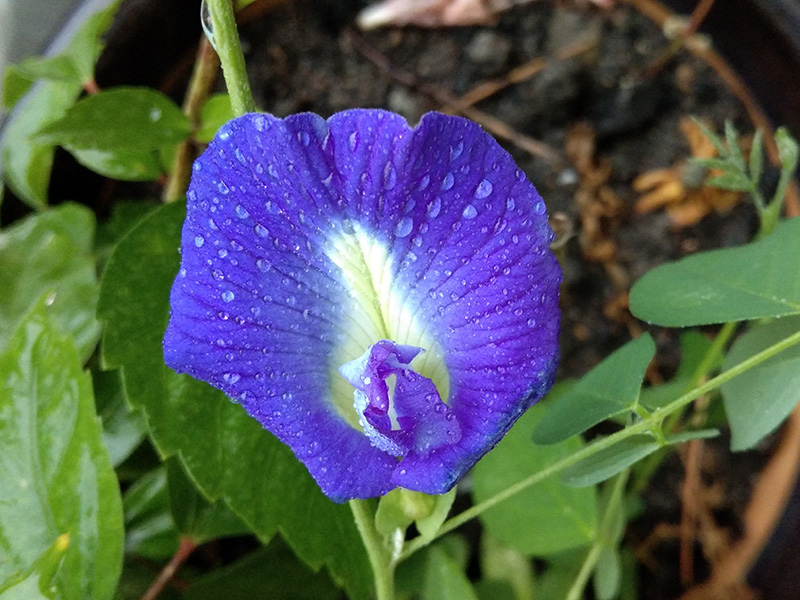
In Ayurveda, such manifestations are primarily associated with aggravated Vata Dosha, dominance of Rajas, and depletion of Ojas, resulting in reduced mental clarity and resilience. Shankhapushpi (Convolvulus pluricaulis) is a classical Medhya Rasayana widely used for enhancing memory, calming the mind, and improving cognitive function under stress conditions.1
Ayurvedic perspective of shankhapushpi
Shankhapushpi is described in Ayurvedic literature as a potent Medhya (nootropic) herb that promotes intellect (Dhi), retention (Dhriti), and recall (Smriti). It is traditionally used in conditions such as anxiety, insomnia, mental fatigue, and stress-related cognitive decline.
From an Ayurvedic standpoint, its actions include:
- Pacification of Vata and Pitta Dosha
- Enhancement of Sattva guna (mental clarity and stability)
- Reduction of Rajas (mental agitation and overthinking)
- Support of Ojas (psychological resilience and vitality)
These effects make it particularly useful in restoring cognitive balance during chronic stress exposure.
Neurocognitive mechanisms
Convolvulus pluricaulis is a multifunctional neuroactive herb with anxiolytic, memory-enhancing, and stress-modulating properties. Its bioactive compounds (including flavonoids, alkaloids, and coumarins) are associated with multiple central nervous system effects.
Key neurocognitive actions include:
Modulation of neurotransmitter systems:
Shankhapushpi is associated with regulation of neurotransmitters involved in cognition and mood, particularly those influencing learning, attention, and emotional stability. This contributes to improved mental processing under stress.
Stress response regulation:
It is considered to help normalize stress-induced neuroendocrine activation, thereby reducing the cognitive impact of prolonged psychological stress and improving mental endurance.2
Antioxidant and neuroprotective effects:
Chronic stress increases oxidative damage in neural tissues. Shankhapushpi contains phytochemicals that exhibit antioxidant properties, helping protect neurons and maintain synaptic integrity.
Enhancement of synaptic function:
Experimental literature suggests improved neuronal communication and synaptic plasticity, which are essential for learning, memory consolidation, and cognitive flexibility.
Anxiolytic and sedative balance:
Shankhapushpi provides a unique balance of calming and cognitive-enhancing effects, reducing anxiety without causing significant cognitive suppression, thereby supporting functional alertness with relaxation.
Stress-Induced cognitive dysfunction: Integrated view
In chronic stress conditions, cognitive dysfunction arises due to hippocampal vulnerability, neurotransmitter imbalance, and persistent hormonal activation. Shankhapushpi is traditionally viewed as a mind-calming Rasayana that stabilizes mental activity while enhancing cognitive clarity.
Its role can be summarized as:
- Improving attention and working memory
- Reducing mental fatigue and overactivity
- Supporting emotional regulation under stress
- Enhancing stress adaptability and cognitive resilience
Contemporary research overview
Convolvulus pluricaulis is a significant neuroprotective and nootropic herb. Reviews describe its role in improving memory, reducing anxiety, and mitigating stress-related behavioral disturbances. Experimental studies further suggest its involvement in antioxidant defense mechanisms, modulation of neurotransmission pathways, and protection against neurodegenerative changes.
Although clinical evidence varies in quality, the overall scientific direction supports its traditional use as a cognitive enhancer and stress-modulating agent.
Clinical relevance
Shankhapushpi may be considered as a supportive intervention in:
- Stress-induced cognitive impairment
- Anxiety-associated memory dysfunction
- Mental fatigue and burnout
- Mild attention and concentration deficits
- Sleep-related cognitive disturbances3
It is often used as part of polyherbal formulations with other Medhya Rasayanas for synergistic effects.
Conclusion
Shankhapushpi (Convolvulus pluricaulis) is an important Ayurvedic Medhya Rasayana with significant relevance in managing stress-related cognitive dysfunction. Classical Ayurvedic concepts emphasize its role in enhancing memory, stabilizing the mind, and improving mental resilience. Contemporary research aligns with these traditional views, highlighting its neuroprotective, anxiolytic, and cognitive-enhancing properties. Overall, Shankhapushpi represents a valuable herbal intervention for supporting neurocognitive health in chronic psychological stress.
Reference:
- Sharma R, Singla RK, Banerjee S, Sinha B, Shen B, Sharma R. Role of Shankhpushpi (Convolvulus pluricaulis) in neurological disorders: An umbrella review covering evidence from ethnopharmacology to clinical studies. Neurosci Biobehav Rev. 2022;140:104795. doi:10.1016/j.neubiorev.2022.104795 https://pubmed.ncbi.nlm.nih.gov/35878793/
- Hannan MA, Sultana A, Rahman MH, et al. Protective Mechanisms of Nootropic Herb Shankhpushpi (Convolvulus pluricaulis) against Dementia: Network Pharmacology and Computational Approach. Evid Based Complement Alternat Med. 2022;2022:1015310. Published 2022 Oct 3. doi:10.1155/2022/1015310 https://pmc.ncbi.nlm.nih.gov/articles/PMC9550454/
- Balkrishna A, Thakur P, Varshney A. Phytochemical Profile, Pharmacological Attributes and Medicinal Properties of Convolvulus prostratus - A Cognitive Enhancer Herb for the Management of Neurodegenerative Etiologies. Front Pharmacol. 2020;11:171. Published 2020 Mar 3. doi:10.3389/fphar.2020.00171 https://pmc.ncbi.nlm.nih.gov/articles/PMC7063970/