
Introduction
Inflammatory bowel disease (IBD) is a chronic intestinal disorder comprising Crohn’s disease and ulcerative colitis. It develops due to an inappropriate intestinal immune response to intestinal microbes in genetically susceptible individuals. Genes regulating innate immune responses and environmental triggers influence disease susceptibility. IBD is characterized by an imbalance between effector and regulatory immune mechanisms within the intestine, resulting in persistent inflammation and elevated levels of proinflammatory cytokines.
Immunopathogenesis of inflammatory bowel disease
- Active IBD is associated with infiltration of innate immune cells such as neutrophils, macrophages, dendritic cells, and natural killer T cells into the intestinal lamina propria.
- Adaptive immune cells, including B cells and T cells, also contribute to the inflammatory process.
- Excessive immune-cell infiltration aggravates tissue inflammation and promotes disease progression.
- Altered cytokine and chemokine signaling plays a central role in disease pathogenesis.
- TH1 responses are characterized by the secretion of IL-1, IL-2, IL-6, IL-12, IL-18, TNF-α, and IFN-γ.
- Ulcerative colitis additionally exhibits defective TH2 responses associated with IL-4, IL-5, and IL-10 secretion. 1
Therapeutic profile of Musta
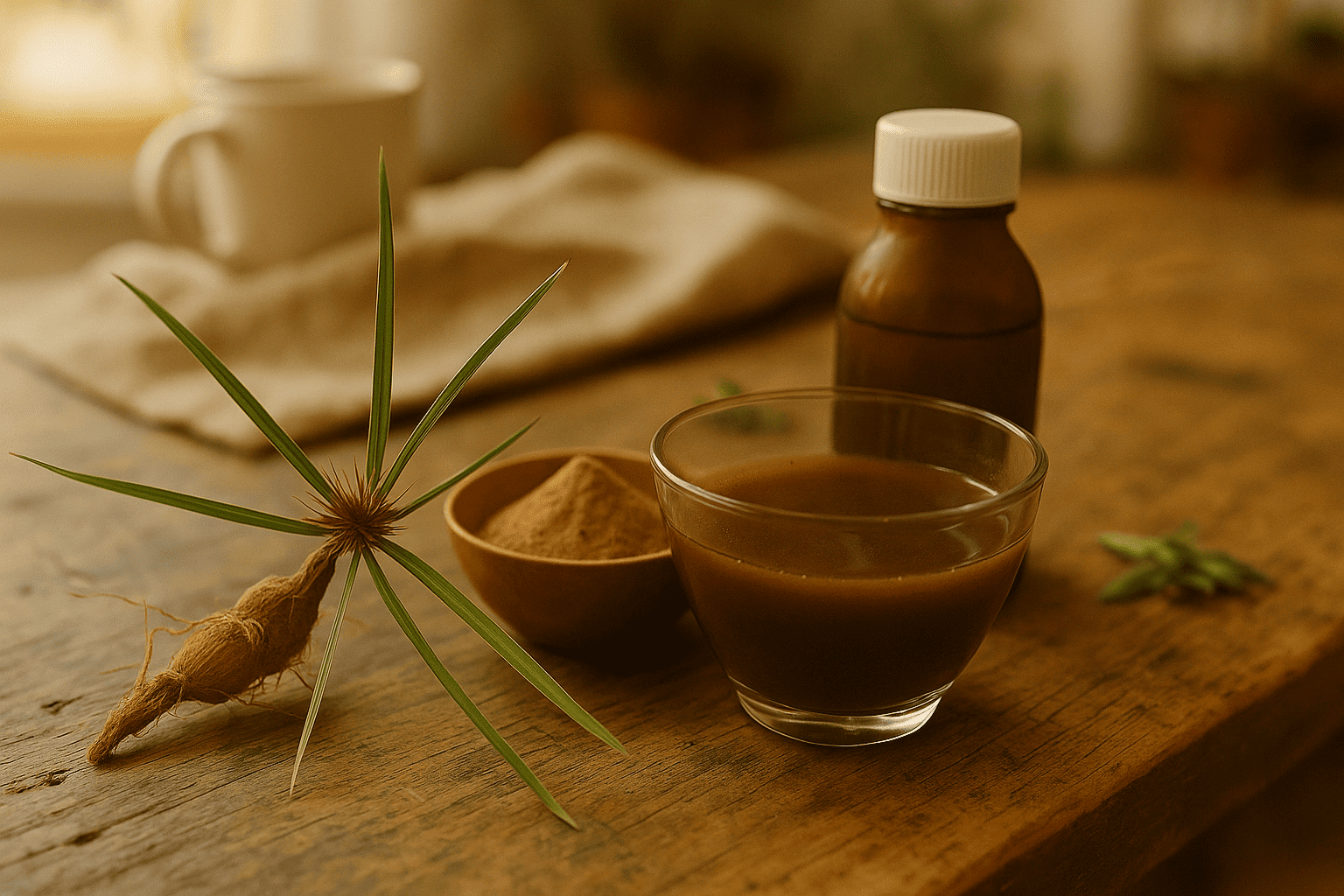
Musta (Cyperus rotundus Linn.), commonly known as Mustak, Nagarmotha, or nut grass, is a perennial sedge distributed throughout India.
Key characteristics of Musta include:
- Rich content of essential oils containing sesquiterpene hydrocarbons, epoxides, ketones, monoterpenes, and aliphatic alcohols.
- Presence of triterpenes such as β-sitosterol and linoleic acid.
- Traditional use of tubers and rhizomes in chronic diarrhea with mucus and other abdominal disorders.
- Documented anthelmintic, antibacterial, fungicidal, analgesic, and central nervous system depressant activities. 2
Potential role in intestinal inflammation
The therapeutic relevance of Musta in IBD is linked to its effects on inflammation and oxidative stress.
- Intestinal inflammation is associated with reduced body weight, food intake, water intake, antioxidant activity, and colon length.
- Disease progression is accompanied by increases in inflammatory markers, oxidative stress indicators, disease activity scores, and serum cortisol levels.
- Active constituents of Musta, particularly natural steroids and terpenoids, exhibit anti-inflammatory and antioxidant properties.
- These actions are associated with the downregulation of proinflammatory cytokines, helping to reduce intestinal inflammation and tissue damage.
- The overall pharmacological profile supports gastrointestinal protection and modulation of inflammatory responses.
Conclusion
IBD is a complex inflammatory condition driven by immune dysregulation, cytokine imbalance, and oxidative stress. Musta possesses multiple pharmacological properties relevant to intestinal health, including anti-inflammatory, antioxidant, and gastrointestinal protective effects. Its traditional use in chronic digestive disorders, together with its ability to modulate inflammatory pathways, highlights its therapeutic relevance in the management of intestinal inflammation.3
References:
1. Abraham C, Cho JH. Inflammatory bowel disease. N Engl J Med. 2009;361(21):2066-2078. doi:10.1056/NEJMra0804647. https://pmc.ncbi.nlm.nih.gov/articles/PMC3491806/
2. Pal D, Dutta S, Sarkar A. Evaluation of CNS activities of ethanol extract of roots and rhizomes of Cyperus rotundus in mice. Acta Pol Pharm. 2009;66(5):535-541. https://www.ptfarm.pl/pub/File/Acta_Poloniae/2009/5/535.pdf
3. Johari S MPharm PhD, Joshi C PhD, Gandhi T MPharm PhD. Effect of Cyperus Rotundus on Cytokine Gene Expression in Experimental Inflammatory Bowel Disease. Iran J Med Sci. 2016;41(5):391-398. https://pmc.ncbi.nlm.nih.gov/articles/PMC4967483/#sec1-5