
Introduction
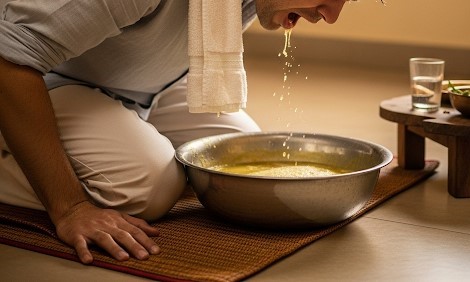
Vamana Karma, a core Panchakarma procedure in Ayurveda, is a medically guided emesis therapy primarily used for the elimination of vitiated Kapha dosha and metabolic toxins (Ama). Classical Ayurvedic texts describe it as both a curative and preventive intervention for restoring doshic balance and maintaining systemic homeostasis.
Traditionally, it has been indicated in conditions such as respiratory disorders (Tamaka Shwasa), dermatological diseases (Kushtha), obesity (Sthoulya), and selected gastrointestinal and neuropsychiatric disorders.
In contemporary practice, Vamana Karma has gained renewed scientific interest due to its potential role in managing lifestyle-related and metabolic disorders, including dyslipidemia, allergic bronchitis, psoriasis, and stress-related conditions. This reflects an emerging integrative approach that aligns traditional Ayurvedic principles with modern evidence-based medicine.
Despite its therapeutic promise, concerns remain regarding safety, standardization, and procedural consistency. Vamana Karma involves sequential stages—Poorva Karma (preparation), Pradhana Karma (main procedure), and Pashchat Karma (post-care)—each requiring precise execution. Improper administration may result in adverse effects such as dehydration, electrolyte imbalance, and gastrointestinal disturbances, highlighting the need for standardized protocols and safety evaluation.
Clinical studies, including trials and observational reports, suggest beneficial outcomes such as improvement in lipid profiles, pulmonary function, inflammatory markers, and psychological parameters. However, variability in study design, small sample sizes, and procedural heterogeneity limit the strength of current evidence.
This review therefore aims to critically evaluate existing clinical data on the safety, efficacy, and therapeutic outcomes of Vamana Karma, correlating classical Ayurvedic principles with contemporary research to better define its clinical applicability and identify areas requiring further investigation.
Indications (Yogya)
Vamana Karma is indicated in a wide range of Kapha predominant and Kapha-Pitta disorders, such as:
- Kasa (cough)
- Tamaka Shwasa (bronchial asthma)
- Kaphaja Pratishyaya (chronic rhinitis)
- Medoroga (obesity)
- Kustha (skin diseases like psoriasis, eczema)
- Sthaulya (obesity/metabolic syndrome)
- Manovikara (certain psychiatric disorders like depression with lethargy)
Contraindications (Ayogya)
Vamana should be strictly avoided in:
- Children, elderly, pregnant women, and weak individuals
- Atyagni (very strong digestion where no Kapha accumulation exists)
- Severe cardiovascular disorders
- Vataja diseases without Kapha involvement
Procedural overview (Karma vidhi)
|
Stage |
Description |
|
Poorva Karma |
Pre-procedural preparation involving Deepana–Pachana (digestive stimulation), Snehapana (internal oleation), and Swedana (sudation) to mobilize and channelize doshas toward the gastrointestinal tract. |
|
Pradhana Karma |
Main procedure involving administration of Vamana dravya (emetic agents) such as Madanaphala, Yashtimadhu, or Ikshvaku, followed by induced therapeutic emesis for elimination of vitiated Kapha. |
|
Pashchat Karma |
Post-procedural management including Samsarjana Krama (graded dietary regimen), rest, and close monitoring for recovery and prevention of complications. |
Procedural details of Vamana Karma
Poorva Karma (Preparatory phase):
The preparatory phase facilitates the mobilization of vitiated Doshas, particularly Kapha, toward the gastrointestinal tract for effective elimination during Vamana Karma.
- Deepana-Pachana (Enhancement of digestive and metabolic activity):
- Purpose: To stimulate Agni and eliminate Ama (metabolic toxins).
- Common drugs: Trikatu Churna, Chitraka, Mustaka, and related formulations.
- Duration: Typically 3–5 days, depending on digestive capacity and Ama status.
- Rationale: Ensures proper digestion and prepares the body for therapeutic emesis.
- Snehapana (Internal oleation):
- Purpose: To liquefy and mobilize Doshas toward the gastrointestinal tract.
- Sneha used: Ghrita, Taila, Tikta Ghrita, Triphala Ghrita, and disease-specific medicated ghee preparations.
- Administration: Vardhamana Krama (incremental dosing) or Sama Krama (fixed dosing).
- Duration: Generally 3–7 days until signs of adequate oleation are achieved.
- Swedana (Sudation therapy):
- Purpose: To dilate channels (Srotas) and facilitate Dosha movement toward the stomach.
- Methods:
- Sarvanga Swedana (whole-body sudation).
- Bashpa Sweda (steam therapy) or Patra Pinda Sweda.
- Duration: Continued until appropriate signs of sudation are observed.
Pradhana Karma (Main procedure):
This phase involves administration of emetic agents to induce controlled therapeutic emesis.
- Vamana dravya administration:
- Classical drugs used:
- Madana Phala (Randia dumetorum).
- Yashtimadhu (Glycyrrhiza glabra).
- Ikshvaku (Lagenaria siceraria).
- Decoctions, pastes, and medicated milk preparations may also be used.
- Procedure:
- A light meal is administered on the previous evening.
- The procedure is performed early morning during the Kapha-dominant period.
- Vamana Dravya is administered with suitable adjuvants such as warm milk or Yashtimadhu Phanta.
- Emesis is induced and monitored until signs of adequate purification are achieved.
- Monitoring:
- Assessment of quantity and nature of expelled material.
- Monitoring of vital parameters and patient comfort.
- Evaluation of adequacy of emesis and identification of under- or over-emesis.
Pashchat Karma (Post-procedure care):
This phase focuses on restoration of digestive function and prevention of complications.
- Samsarjana Krama (Graduated dietary regimen):
- Rationale: Digestive capacity is temporarily reduced after Vamana and requires gradual restoration.
- Diet progression:
- Day 1–2: Manda (thin rice gruel).
- Day 3–4: Peya (semi-liquid rice gruel).
- Day 5–6: Vilepi (thick rice preparation).
- Day 7 onwards: Light and easily digestible solid foods.
- Duration: Usually 3–7 days based on the intensity of purification and patient status.
- Rest and lifestyle modification:
- Adequate physical and mental rest.
- Avoidance of cold exposure, strenuous activity, and stress.
- Gradual resumption of normal activities.
- Monitoring and management of complications:
- Minor adverse effects such as fatigue or throat irritation are managed conservatively.
- Rare complications require appropriate Ayurvedic or conventional medical intervention.
Mechanism of action (Samprapti Vighatana)
- Dosha expulsion: Eliminates vitiated Kapha and Pitta, reducing disease burden.
- Agni Deepana: Enhances digestive and metabolic functions.
- Ama Nirharana: Removes metabolic toxins and restores physiological balance.
- Srotoshodhana: Clears body channels, improving tissue nutrition and function.
Samprapti flow chart
Nidana (Causative factors)
↓
Kapha-provoking Ahara and Vihara
(Heavy, oily, cold foods and sedentary lifestyle)
↓
Kapha Dushti (Kapha vitiation)
↓
Agni Mandya (Impaired digestive fire)
↓
Ama Utpatti (Formation of metabolic toxins)
↓
Srotorodha (Channel obstruction)
↓
Dosha-Dushya Sammurchhana
(Interaction of vitiated Doshas and tissues)
↓
Vyadhi Utpatti (Disease manifestation)
(Kasa, Tamaka Shwasa, Kushtha, Sthaulya, etc.)
↓
Symptoms of heaviness, lethargy, congestion, breathlessness, skin lesions, itching, weight gain, and metabolic impairment
↓
Samprapti Vighatana (Interruption of pathogenesis)
↓
Vamana Karma
(Removal of vitiated Kapha and Ama)
↓
Agni Deepana
(Metabolic correction)
↓
Srotoshodhana
(Channel purification)
↓
Dosha Samya
(Restoration of Dosha balance)
↓
Symptom relief and disease remission
Modern correlation
Vamana Karma may be correlated with controlled therapeutic detoxification approaches. Emerging evidence suggests potential effects on gastrointestinal physiology, autonomic regulation, metabolism, immune function, and neurohormonal pathways.
Pharmacological insights
Classical Vamana Dravyas possess the following therapeutic properties:
- Tikshna (penetrating)
- Ushna (hot potency)
- Bhedana (disintegrating accumulations)
- Chhedana (removing obstructions)
These properties facilitate liquefaction, mobilization, and elimination of vitiated Kapha.
Benefits and clinical outcomes
- Rapid symptom relief in Kapha-dominant disorders.
- Reduction in disease recurrence.
- Improved digestion and metabolism.
- Enhanced immune function and psychological well-being.
- Supportive role in obesity and metabolic syndrome management.
Safety considerations
When performed according to classical guidelines by trained practitioners, Vamana Karma is generally safe. Mild adverse effects such as fatigue, throat irritation, and transient dehydration may occur. Appropriate patient selection, preparation, monitoring, and post-procedure care are essential for minimizing risks.
Clinical outcomes
Symptomatic relief:
- Respiratory disorders (Tamaka Shwasa, Kasa): Reduction in breathlessness, cough, and chest congestion.
- Skin disorders (Kushtha, psoriasis, eczema): Improvement in itching, scaling, erythema, and lesion severity.
- Metabolic disorders (Sthaulya, obesity, prediabetes): Reduction in body weight, BMI, and fatigue.
Biochemical and physiological improvements
- Lipid profile: Decreased total cholesterol, triglycerides, and LDL; increased HDL.
- Glycemic control: Improved fasting and postprandial blood glucose levels.
- Pulmonary function: Improved lung function and peak expiratory flow rate.
- Inflammatory markers: Reduction in CRP, ESR, and other inflammatory indices.
Gastrointestinal and metabolic benefits
- Agni Deepana: Improved digestion with reduced bloating and indigestion.
- Ama Nirharana: Enhanced metabolic efficiency and nutrient utilization.
- Weight management: Sustained reduction in body weight and improved metabolic rate.
Psychological and quality-of-life improvements
- Improved mental clarity and reduced lethargy.
- Better mood stability with reduced anxiety and depressive symptoms.
- Enhanced overall quality of life and functional well-being.
Preventive outcomes
- Reduced recurrence of chronic Kapha disorders with seasonal administration.
- Improved resistance to respiratory and allergic conditions.
- Potential delay in progression of obesity and metabolic syndrome.
Conclusion
Vamana Karma is a classical Ayurvedic bio-cleansing therapy that combines detoxification, metabolic regulation, and symptom management. Available clinical evidence suggests potential benefits in Kapha- and Kapha-Pitta–predominant disorders, including respiratory, dermatological, and metabolic conditions. Although generally safe when performed according to standard protocols, greater procedural standardization and high-quality randomized controlled trials are needed to establish its efficacy, safety, and mechanisms of action within contemporary evidence-based healthcare.1
References:
- Raturi S, Joshi P. SAFETY, EFFICACY, AND CLINICAL OUTCOMES OF VAMANA KARMA: AN EVIDENCE-BASED REVIEW. International Journal of AYUSH; 2025: 14 (04); 105-119. https://internationaljournal.org.in/journal/index.php/ijayush/article/view/1351/1318