Introduction
Knee joint pain, commonly associated with osteoarthritis and other degenerative or inflammatory conditions, is a leading cause of reduced mobility and functional limitation in older individuals. Ageing, trauma, repetitive stress, and joint disorders such as arthritis, gout, and infections contribute to progressive joint damage. In Ayurveda, these manifestations are primarily linked to Vata aggravation along with local structural and functional impairment of the joint.
Ayurvedic therapeutic approach for knee joint pain
Ayurvedic management of knee joint pain involves a multi-modal strategy including external therapies, lifestyle regulation, dietary guidance, and supportive interventions. Among these, Sthanik Snehan (localized oleation) and Swedan (therapeutic sudation) are considered central for pain and stiffness management.
- Therapeutic modalities include Abhyang, Janu Basti, Pizhichill, Janu Pichu, Nadi Swedana, Bashpa Swedana, and Pinda Swedana
- Sthanik Snehan is used to induce relaxation and improve muscle tone
- It is beneficial in reducing Vatapurna Drutisparsha, Shoth, Shula, Prasaran, and Akunchan Vedana. 1
Role of Sthanik Snehan (localized oleation)
Snehana therapy involves the application of medicated oils that possess properties opposite to aggravated Vata, such as unctuousness, heaviness, and softness.
- Abhyang helps pacify vitiated Vata responsible for pain, stiffness, and cracking sensations
- Provides muscle relaxation and improves joint flexibility
- Useful in musculoskeletal pain, sports injuries, and postural disorders
- Regular application contributes to overall reduction in joint discomfort
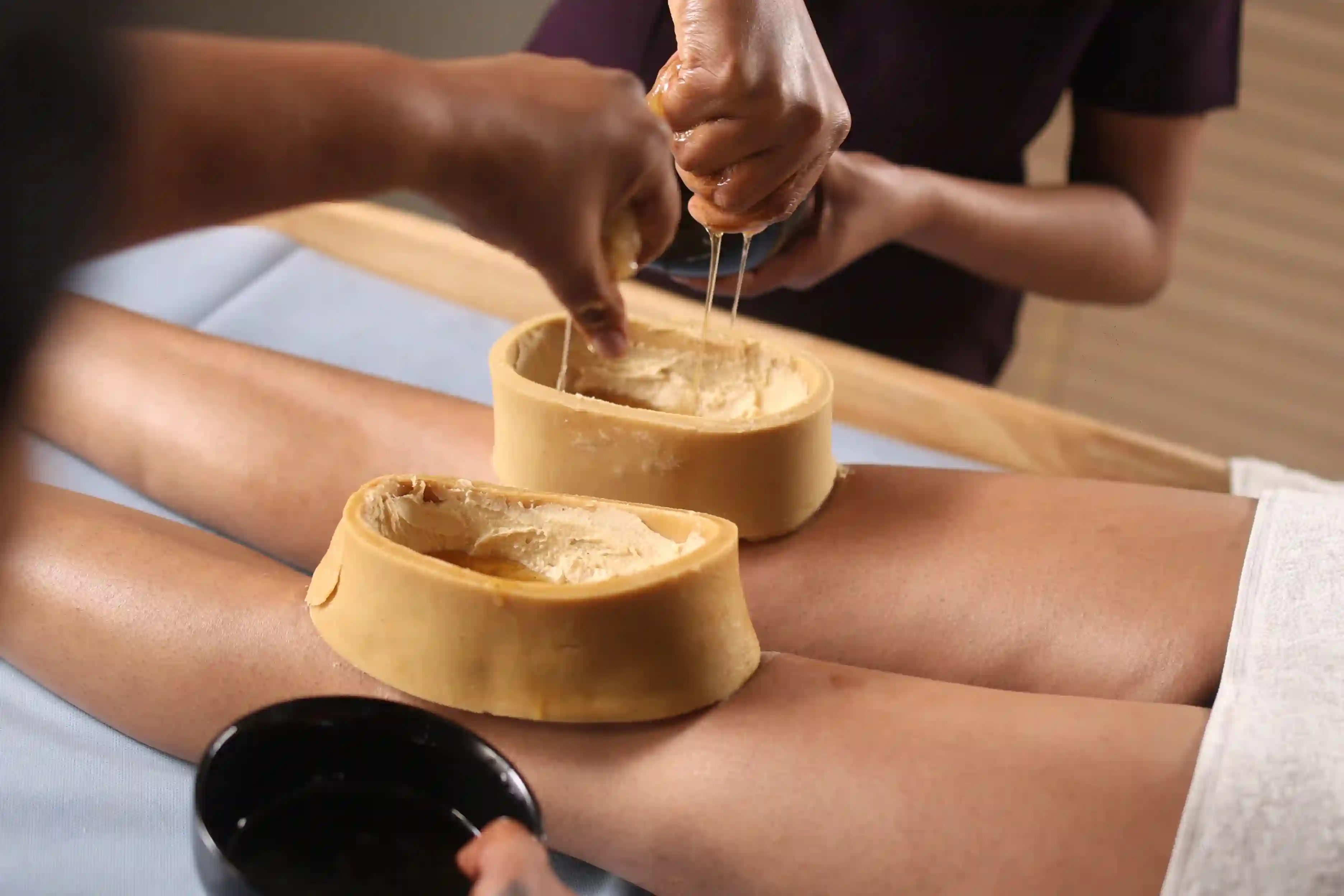
Janu Pizhichil in knee joint restoration
Janu Pizhichil involves continuous pouring of warm medicated oil over the knee joint.
- Acts as a rejuvenating and strengthening therapy for joint tissues
- Particularly indicated in Vata-dominant conditions like arthritis
- Helps reduce inflammation, stiffness, and muscular fatigue
- Restores physical strength and improves joint function
Role of Sthanik Swedan (localized sudation therapy)
Swedan is performed after Snehan and induces therapeutic sweating through controlled heat application. It is essential in Vata-Kapha related joint disorders.
- Relieves stiffness, heaviness, coldness, and promotes sweating
- Nadi Swedan delivers targeted steam using Nadi Sweda Yantra for localized treatment
- Patra Pottali Sweda applies herbal leaf boluses for analgesic heat therapy
- Supports pain relief and improves local circulation in the knee joint2
Conclusion
Sthanik Snehan and Swedan provide a structured Ayurvedic approach for managing knee joint pain through Vata pacification, local nourishment, and channel decongestion. By combining oleation and sudation techniques, these therapies effectively reduce pain, stiffness, and functional restriction, thereby improving mobility and quality of life in patients with knee joint disorders.3
References:
1. Shastri KN, Chaturvedi GN. Agnivesha’s Charaka Samhita, Vidyotini Commentary. Chikitsasthana. Varanasi, India: Chaukhamba Bharati Academy; 2004:235. https://www.scirp.org/reference/ReferencesPapers?ReferenceID=721635
2. Shastri K, Chaturvedi GN, eds. Charaka Samhita of Agnivesha (Dridhabala edition). Siddhi Sthana. 1st ed. Varanasi, India: Chaukhamba Bharati Academy; 2003:1169. Ch 1, verses 38–40. https://www.sciepub.com/reference/395881
3. Jain S, Jain A. A comprehensive review on the efficacy of Sthanik Snehana and Swedan in managing knee joint pain. International Journal of Novel Research and Development (IJNRD). 2024;9(3). IJNRD.org. https://www.ijnrd.org/papers/IJNRD2403102.pdf